Newsletter

Join our mailing list for latest news and features

Build Hollywood

Build Hollywood

Build Hollywood

Build Hollywood

Partnerships

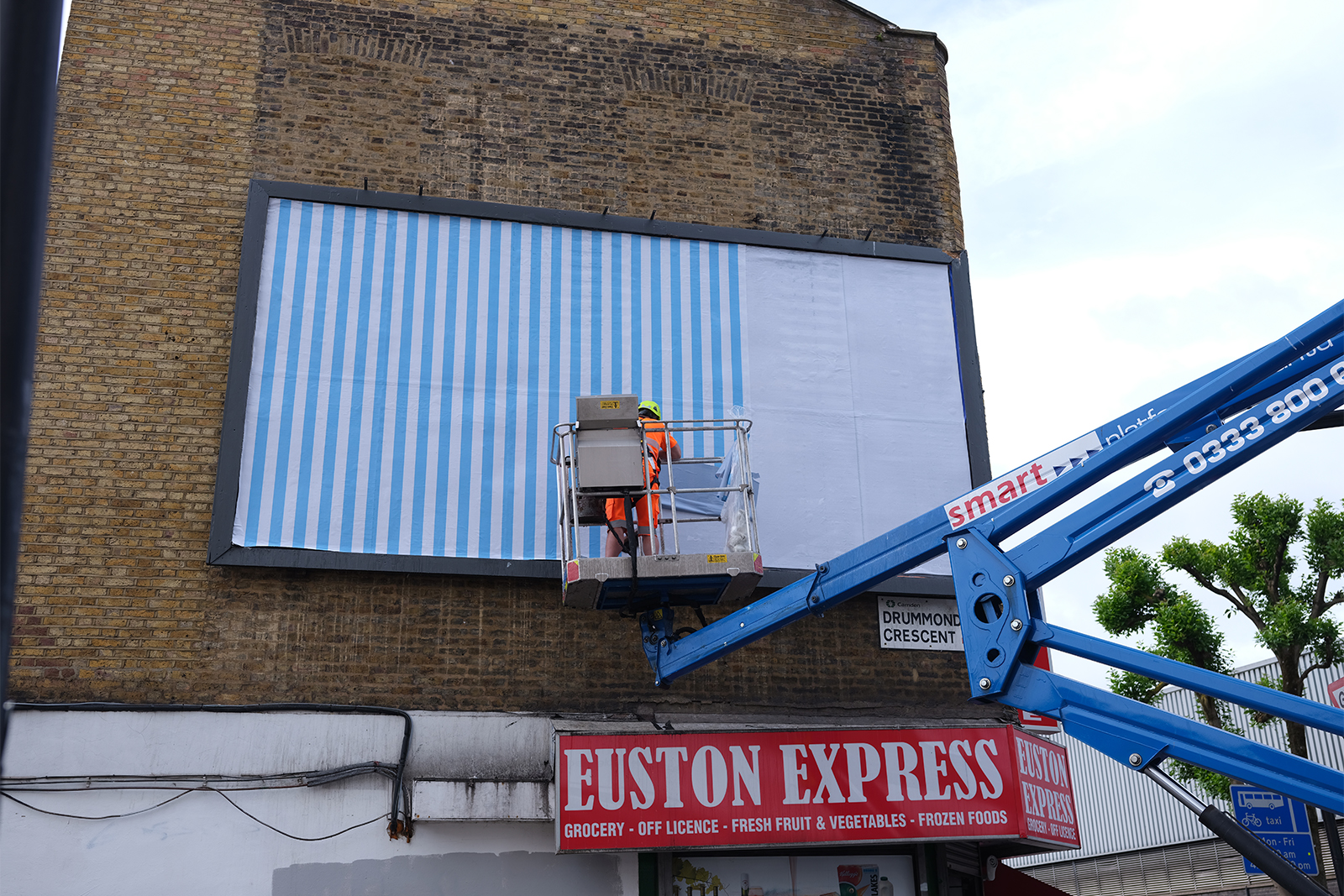
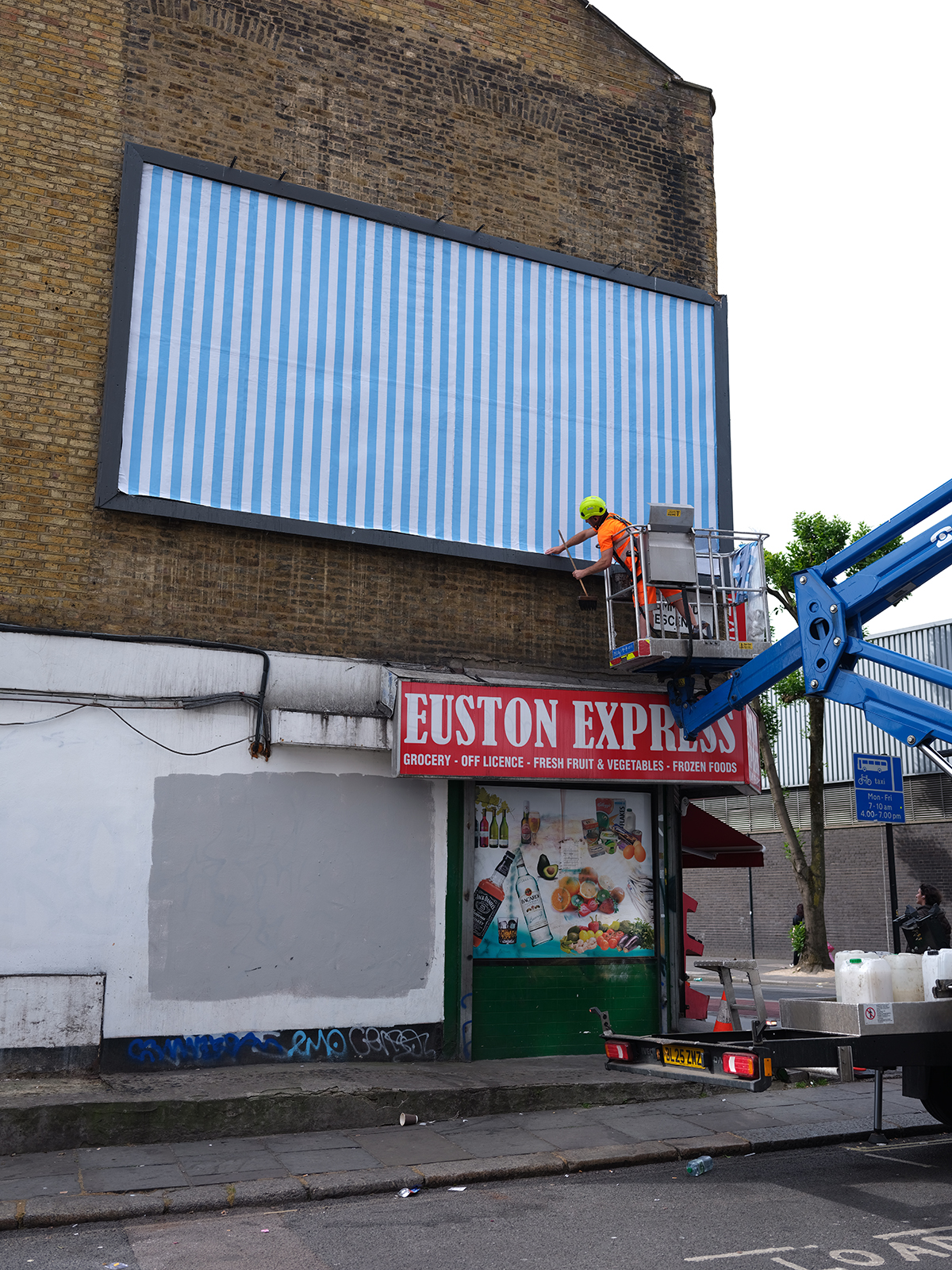
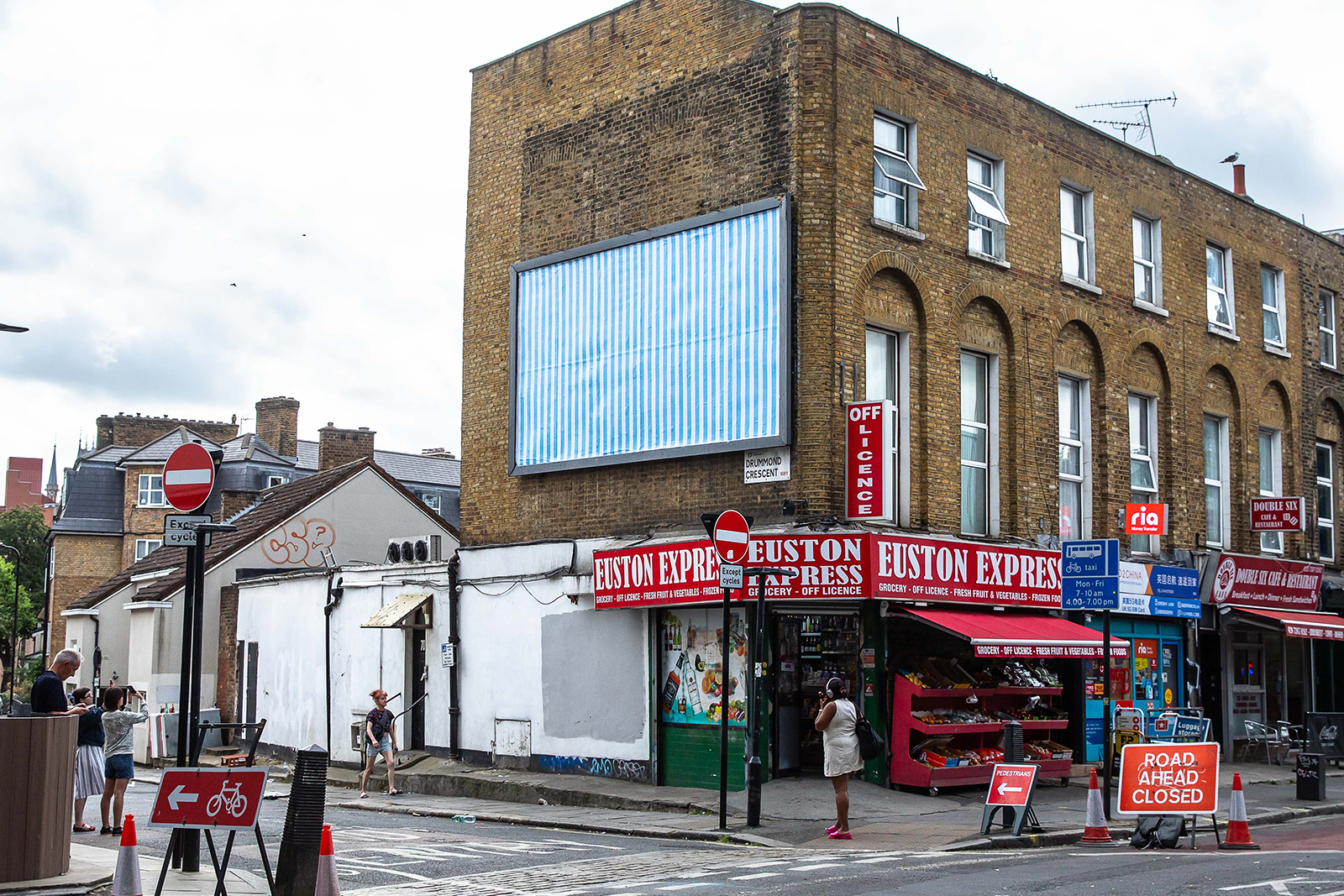
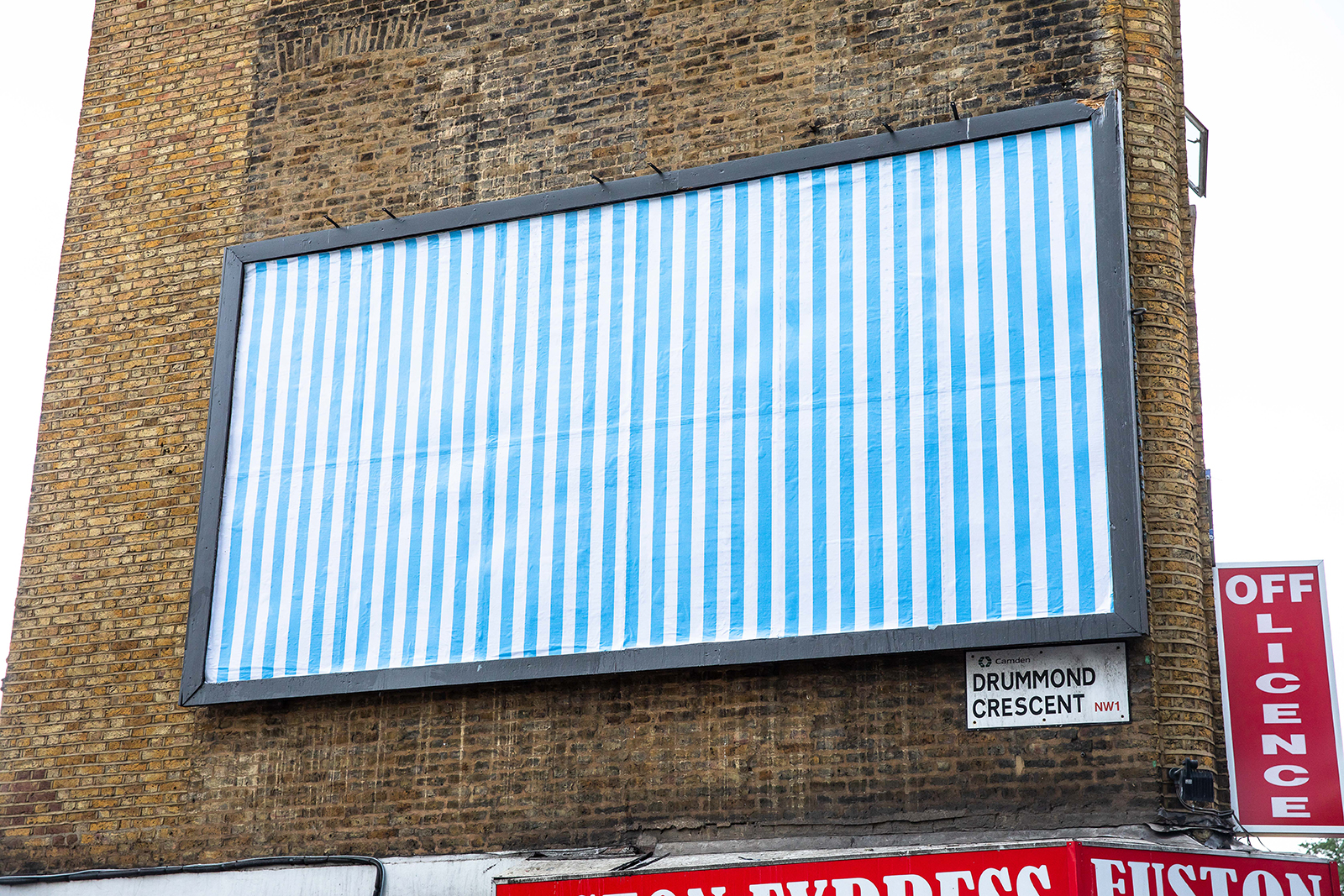
Stripes, Colour, Space and the World Beyond: An historic London billboard artwork is recreated to coincide with Lisson Gallery’s intriguing new show…

Daniel Buren (b.1938) is a renowned French artist whose practice spans painting, printmaking, sculpture, installation and all manner of interventions including on urban settings.

In 1965 Buren first tackled the conceptual task of wondering how minimal a visual intervention could be and yet still pose questions as to what painting is, how it’s presented, and more broadly, the physical and social environment in which an artist makes work.

This economy of means in his so called “degree zero” painting leads viewers to look beyond the visual – originally vertical white stripes alternating with a stripe of the same width but a different colour – and to question how and by whom space is used. In short, Buren asks us to consider the social and physical ramifications attendant on the appropriation of space.

As we know, billboards occupy a significant surface area in the public realm. Buren was both mesmerised and horrified by the power of billboards to infect public consciousness. What would it mean to install a poster or a billboard in a teeming urban environment that had no message, wasn’t overtly trying to sell passersby product but rather sought to interrupt our everyday perspective? Buren’s seemingly simple, certainly incongruous interventions invite us to experience the world afresh.

On the occasion of Lisson Gallery hosting an exhibition of the artist’s work as it has appeared in various publications over the years, BUILDHOLLYWOOD were delighted to help revisit Buren’s degree zero billboard titled Billboard in London more than fifty years after the original intervention. With the exhibition titled Pages in Situ, it seemed like a good idea to catch up with the Lisson exhibition’s curator Fraser Muggeridge. We met in his busy but serene Bethnal Green studio to find out more about Buren, an artist Muggeridge is clearly delighted by, as well as his own practice and evolution as a graphic designer.

04.06.26

Words by Adrian Burnham
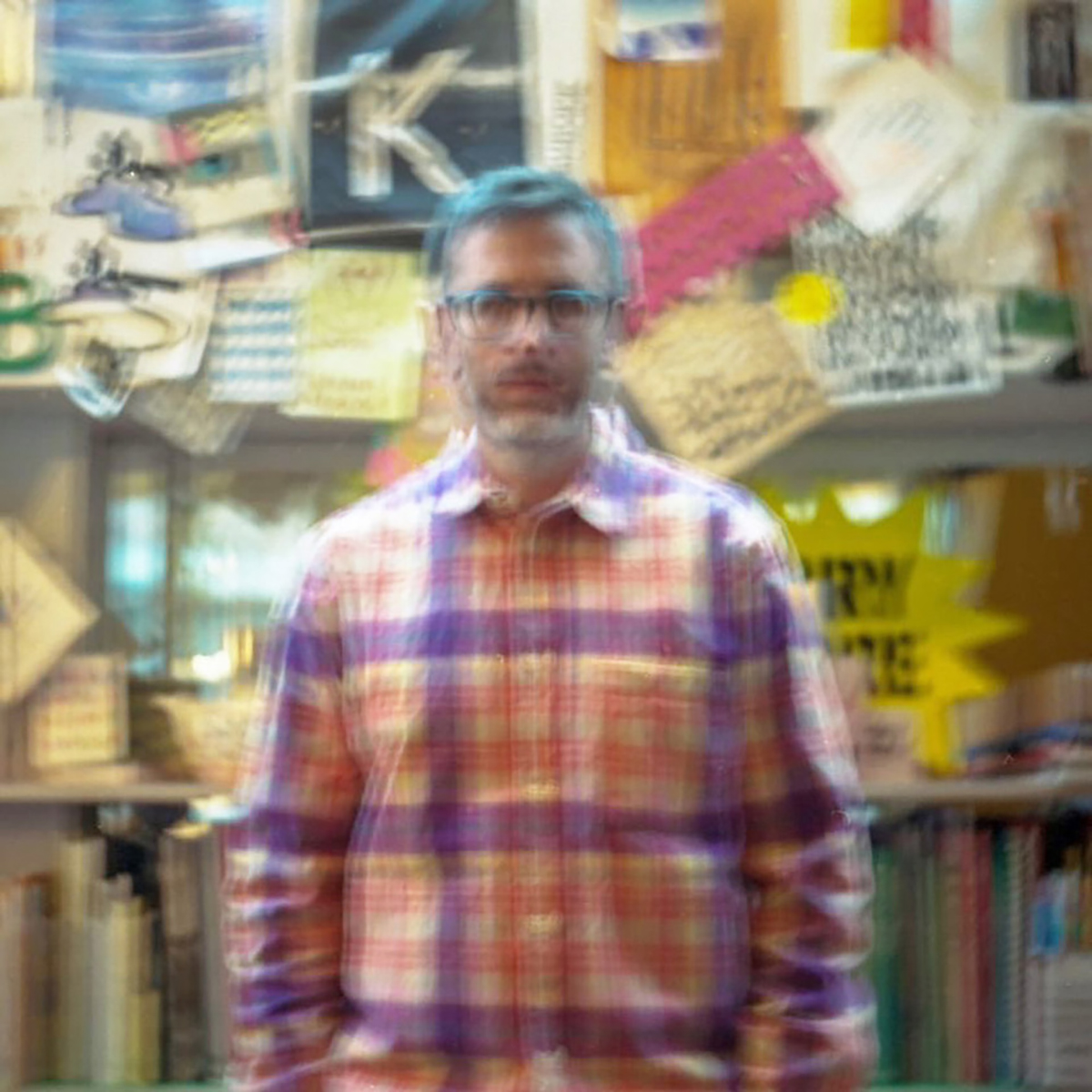
Fraser Muggeridge

FM What are we talking about?

AB Well, rolling with my proposed starting point of ‘origins and ethos’, maybe the first question is: when did you originally become enamoured with typography or design?

FM I was always into lettering, even when I was really young. You know, some people learn musical instruments, or go to swimming classes, or whatever. I asked for calligraphy lessons, so my mum organised calligraphy lessons when I was about ten or eleven.

I also remember our next-door neighbour was a graphic designer. And he had a car! We didn’t have a car. I was like, oh my God, this guy’s got a car. So that’s one of the reasons I got into it. Plus, I really liked the precision. I was pretty into technical drawing, using a ruler and a compass…

AB At school, we still had technical drawing.

FM Yeah! Same here. Drawing board, getting things straight, measuring. I suppose it was the maths of it that also appealed. And the idea that someone might even pay you to do this rather than having a crap job—it blew my mind. It still blows my mind, even today.

AB Working with balance, proportion, rhythm…?

FM Also, I managed to persuade my school that graphic communication was a language, because I did it as a GCSE language.

AB Wow.

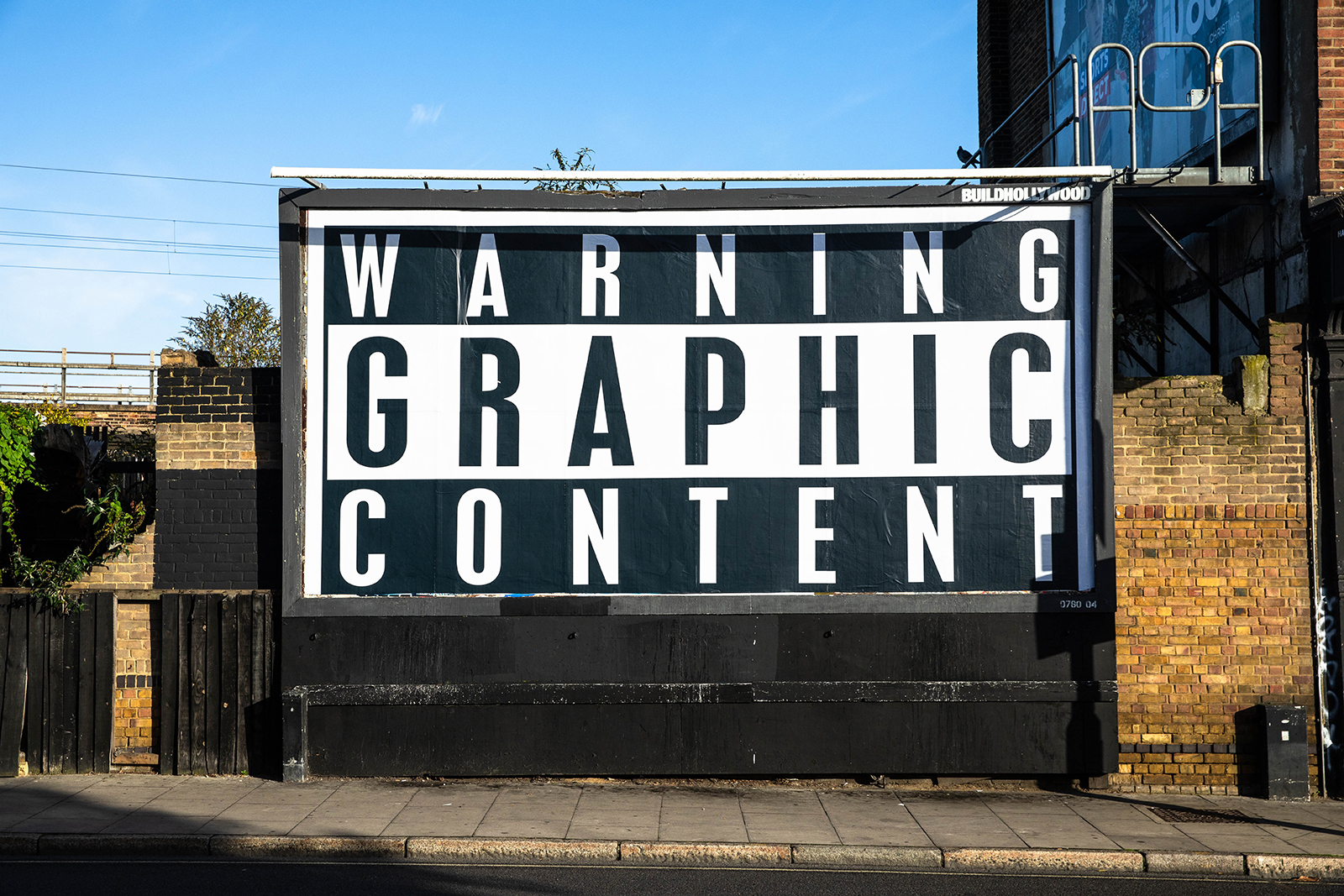
Jeremy Deller Warning Graphic Content Billboard 2021

FM I did design and graphic communication—which is sort of the same thing when you’re sixteen—so I got out of doing French because I did graphic communication instead.

AB Brilliant. And graphic communication is arguably a language beyond words?

FM I don’t think I really realised what I was doing. I just didn’t want to do French. Any excuse!

And then it was quite straightforward. I looked in the back of the UCAS 1991 handbook and there was only… At the time I didn’t really realise the difference between polytechnics and universities. I went to a normal comprehensive, and it was always the case that polys were badly thought of. You know, if you went to a poly, you were a bit of a failure. Which obviously isn’t the case at all. So anyway, I looked in the UCAS handbook and there was only one course at Reading that did typography. That was the only graphic design course at university. So I just went there.

AB And what did that open up for you, that university experience?

FM I remember thinking how it was such a contrast to being at school and having to do subjects you don’t really want to do. Then when I went to uni, it was amazing because there was this whole academic world, but it was all about design. It just sort of blew me away. I was really into it. Mega into it.

AB So, ‘shining lights’ for you at that time? Who would you say…?

FM Well, I was very fortunate to be on the same course, in the same year group as two other brilliant designers, Stuart Bailey and John Morgan—the latter sadly passed away last year—so I learnt a lot from my fellow students, my peers.

And another strong influence was that it felt like the end of doing things manually. It was the crossover time. In the first year we didn’t do anything on computers. In the second year we still had things in the department like a PMT camera, a bromide machine, and analogue photographic equipment for enlarging and reducing. And we still had a litho printer in the department. So we’d make plates—imagine how exciting that was.

AB I remember!

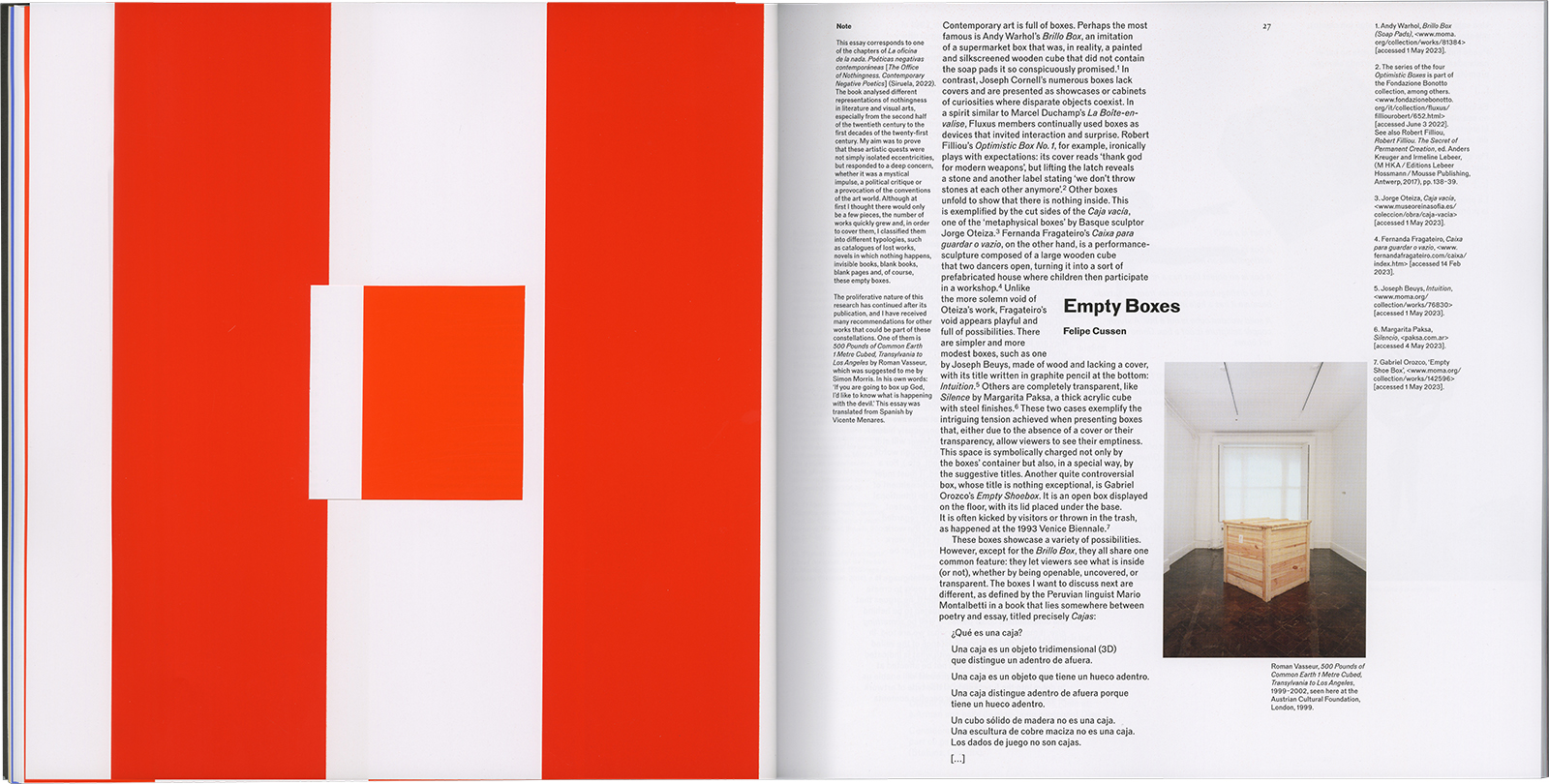
Inscription: The Journal of Material Text - Theory, Practice, History Issue 5 Information as Material in partnership with Leeds Beckett University 2025
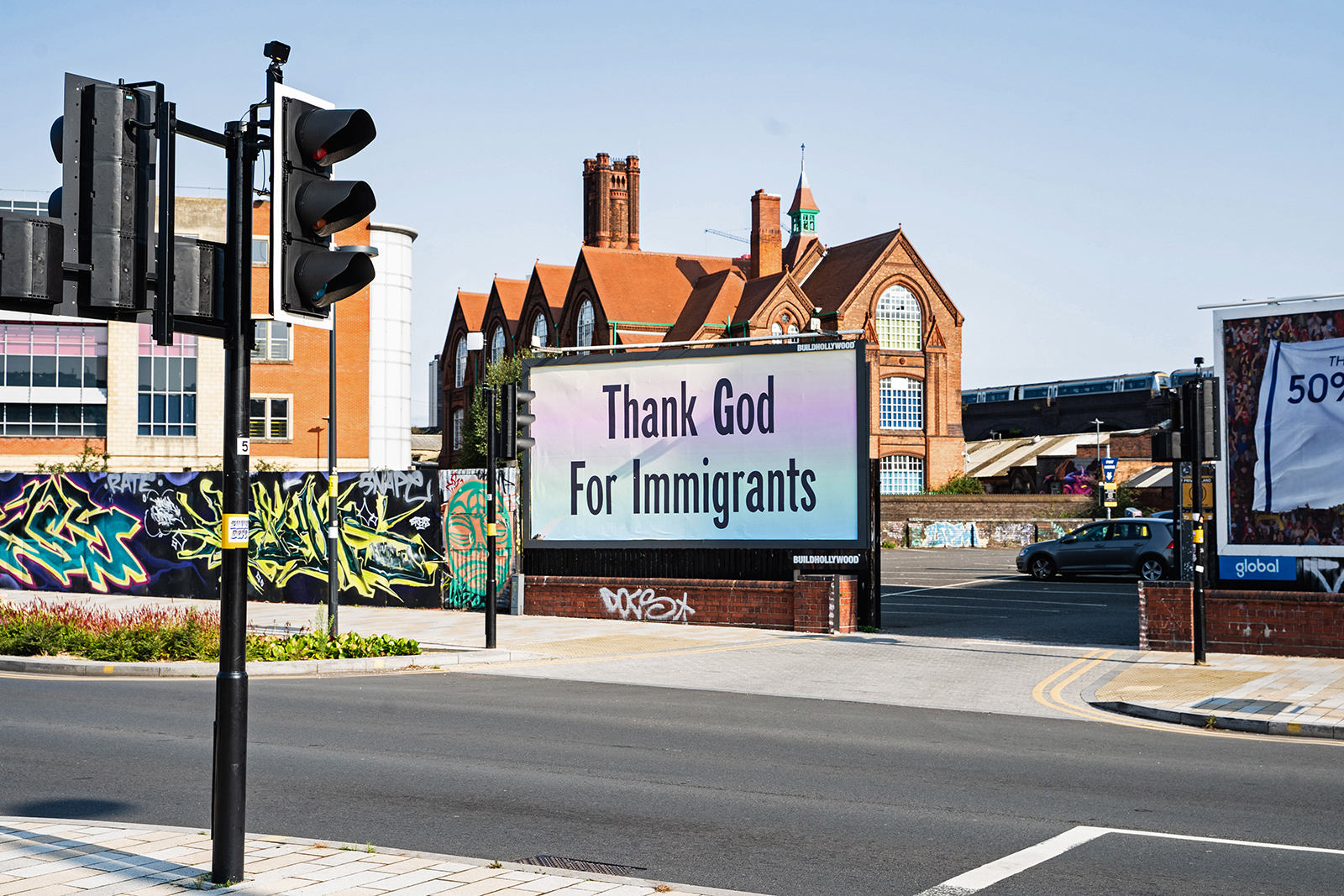
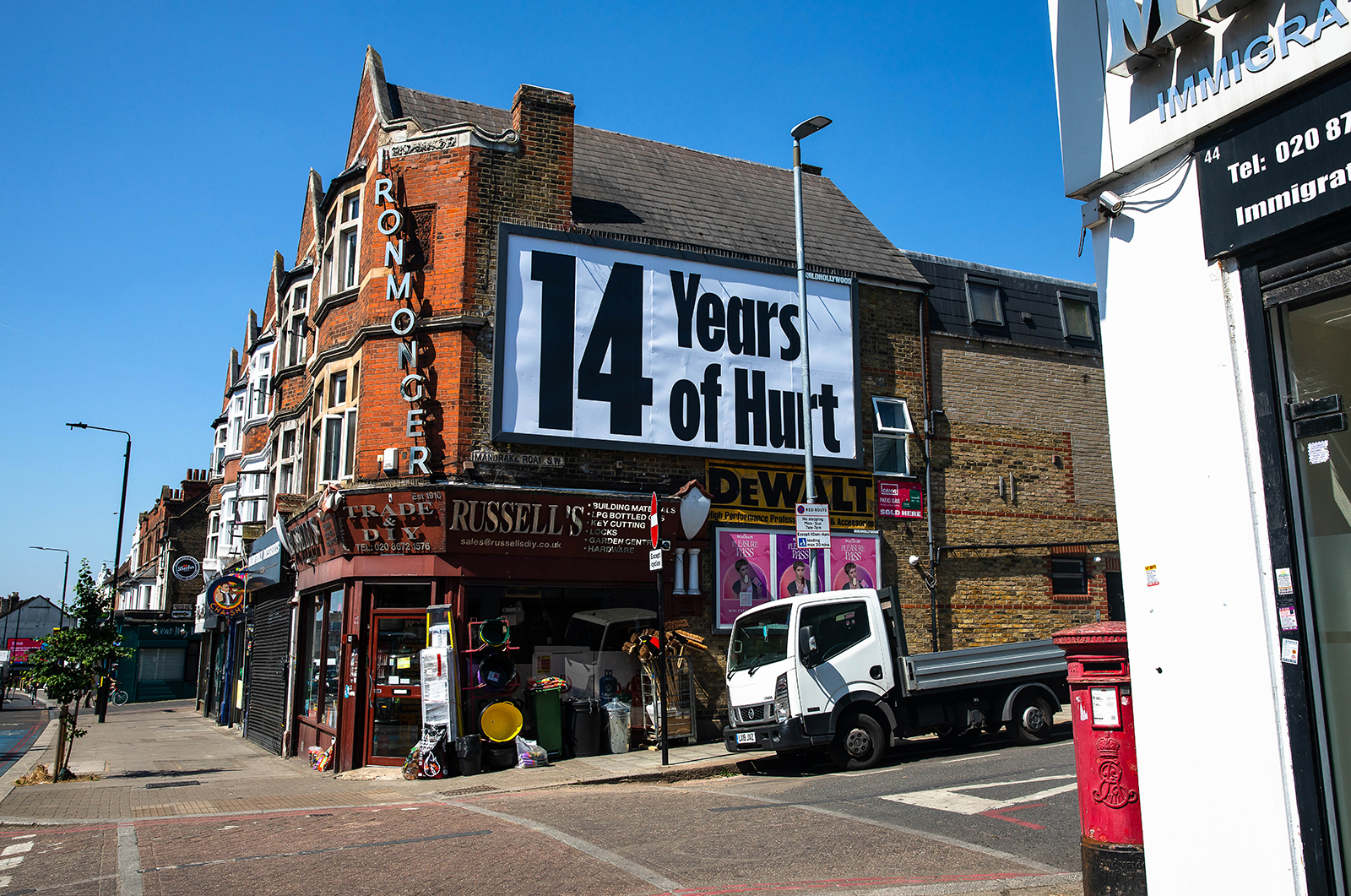
Jeremy Deller & Fraser Muggeridge Thank God For Immigrants Billboard 2024
FM We had a CRTronic typesetter, which was this huge machine, as big as this table. Digital typesetting, but really early…

AB I think we were lucky, though, to span that divide. It’s a cliché to say it, but it really was a Gutenberg moment, wasn’t it?

FM Yeah. And there were only five computers in the department. So you had to book them. Get in early, at eight o’clock in the morning, and book a computer for an hour and a half. And then your tutor—who also didn’t have a computer—would kick you off because they had to write a paper or something. It’s kind of mad that the whole department shared five computers, but what it meant was that you had to go there.

AB And be prepared, know what you’re doing a little bit?

FM And learn from everyone, really learning from everyone. Maybe it’s slightly different now. Obviously there was no internet. You were just there, like a sponge. It was great. And it was a four-year course, so a long time. I’m still very much linked to Reading. I do a bit of teaching there, and we do work for them…

AB A stimulating time.

FM Exactly. I’m actually going there on Tuesday, to a conference, delivering a paper about typesetting.

AB Brilliant. And then, postgrad?

FM Postgrad—I kind of had time away. I spent a lot of time in India, just hanging around. And then I found it very hard to get a job. It took me about a year. Again, that’s very clichéd, isn’t it? You come out of art school thinking everyone is going to appreciate your typographic finesse. And they don’t.

So I found it quite hard, but I did manage to get work in London with a very small company. In fact, I was assistant to one person, Sara Chapman. It was in Clerkenwell. I obviously didn’t know the history of Clerkenwell, or its history of printing and typesetting. I worked for her for two or three years. I learnt a lot there—that was the late ’90s—and that turned into starting something of my own in the early 2000s…

AB Of your own?

FM Yeah.

AB I agree with you—sometimes you come out of art school and remunerative opportunities seem few and far between. But I also think you can come out of a certain kind of art education with a degree of, if not preparedness, then at least the nerve to set something up yourself, simply because of the lack of opportunities.

FM But also, what I learnt from Sara were things like: ‘What’s a quote?’, ‘What’s an invoice?’. And the main thing is what happens when—because basically the job of a graphic designer is to limit the things that can go wrong—so how you deal with criticism. Whereas as a student, you maybe deal with it in a different way. Your tutor might say, “That’s not so good,” etcetera.

But when a client’s paying you, you’ve got to learn how to deal with what happens if they don’t like it. What do they mean when they say they don’t like it? For most people coming out of uni and doing their own thing, that’s quite difficult. There are people who do it successfully, but I think it’s pretty hard. Most people work somewhere for a bit. And talking to people, talking about your work, the promotional side, how you get work and all that—it’s a bit of a dark art. People call them ‘soft skills’, don’t they? You’ve got the ‘hard skills’ of production, then the ‘soft skills’ of how you…

AB Well, how do you create trust with people you don’t necessarily know personally? But you do need trust to communicate effectively, to be on the same page, as it were.

FM Exactly.

[FM goes on to describe and show a current graphic experiment in which ink is applied to paper sheets in such a way that colours stray randomly across the page due to the process. Five hundred separate sheets have been compiled into a short video that, at times, appears as a single strand drifting through the centre of the screen, and at others resembles the colour blocks of a restless Rothko painting.]

…I’ve always been really interested in print processes.

AB That leads me onto another area I wanted to talk about: the ethos behind your approach to design. There seems to be a fascination with process?

FM Yeah.

AB And how process can be made part of, or inform, the creation of visual images?

FM I suppose I’m just curious about—rather than merely relying on aesthetics—I’m interested in interrupting the design process. People tend to think of process as one, two, three, four, five… And I think, well, why not stop at two? Before it’s ‘finished’. Or why not do three differently?

AB Because that ensures a kind of economy?

FM I’m usually doing the complete opposite of that. Not economy—just inefficiency.

AB A productive inefficiency.

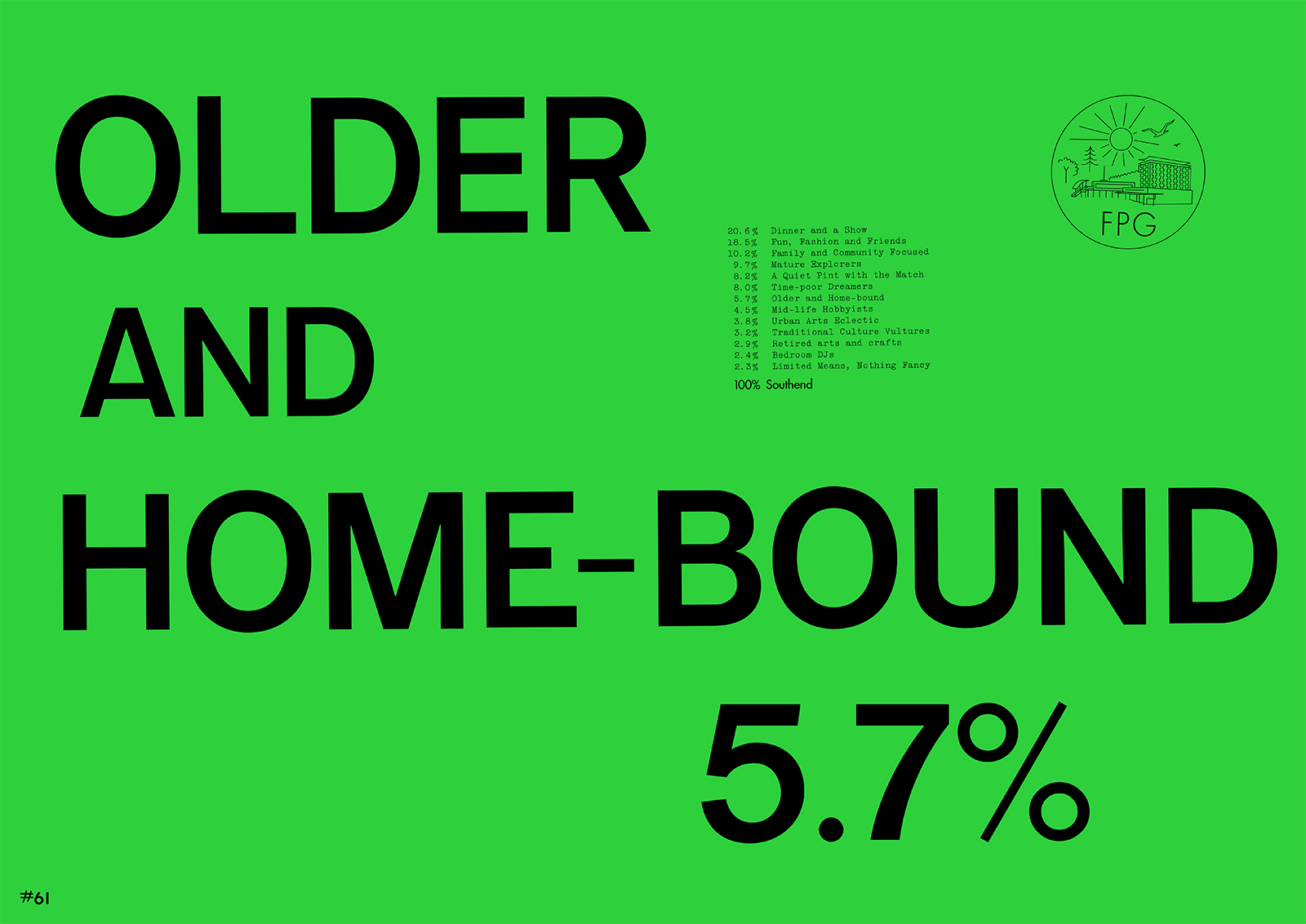
FM Yeah. So I might try and make a billboard—you know, a standard roadside billboard is made up of forty-eight sheets, and the artwork is supplied to printers at ten per cent scale. But actually a billboard is twelve sheets—twelve sets of four-sheet posters. So I think, okay, why don’t we do twelve posters that get assembled, but maybe turn one upside down? Or put it up so it looks like it’s ‘wrong’?

AB So once again, you’re revealing process…

FM And sometimes it drives printers mad.

AB Because there’s a ‘proper’ way to do it.

FM [Laughs] Yeah. Why interfere with convention?

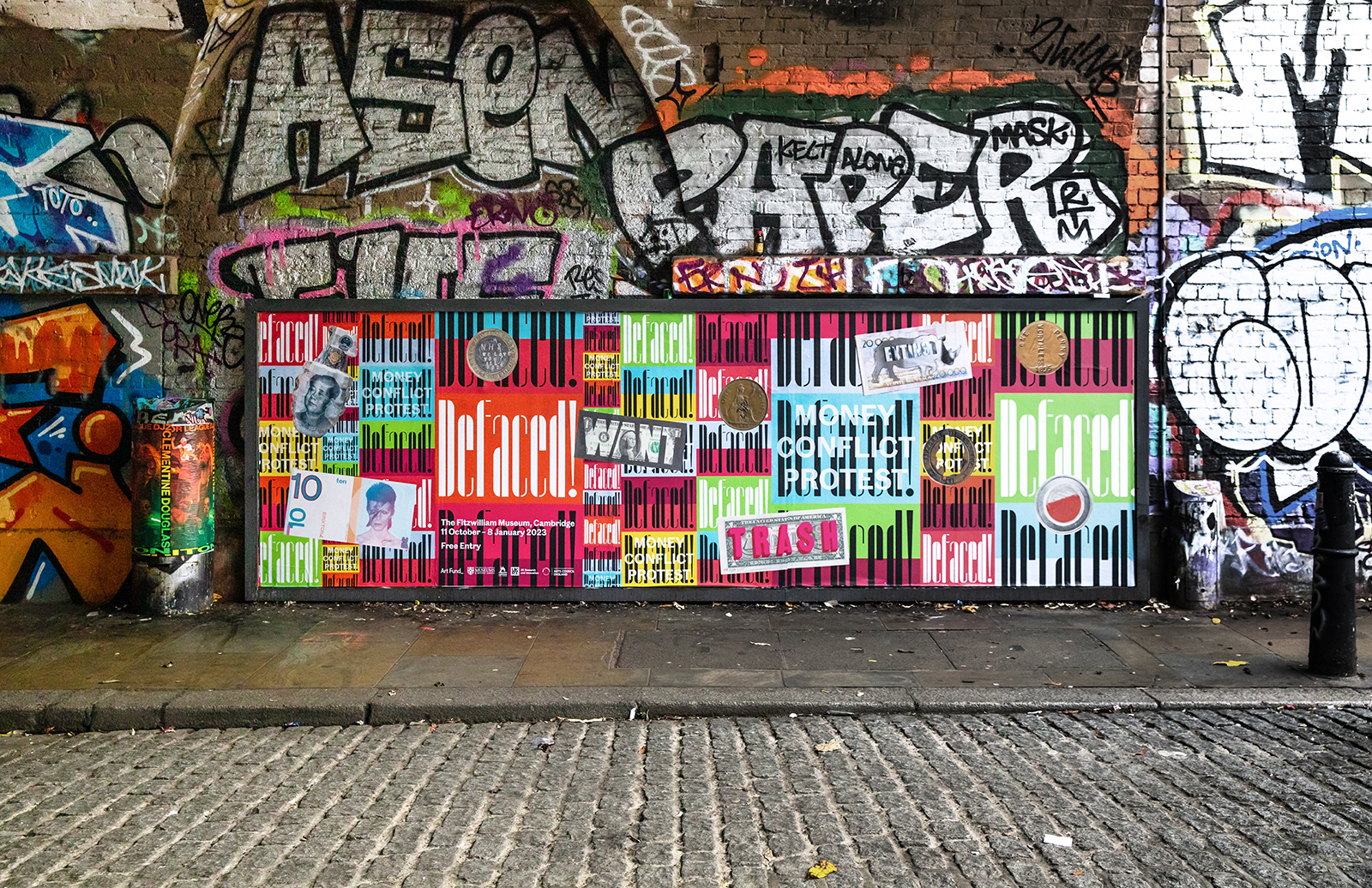
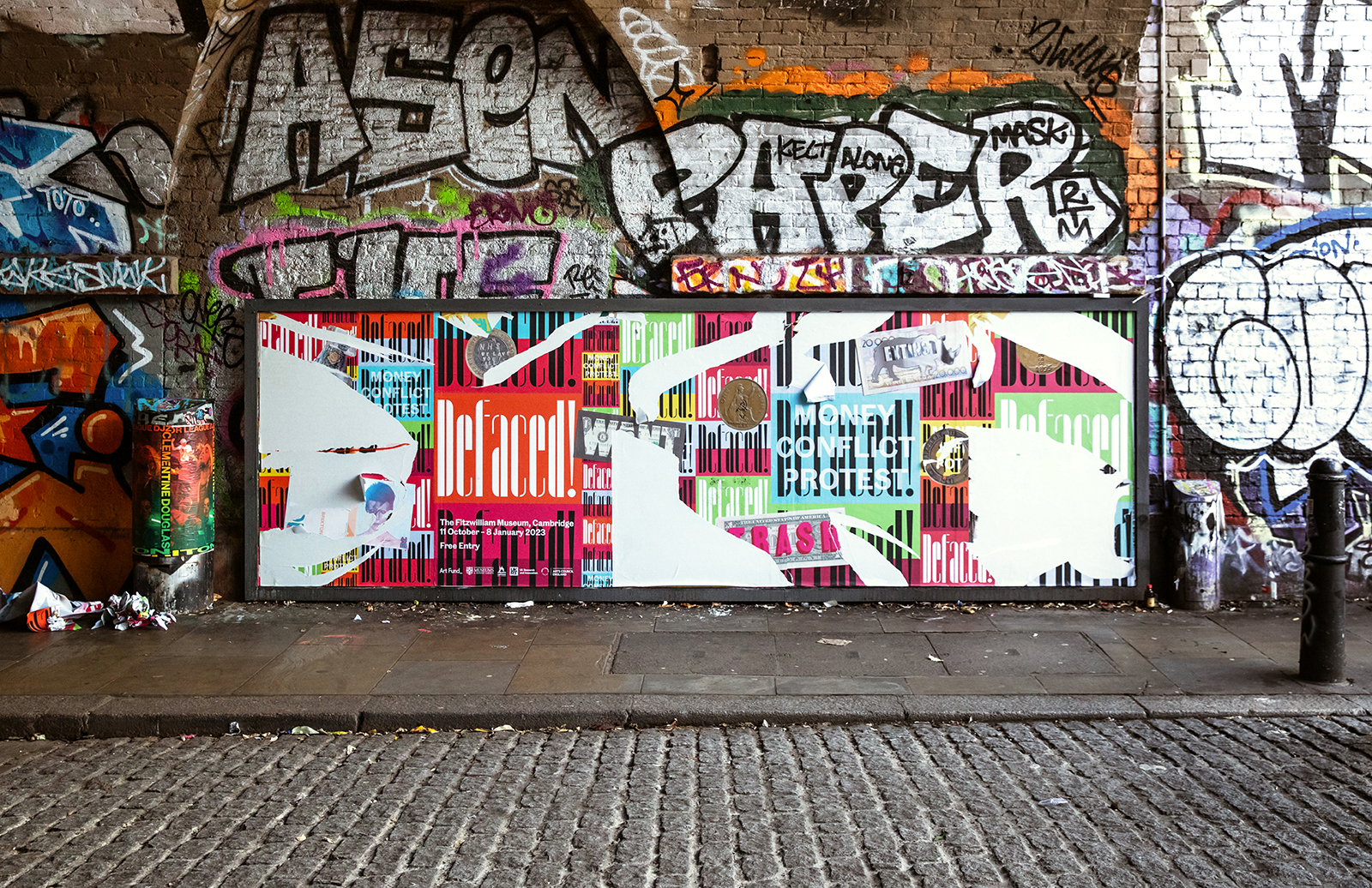
Three years ago—I think we might have built it with BUILDHOLLYWOOD actually—it was a show at the Fitzwilliam Museum in Cambridge called Defaced. And we did a billboard, a few of them, and we defaced them by tearing them, like those beautiful tears you see on billboards. Décollage—but intentional décollage, which then becomes content. The tear becomes content, becomes an idea. By interrupting conventional processes, you sort of reverse-engineer an idea.

I used to think it was quite normal to work like this. But now I realise it’s not.

AB Yes. It’s like my long-held fascination with flyposting. You assume everyone is equally interested. Not always the case.

FM Yeah, I’ve been reading a few of your THE ART OF FLYING booklets. Very interesting.

AB Well, I’m glad you think so.

FM The stories are great. Did my one ever get done?

AB Yes. Since Christmas I’ve proofed the next batch, including the one you wrote an intro for. They’re on their way to the printers.

FM Getting back to process and design, I’ve done a lot of projects where I’ve suggested a billboard as a medium. For example, we did a typeface launch project for a commercial typeface, and I suggested a billboard campaign. The director said, “How much is that going to cost?” But working with you guys, not all billboards are expensive—inside knowledge can lead to much more inventive approaches.

Which brings us to the Daniel Buren billboard. The Lisson Gallery, who are hosting the Buren exhibition in London, might not know how to produce a billboard project themselves. They might make it unnecessarily complicated or go somewhere expensive. Whereas working with BUILDHOLLYWOOD, being a more flexible company, allowed an art project to happen that others probably wouldn’t touch. It’s all about knowledge, isn’t it?

And I like the ‘story’—the story of suggesting these things, the story of working with people to make something happen. When we suggested the Daniel Buren billboard, Daniel—who is still alive, quite elderly now, but still active—got back to us saying he might still have one of the original billboards in storage, from 1972 or ’73. So engaging with process, working with people, and the history—all of that becomes part of the story of this new Buren project.

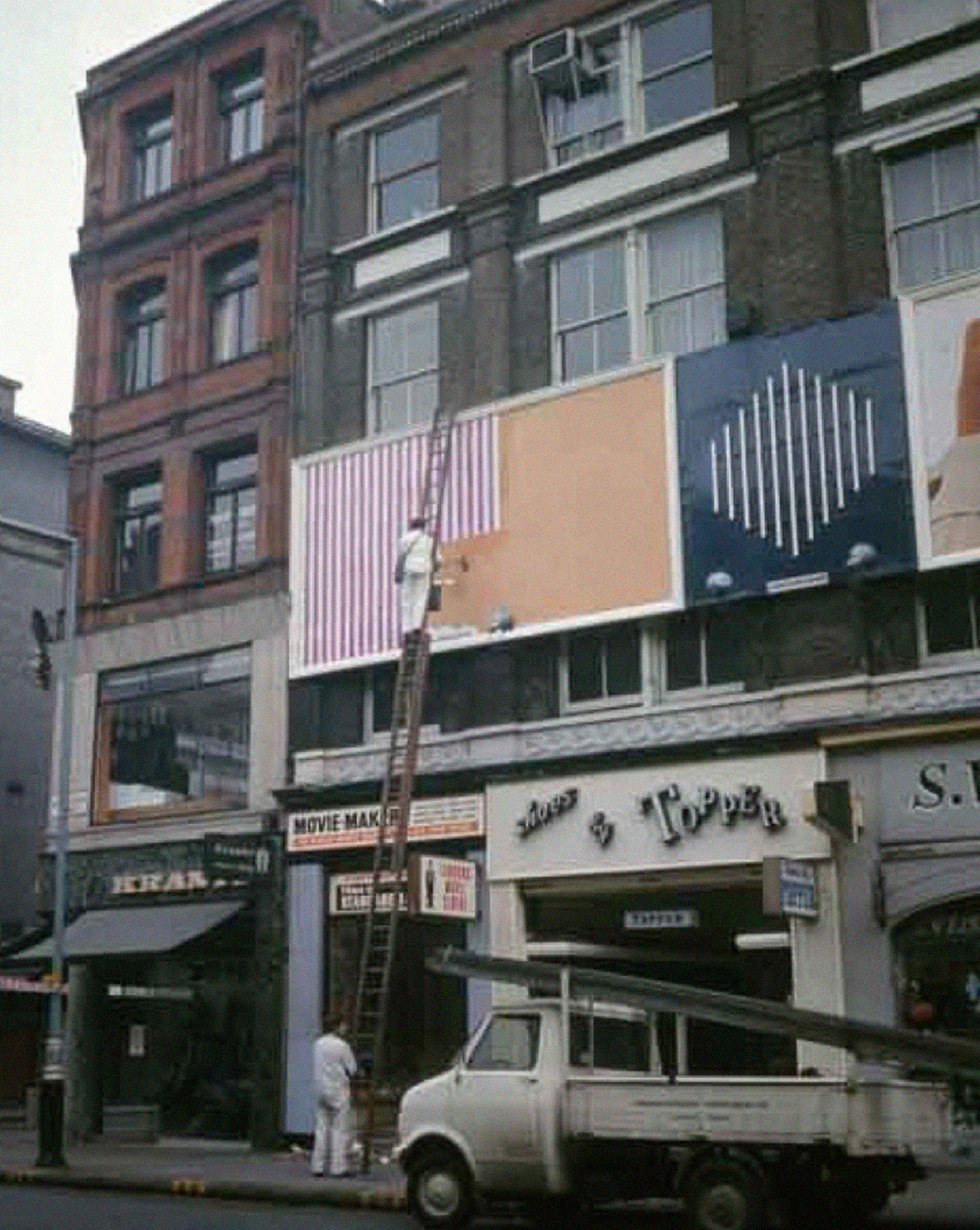
Originally, Buren did a show in around 1972 on Shaftesbury Avenue, at a gallery called John Weber. The gallery was either closed or being refurbished, so he installed a billboard on the front of the building, which I believe he put up himself. The invitation said the show ran for a week, was open twenty-four hours a day, and the dimensions were six metres by three metres. And it was just white and purple stripes.

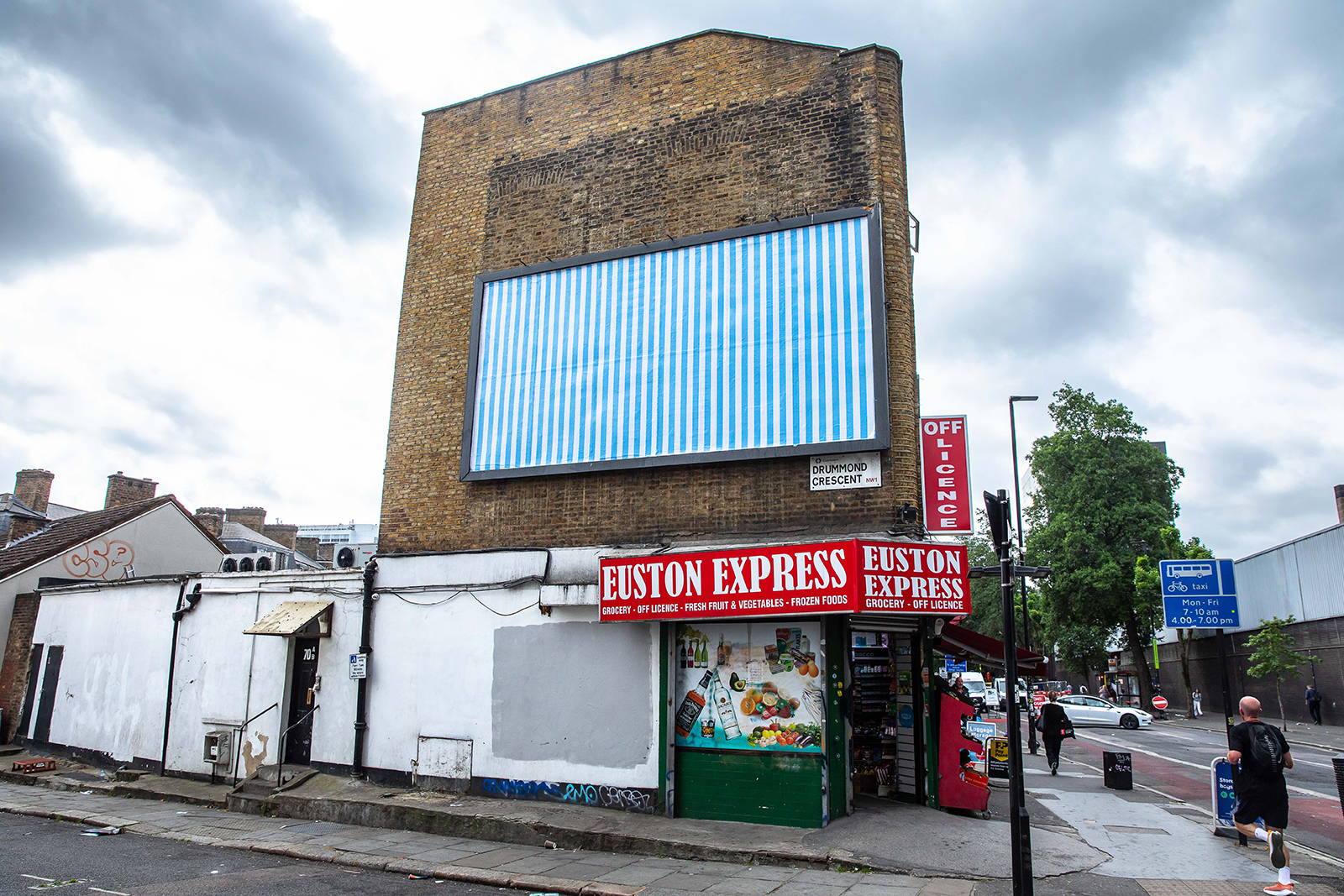
Of course, Buren did a lot of flyposting, especially in the 1960s, often installing works himself. He was even arrested and kicked out of Switzerland for it. I always thought it would be great to do a new version of his London billboard. And nowadays there are no billboards left on Shaftesbury Avenue. Where do you even find a billboard in the centre of town now? The sites are all taken over by real estate. So the one we have on Eversholt Street, Euston, is near the gallery and about as close as you can get to the original location.

What’s interesting is that the billboard functions as an announcement and as part of the exhibition, but it doesn’t actually say anything. I’m curious about what people think when they see it. If you know it’s a Buren stripe, you know exactly what it is. But if you don’t, it’s just a stripe.

AB Or I was thinking it looks like one of those paper bags you used to get sweets in.

FM Yeah, it looks like a big paper bag.

But really, do you know the story of the stripes? They’re always 8.7 centimetres wide. The show I’m working on at the Lisson Gallery features works where he intervenes in publications. So, for example, there’s a 1970s catalogue featuring Mario Merz, Gilbert & George, and others. Then there’s this great sequence of pages: Marcel Broodthaers; then Stanley Brouwn. Do you know Stanley Brouwn? He was an amazing artist who never allowed photographs of his work or himself. So his page is blank. Then Daniel Buren’s page carries his standard stripes, but he’s uncredited. And then it goes to Victor Burgin.

AB Quite a line-up.

FM So the show is about Buren’s work appearing in other publications. That relates to the billboard, because the stripe is the same size. The 8.7-centimetre width originally comes from a striped café awning commonly found in Paris.

AB And by applying the same image to different surfaces and objects, there’s a kind of research element to Buren’s practice. He’s testing perception—how people engage with space and environment.

FM Yeah. To me, that’s what’s so interesting. Buren calls it his visual tool. Some people think, “Oh, it’s just a stripe.” But the application is what matters: books, surfaces, 3D objects, architecture, buses… anything.

What’s remarkable is how much creative freedom comes from such a strict constraint. It’s always white plus one coloured stripe. Never two colours. Always 8.7 centimetres wide. And yet there’s so much you can do with it—how it’s applied, where it’s applied. From sandwich boards and deckchairs to the striped columns in the Palais-Royal courtyard installation, which was once controversial but is now considered iconic. It changes not just how a space looks, but how we think and feel within it.

The Pages in Situ show opens 11 June 2026 at Lisson Gallery, 27 Bell Street, London NW1 5BY.

BUILDHOLLYWOOD’s Daniel Buren billboard is at 70 Eversholt Street, Camden, London NW1 1DA.

Previous article

Marathon Season: Hit The Ground Running

Next article

Your Space Or Mine

WALK: MANCHESTER