Newsletter

Join our mailing list for latest news and features

Build Hollywood

Build Hollywood

Build Hollywood

Build Hollywood

Partnerships

Courage From the Heart, Refugee Week 2026

For Refugee Week 2026, Counterpoints Arts/Refugee Week invited artists with migrant and refugee backgrounds from communities across the UK to respond to a single theme: courage. The result is a series of billboards displayed simultaneously across six cities.

The theme of Refugee Week 2026 draws on the Latin cor, meaning “heart.” For people forced to flee their homes, courage is not a singular act but a daily practice—navigating unfamiliar systems, learning new languages, and stepping into an uncertain world, day after day.

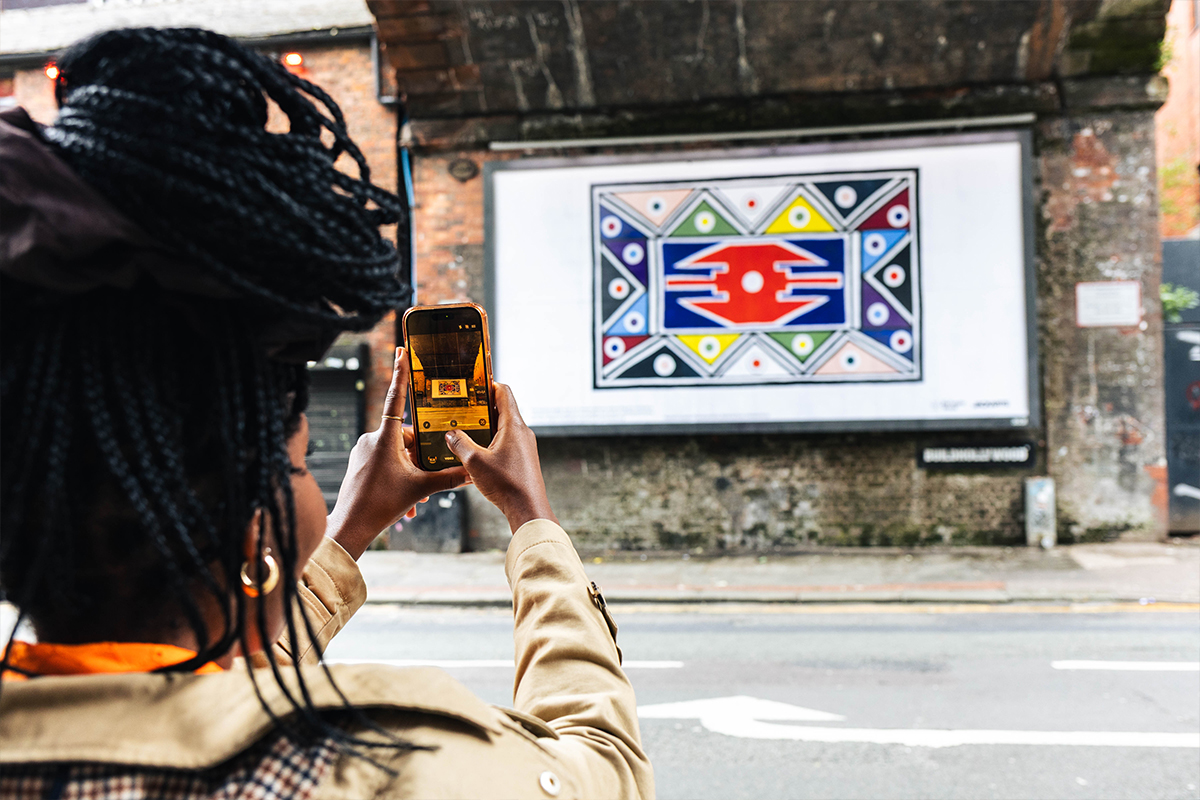
In partnership with JACK ARTS, each artist was given a home-city billboard as their canvas in Sheffield, Birmingham, London, Cardiff, Manchester, and Bristol. The works they present are shaped by personal history, memory, and the particular courage required to build a life somewhere new.

Read on to meet the artists and discover the stories behind their work.

17.06.26

Words by BUILDHOLLYWOOD

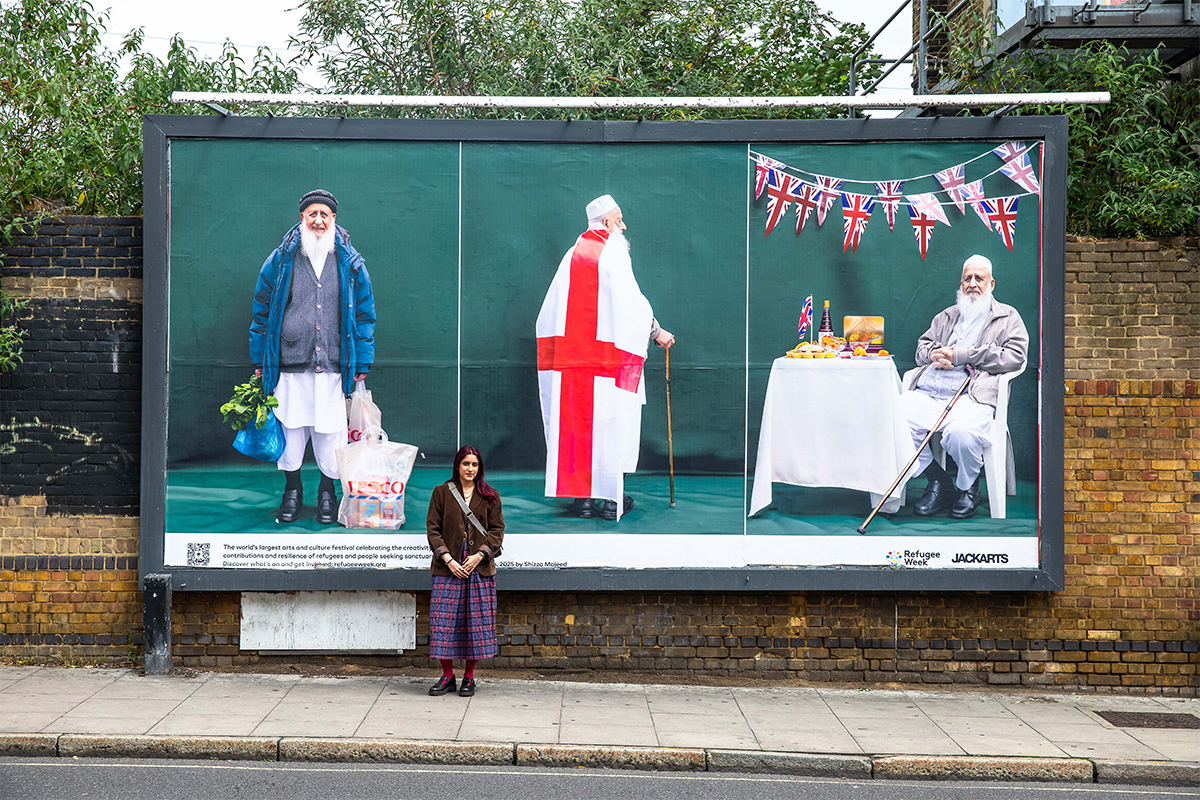
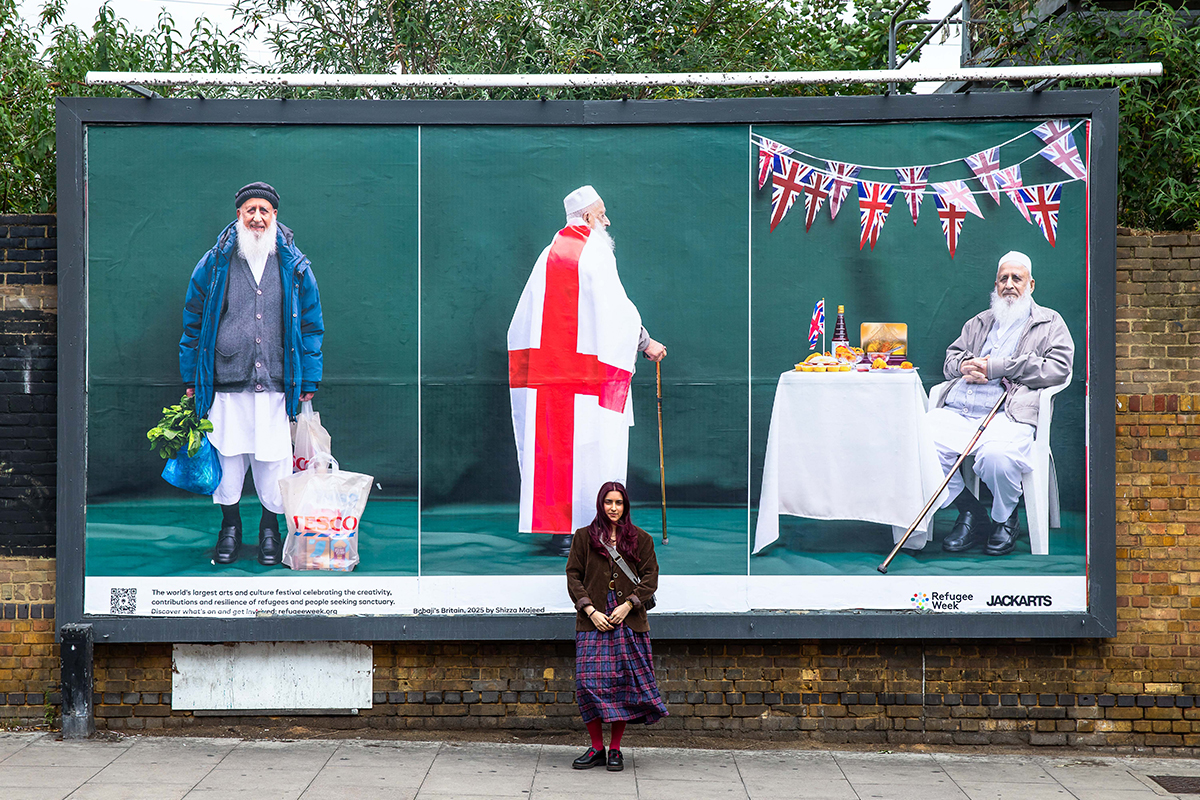
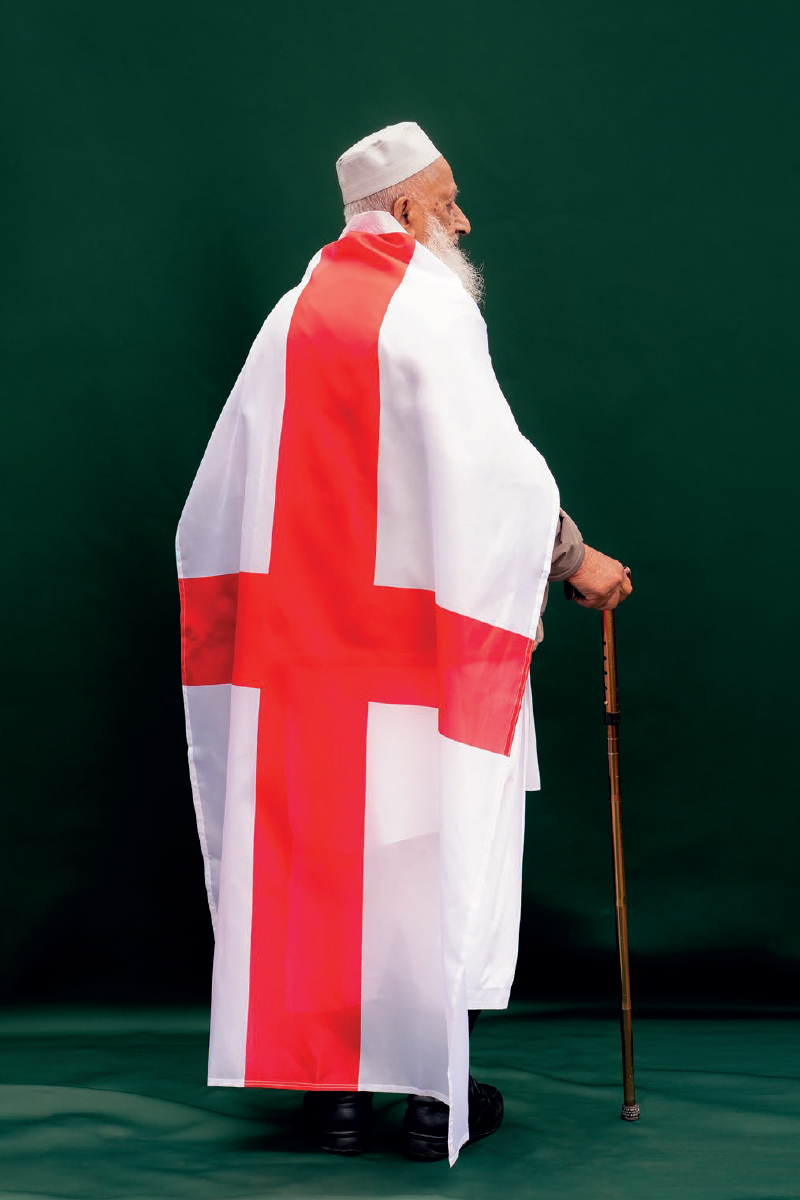
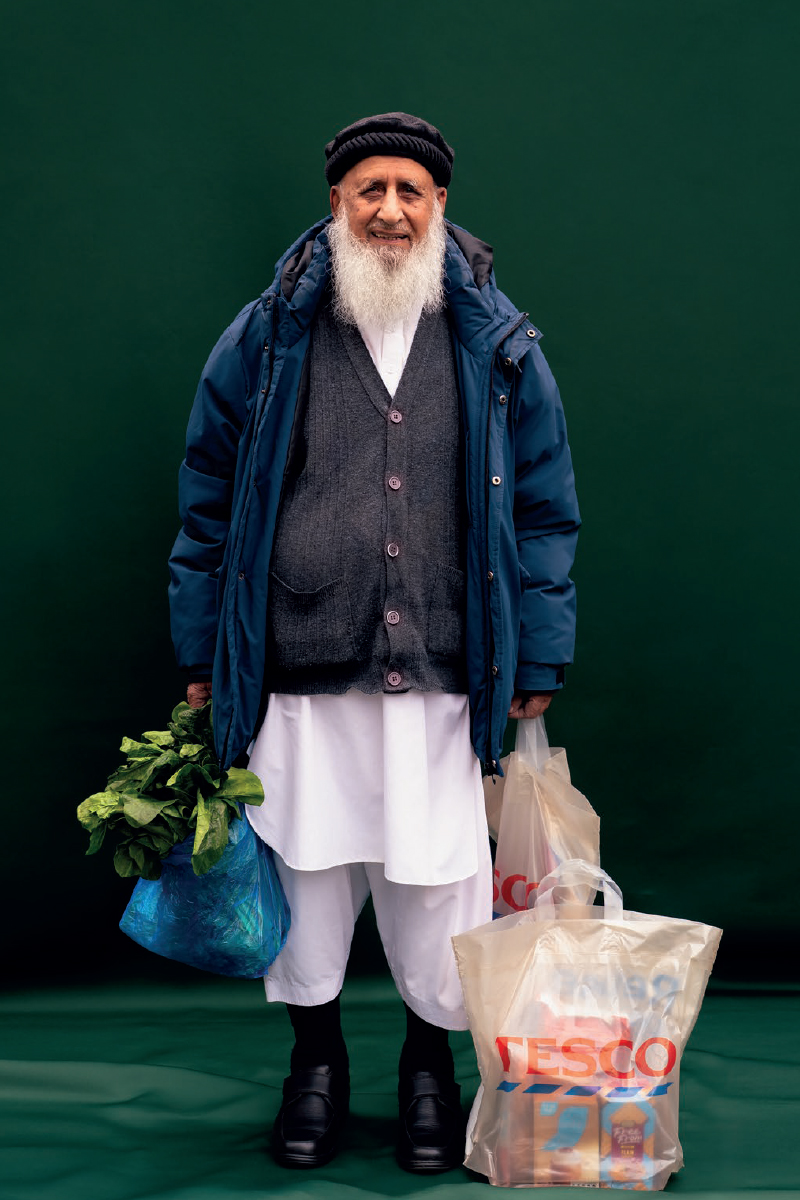
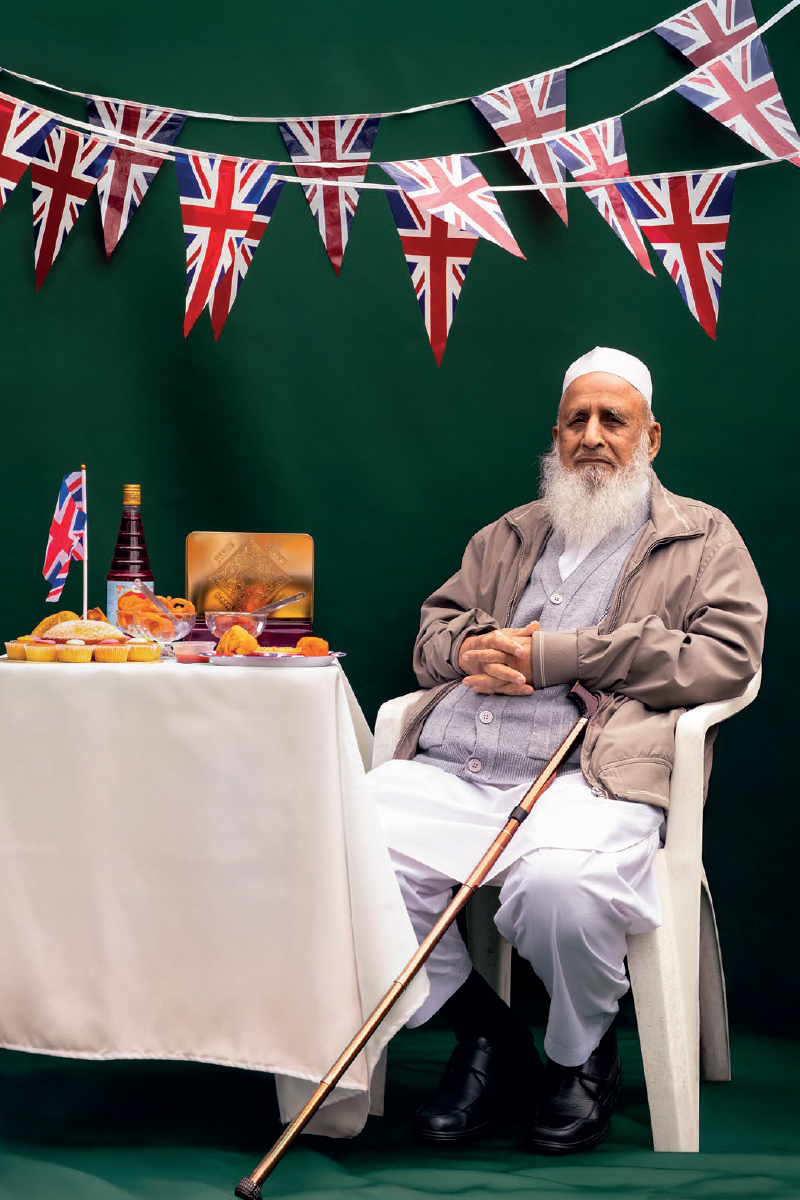
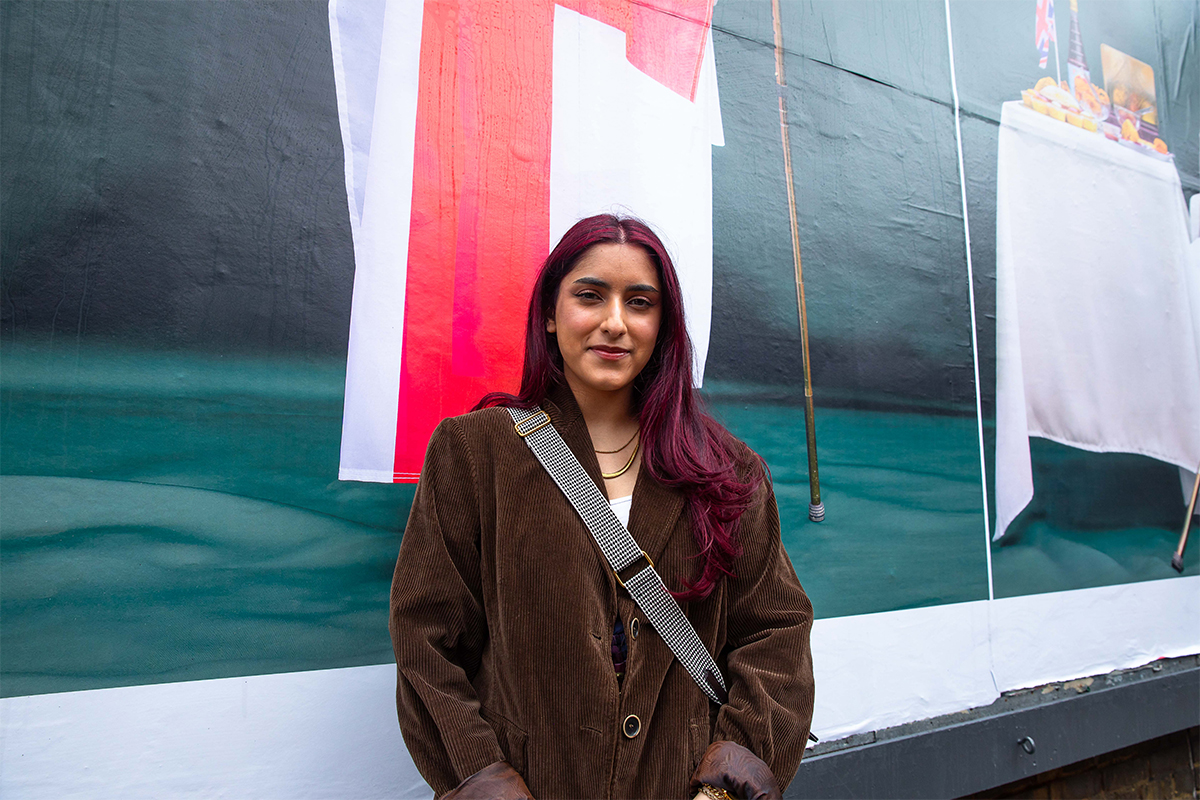
Shizza Majeed, Babaji’s Britain, 2025

Shizza Majeed is a British Pakistani photographer based in London. In 2025, she graduated from Kingston University with a first-class honours degree in photography. Her practice is currently rooted in themes of culture and identity, moving across editorial, documentary and portraiture photography.

‘Babaji’s Britain’ centres on Majeed’s grandfather, a Pakistani man who migrated to Britain in the early 1960s. Now in his late 80’s, he carries an identity shaped by both Pakistani and British cultures. Through a series of portraits created in collaboration with him, Shizza explore how life in Britain has influenced his sense of self and what that identity looks like today. From stereotypes to lived experiences, this work playfully visualises how he has held onto cultural roots while embracing aspects of British life.

When her grandfather first arrived in Britain, his plan was to work, save, and eventually return home. Over 60 years later, his life and the place he calls home are firmly rooted in East London. He has navigated decades of change, from learning a new language, adjusting his appearance, and adapting to a new culture, yet he has never let go of where he came from. However, his experience is not unique, but part of a wider story shared by many who, like Shizza’s grandfather, have helped shape the multicultural fabric of modern Britain.

In a climate where the meaning of ‘Britishness’ is constantly questioned, these portraits reclaim space. They affirm Majeed’s grandfarther’s belonging and honour the richness of his hybrid identity. Mageed states, “ultimately, this project is about more than one man. It’s about the resilience of migrants who carry their histories with them, who adapt without forgetting, and who quietly shape the story of a nation by simply being here.”

London, United Kingdom

@shizzamajeed

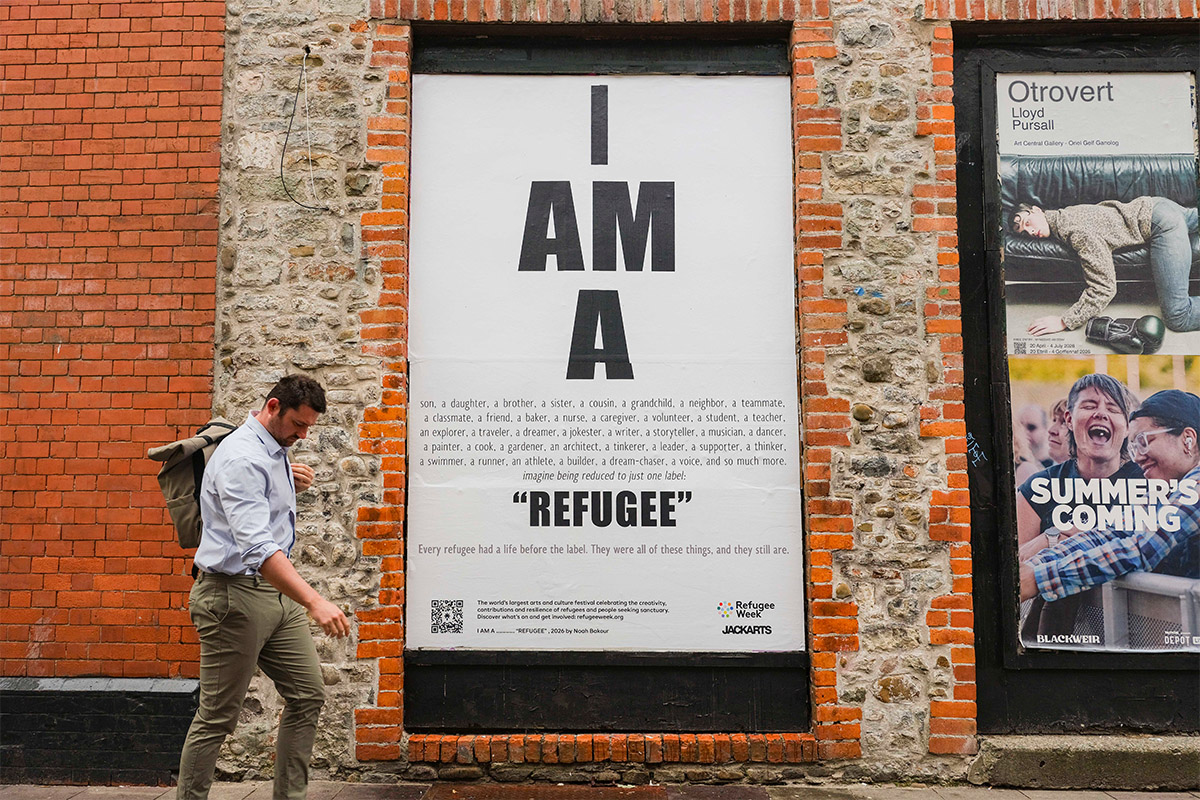
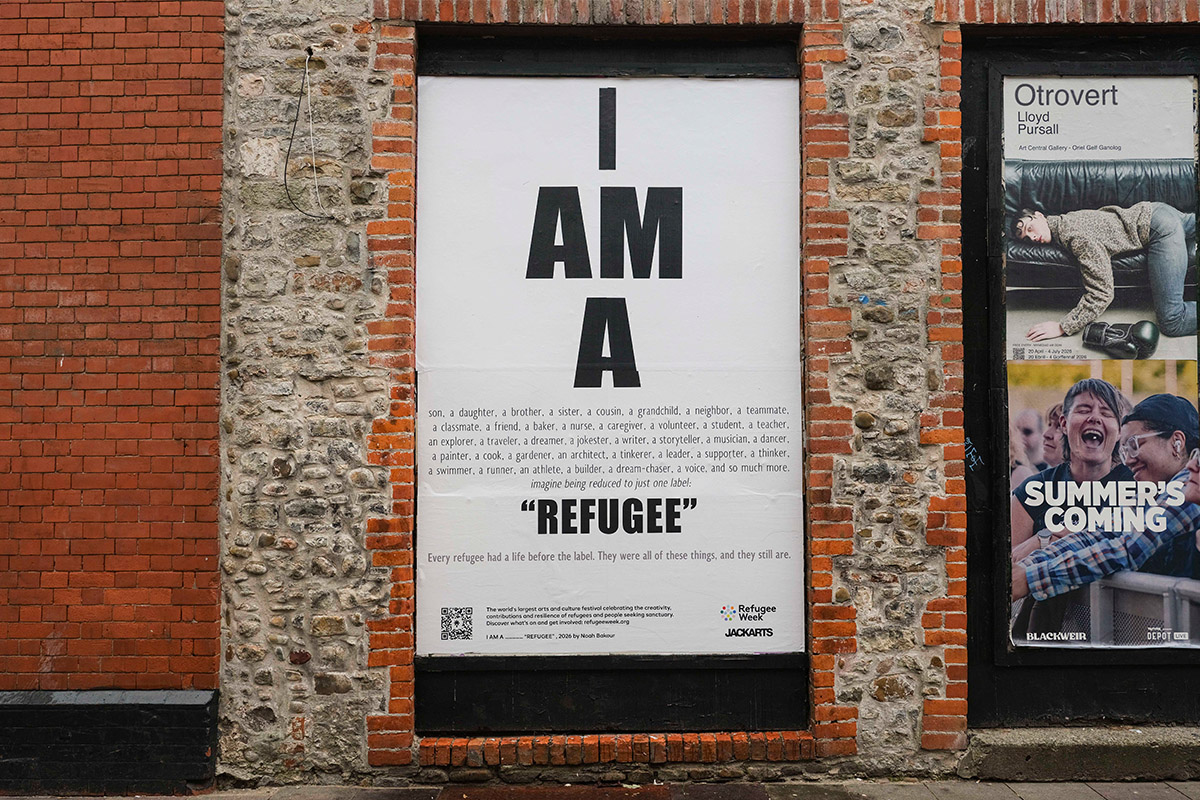
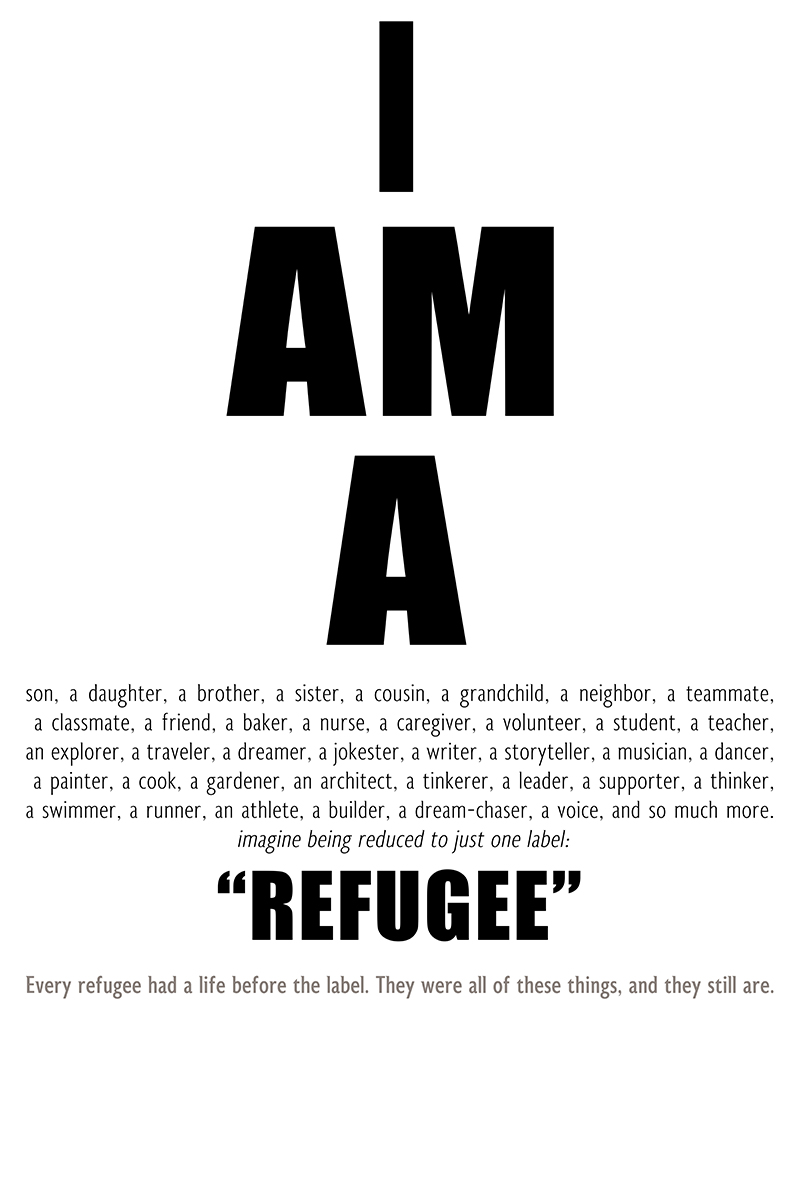
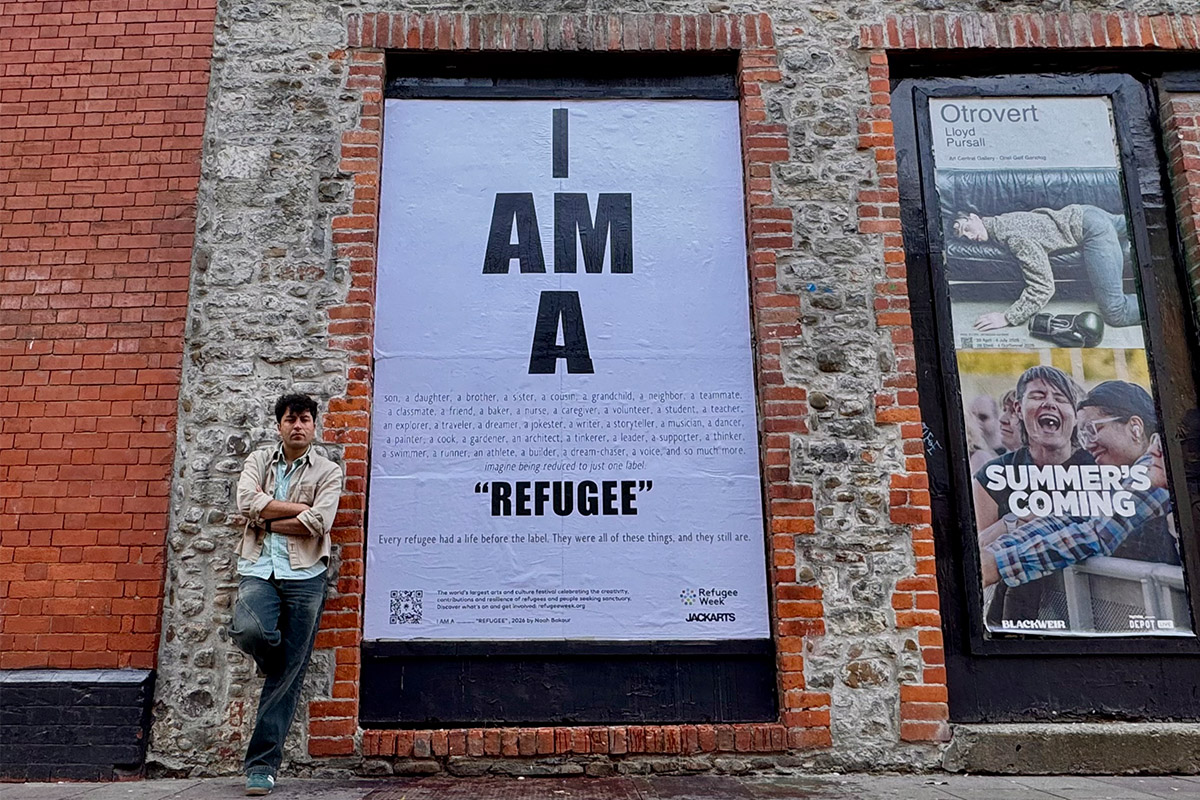
Noah Bakour, I AM A …………. “REFUGEE” , 2026

Noah Bakour is a Syrian filmmaker and visual artist based in Cardiff, Wales. Through film and visual storytelling, he explores themes of migration, identity, belonging, and human connection. His work is deeply shaped by his lived experience as a refugee. With an interest in creating stories that focus on dignity, memory, and the emotional realities behind public narratives surrounding migration.

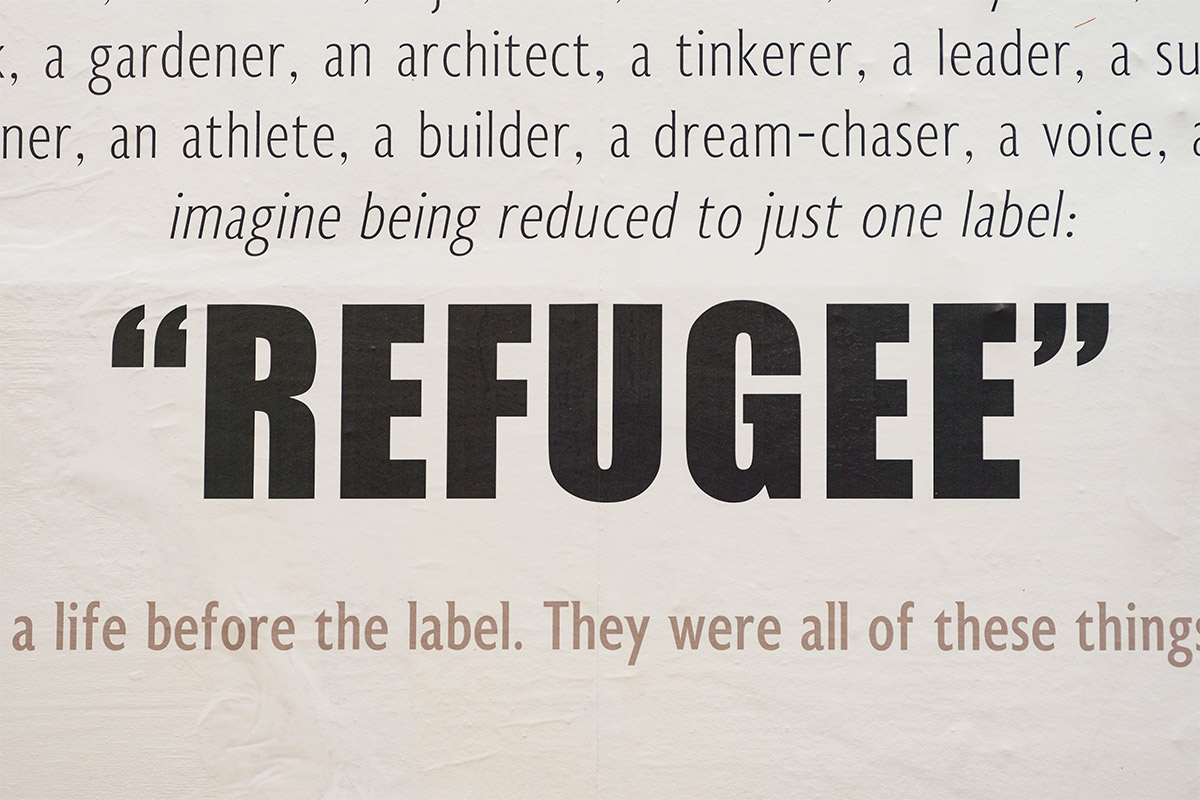
I AM A is a typographic artwork about identity, humanity, and the way people are often reduced to a single label.

The piece lists simple and familiar parts of a person’s life: a son, a daughter, a student, a friend, a neighbour, a dreamer, before ending with the word “REFUGEE.”

It was inspired by Bakour’s own lived experience and the feeling that, once someone is called a refugee, many people stop seeing the rest of who they are. Behind that one word are real lives, memories, families, talents, fears, hopes, and everyday moments that connect us all. Noah aimed to create something emotionally honest but visually simple. Rather than using traumatic images, he focused on words and identity, allowing the audience to sit with the message and reflect quietly.

The artwork was created digitally using typography and minimalist design, letting the text itself carry the emotional weight. Through its simplicity and scale, the work invites viewers to look beyond labels and remember the humanity that exists before and beyond the word “refugee.”

Cardiff, United Kingdom

@noah.bakour

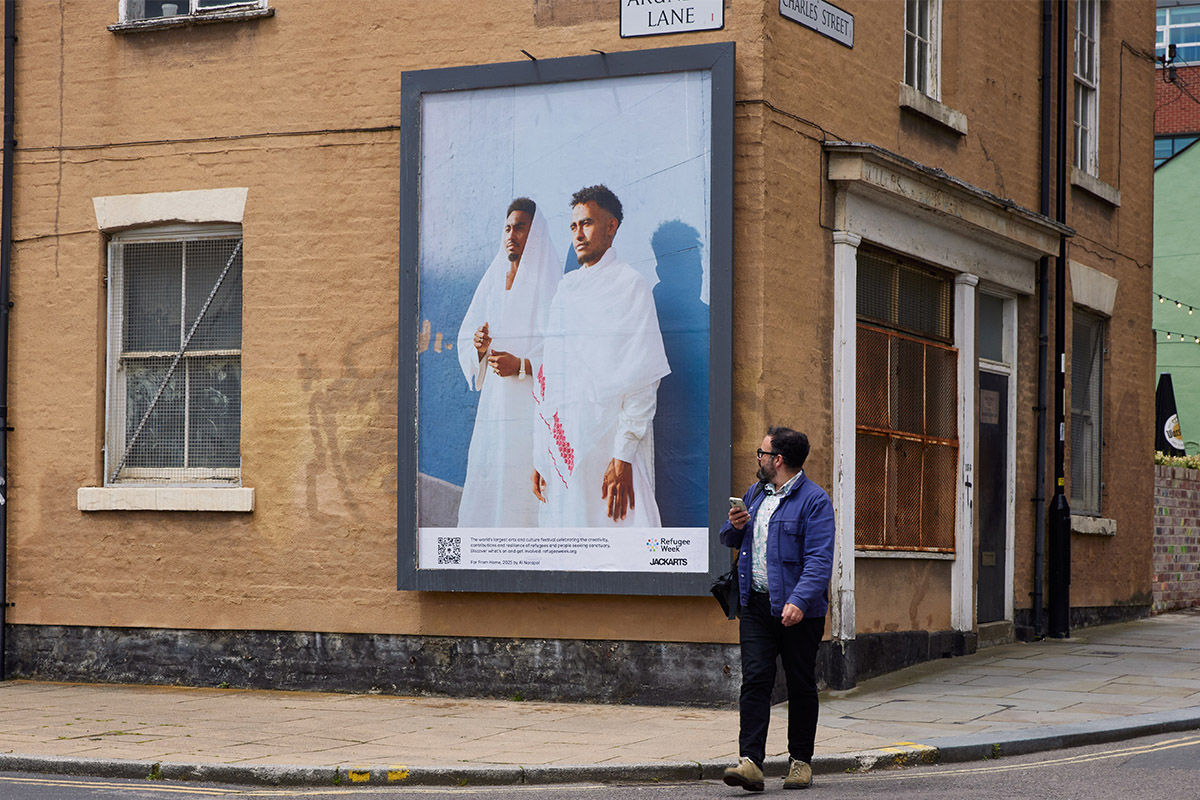
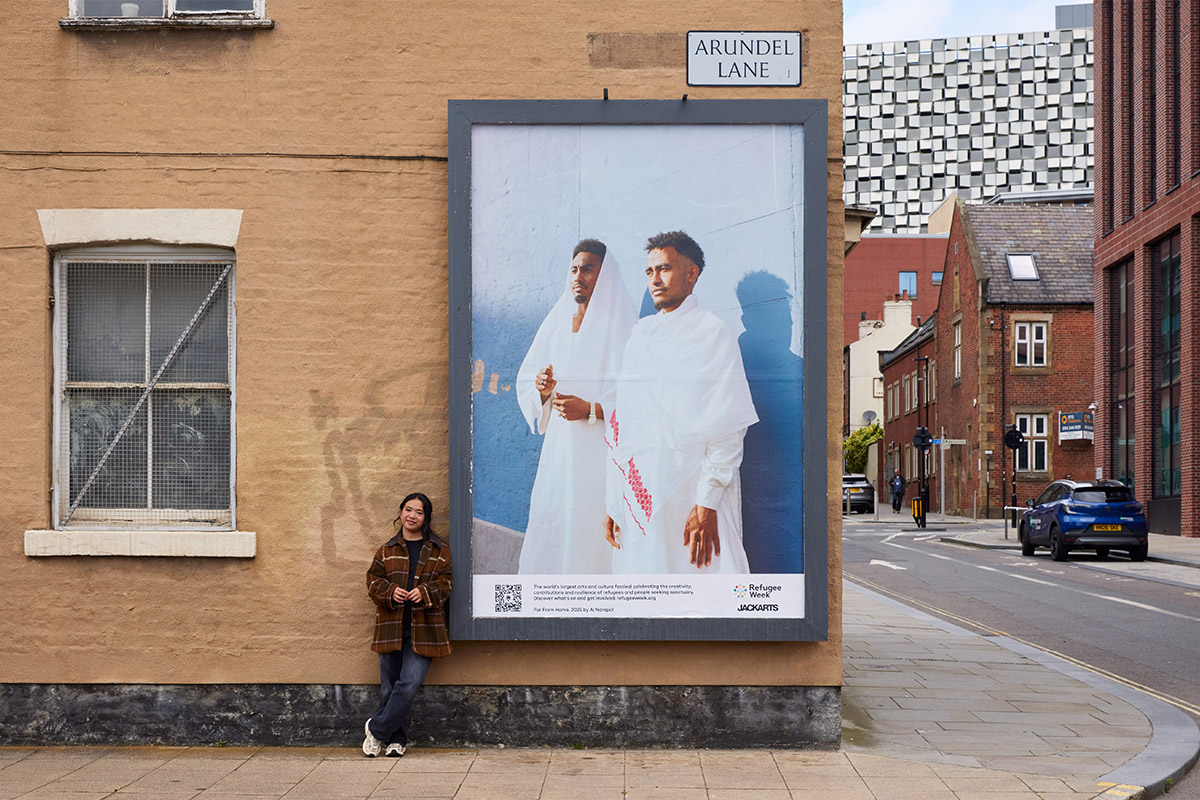
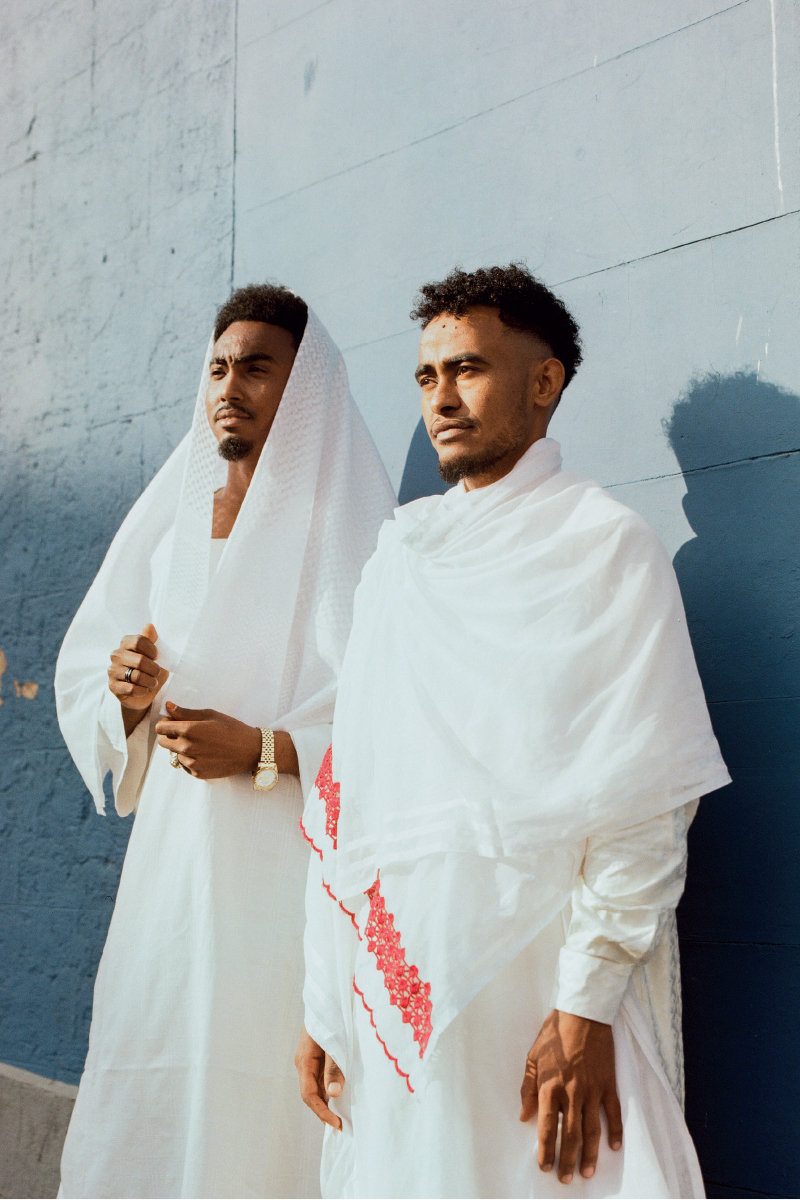
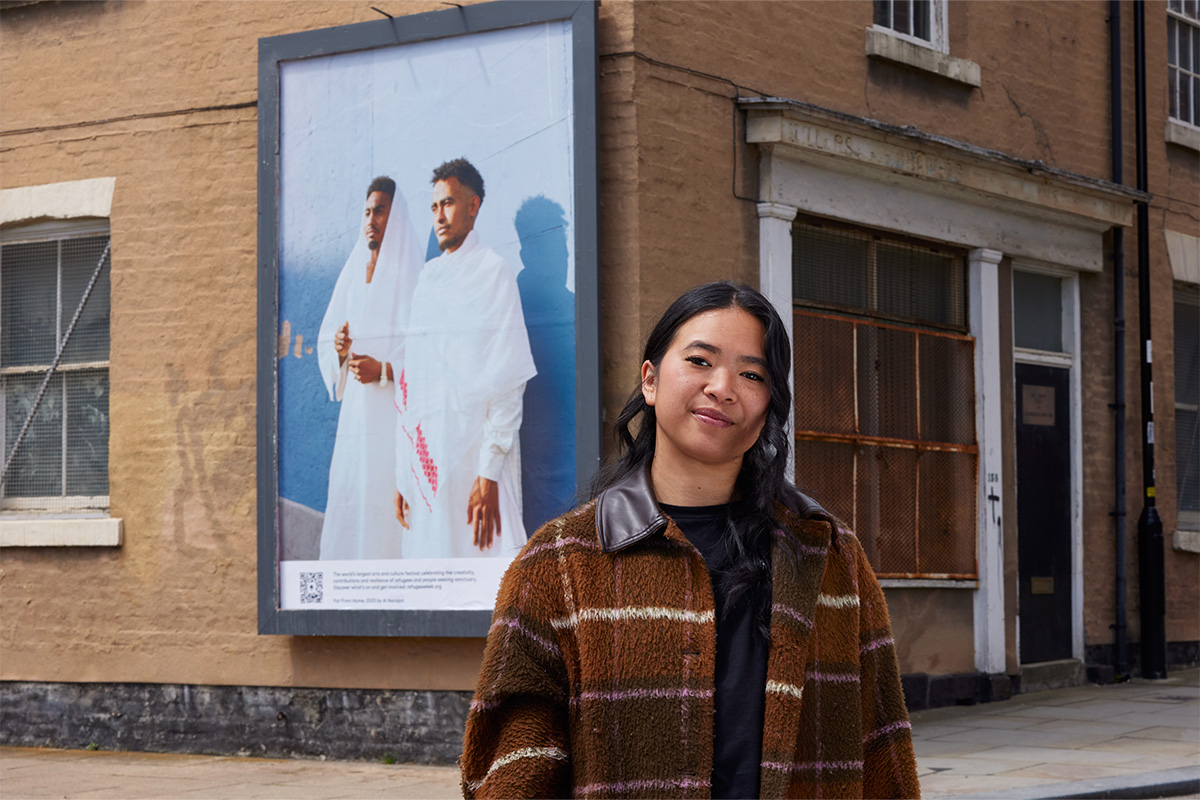
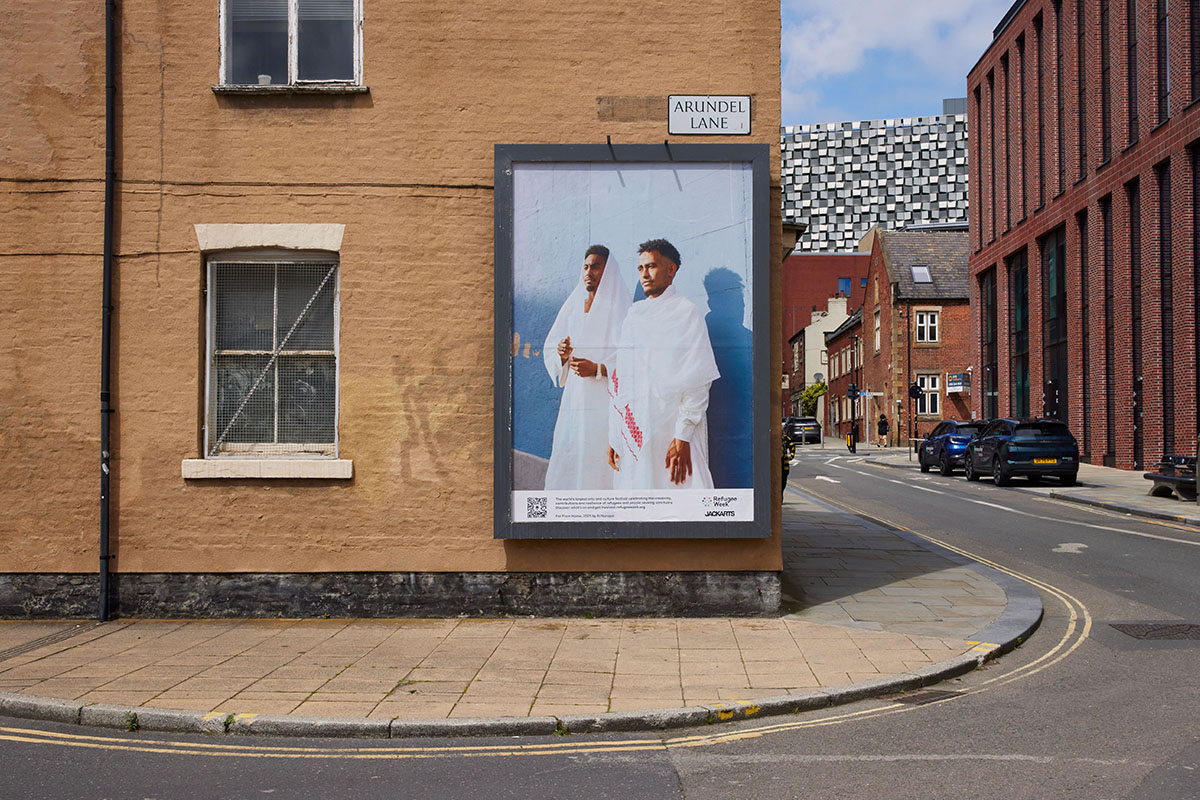
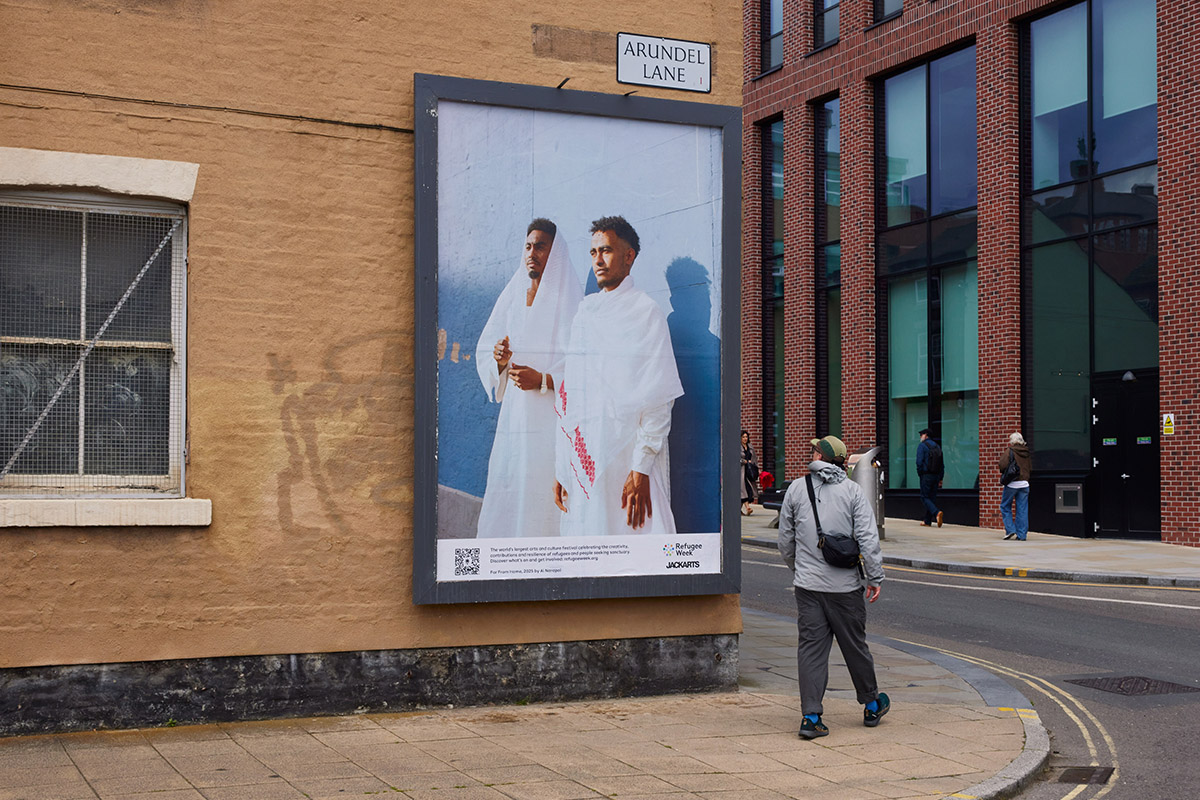
Ai Narapol, Far From Home, 2025

Ai Narapol sees their experience as a migrant growing up in the UK as having inspired their whole career as a photographer and filmmaker. Expressing that she resented her heritage as a child, but as an adult, she now desperately clings to everything about Thailand. Moving to Sheffield for university exposed her to more diversity and taught her to embrace different cultures.

Far From Home was a portrait created as part of Narpol’s Artist Residency with RESOLVE Collective x Bloc Projects in Sheffield. Her chosen theme was ‘Migration’. She photographed 6 people she knew from Palestine, Eritrea, Sudan, India, Nigeria on medium format and created a silent visual film.

During this time, Ai co-found an organisation alongside Muetesim Ahmed, called UMMAYA. A lived-experience-led group that encourages integration through creative practices. The idea came from Ai believing that it would be beautiful to see people of various heritages wear their traditions with pride in their local British spaces. She explains this is not a unique concept, but definitely an underrated one that promotes the integration we need. Ismail and Mohammed were two students from her English Conversation Club. Their enthusiasm and pride for their home country resonated with Ai and she wanted to include them both within this project.

“It is an honour for me to represent refugees in this beautiful city” – Ismail.

Although the residency was supposed to be about Ai as an artist, she realised that ‘community’ and ‘collaboration’ is her passion and that her art would not exist without others.

“I may call myself a working class/struggling artist, but my privilege still allows me the option to create art and thanks to this project, I will never forget that! Let’s continue to support Sudan and allow people to practice any religion they wish” – Ai Narapol.

Sheffield, United Kingdom

@ainarapol

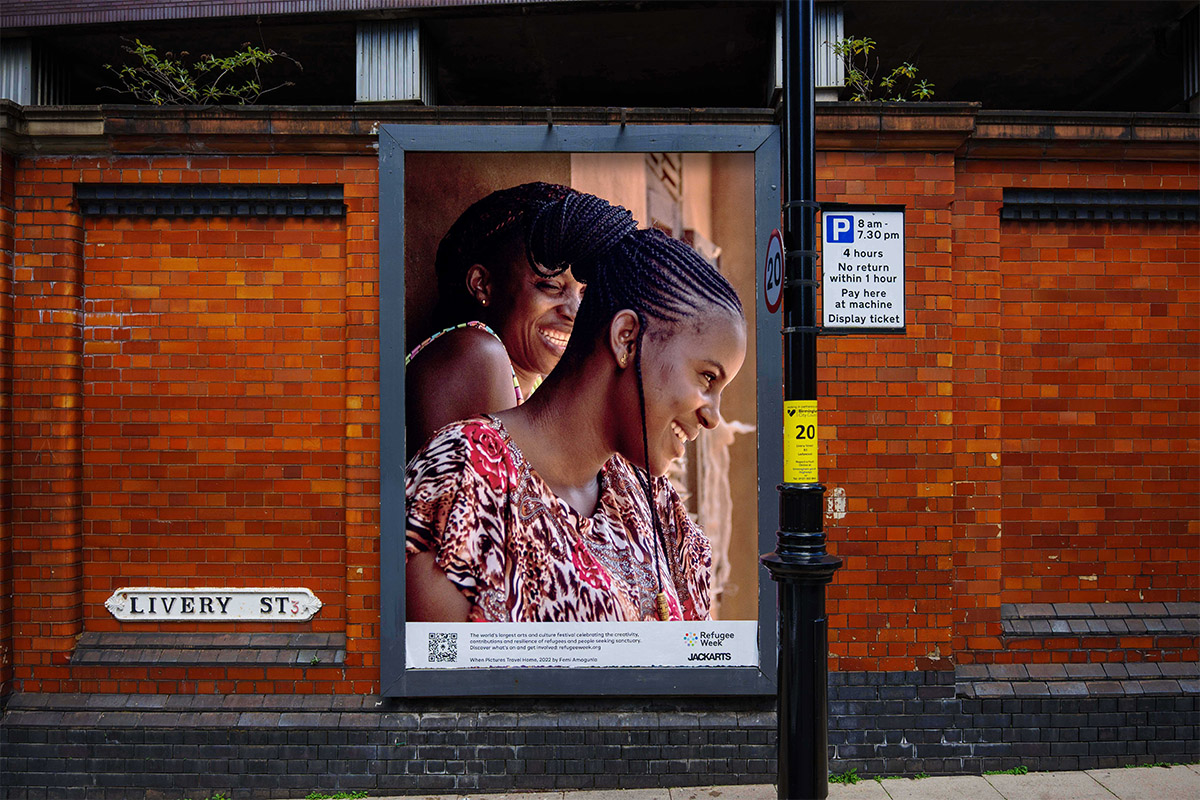
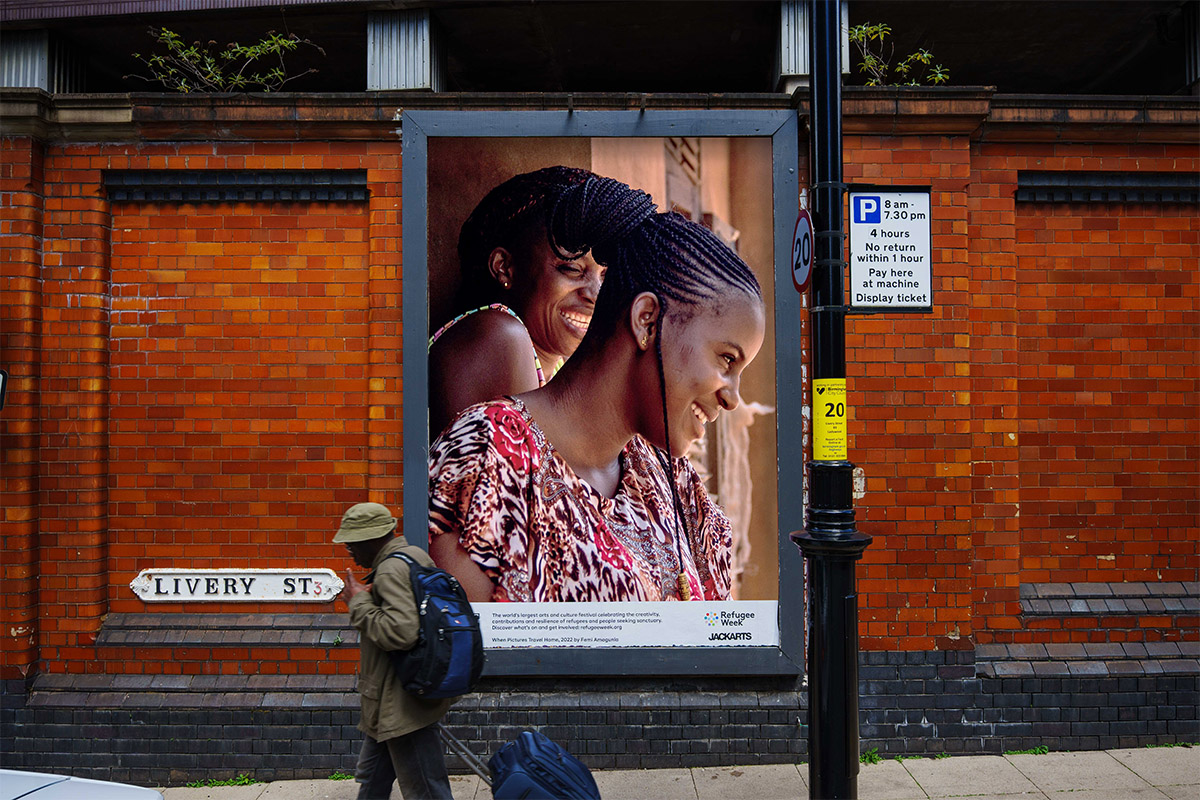
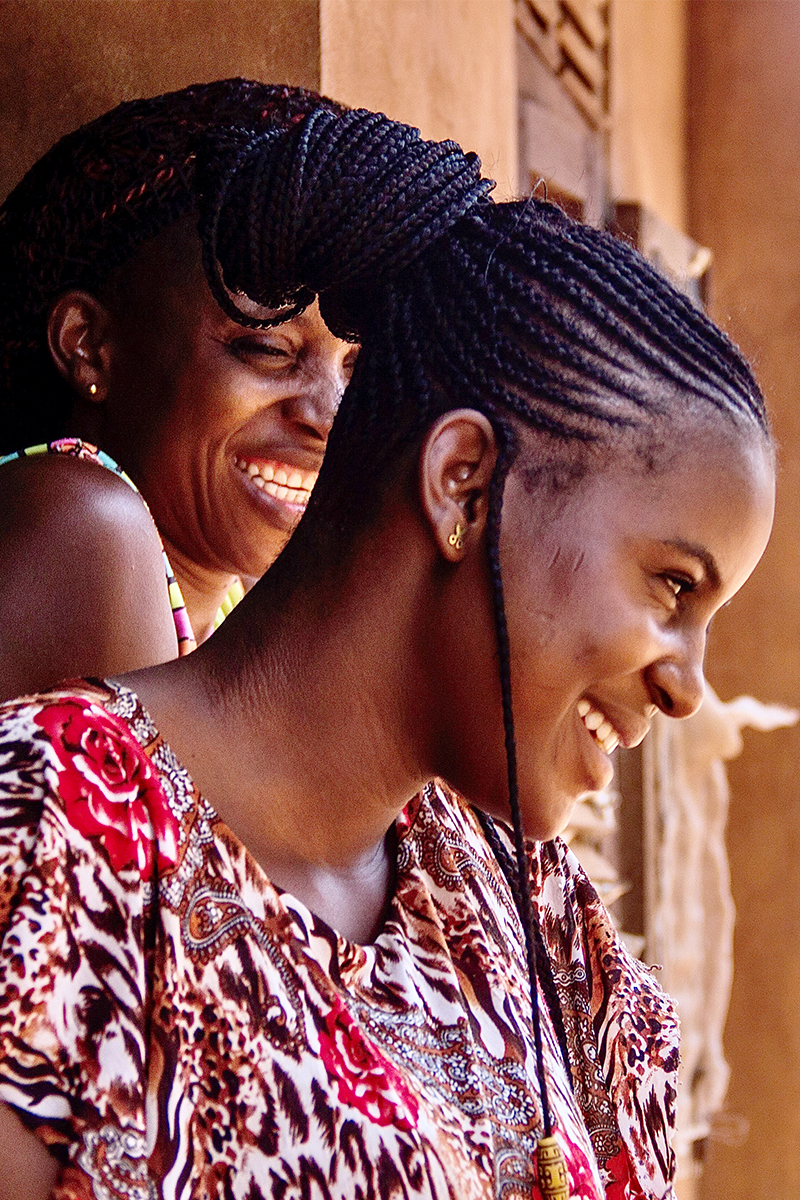
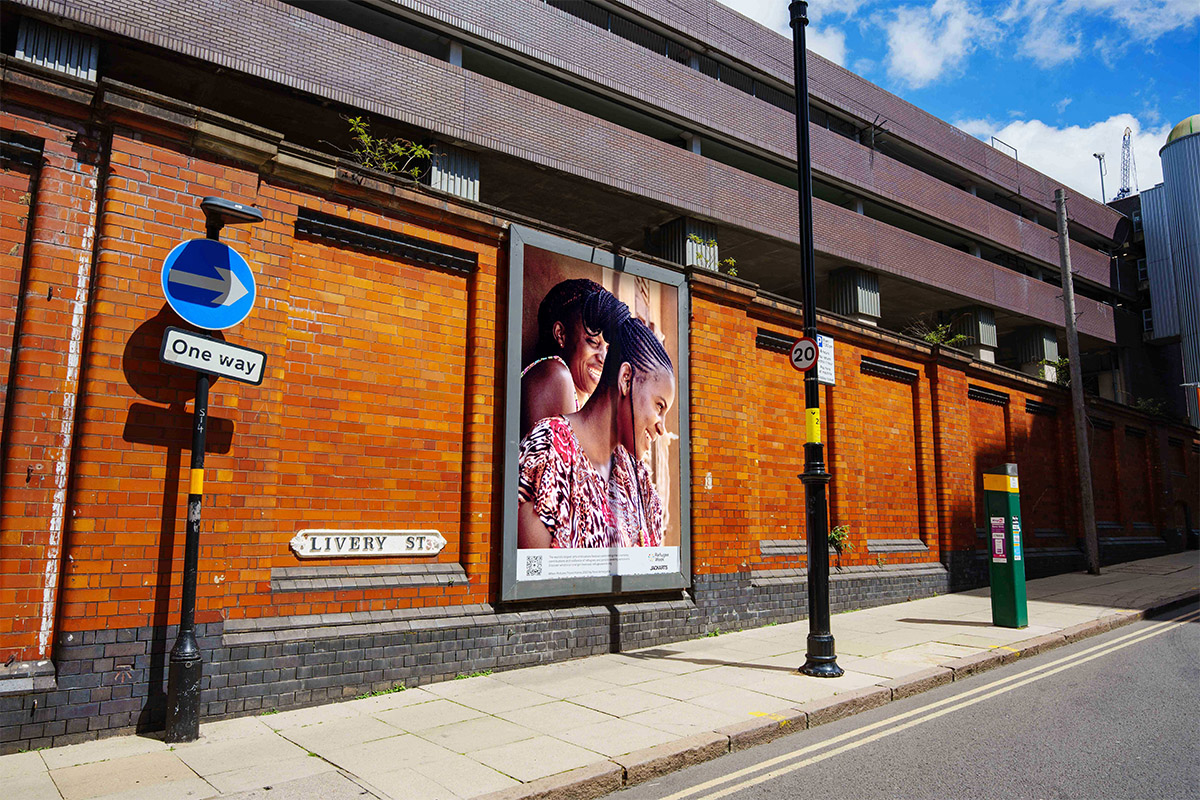
Femi Amogunla, When Pictures Travel Home, 2022

Femi Amogunla is a Nigerian-born documentary and portrait photographer based in the UK. With background knowledge in filmmaking, Femi seamlessly blends the art of visual storytelling across multiple media, creating insightful narratives that resonate with audiences.

Between 1910 and 1914, Northcote Thomas photographed communities across what is now Nigeria. More than a century later, in 2022, those images began a different journey: they re-migrated home to places like Neni, reconnecting families with ancestors once known only through memory and story.

In this photograph, a mother smiles as her daughter studies one of those returned images from their community. Between them passes something larger than recognition—a reclaiming of history, identity, and belonging. Sometimes courage is not loud. Sometimes it is the quiet act of looking back, of recovering what was scattered across time and distance, and daring to see yourself again. Their shared gaze speaks to the courage of return: the courage to recover memory, to reconnect lost generations with displaced histories, and to find home again in the fragments that survive.

Birmingham, United Kingdom

@femiclicks

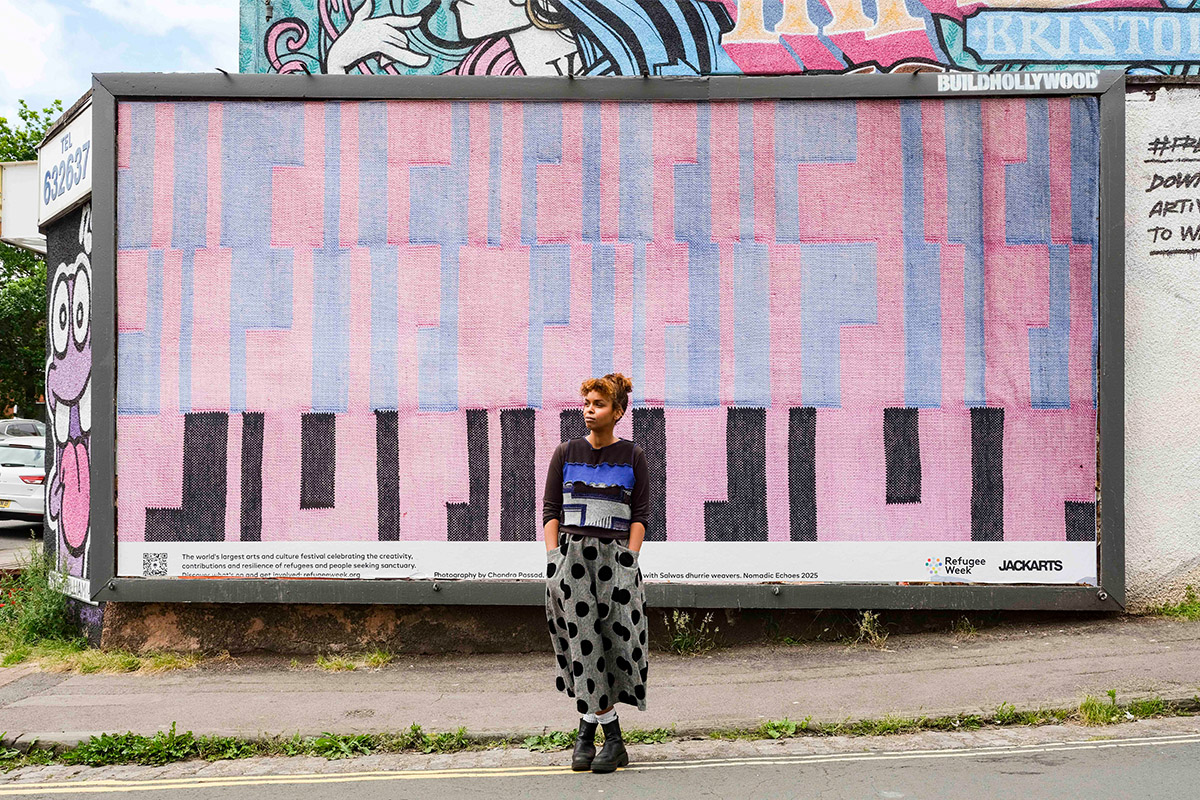
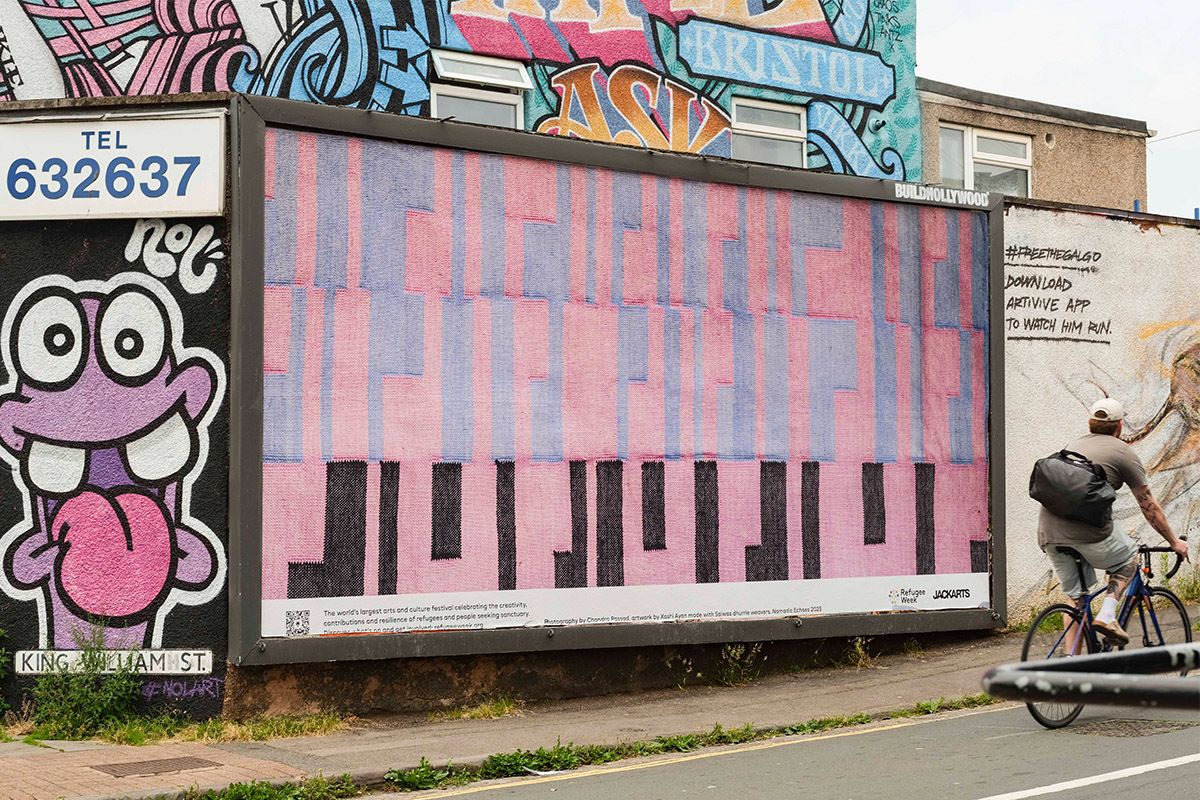
Ayan Cilmi, Nomadic Echoes 2025

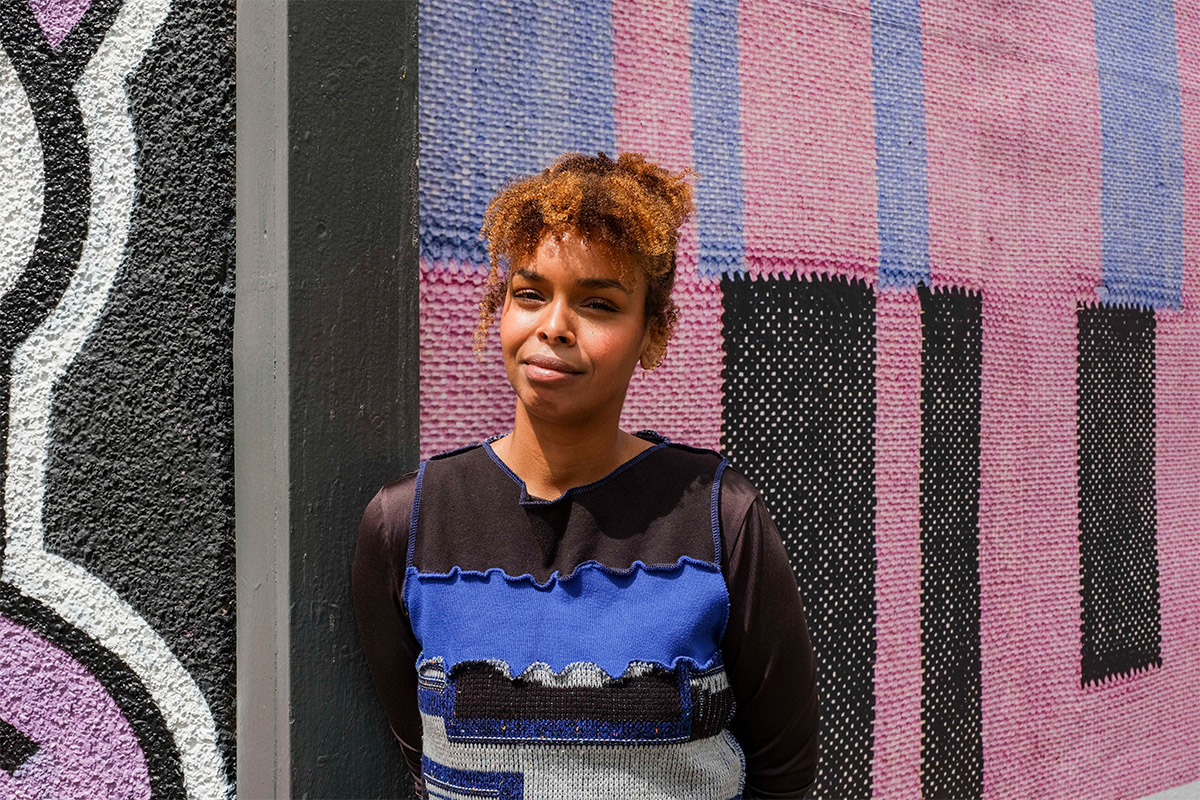
Ayan Cilmi is a filmmaker, thinker, notetaker and artist. She is a co-founder of the Dhaqan Collective, a feminist art collective of Somali women that centres the voices of womxn and elders in their community through co-creation and collaboration. The collective has used everyday materials such as cassette tapes, food, and textiles to create spaces of communion, joy, and healing that centre the full range of Somali diasporic experiences. Cilmi is now transitioning from a collaborative practice into independent solo work, which means spending the next year recalibrating, learning, and experimenting in order to find new ways of expanding their existing practice.

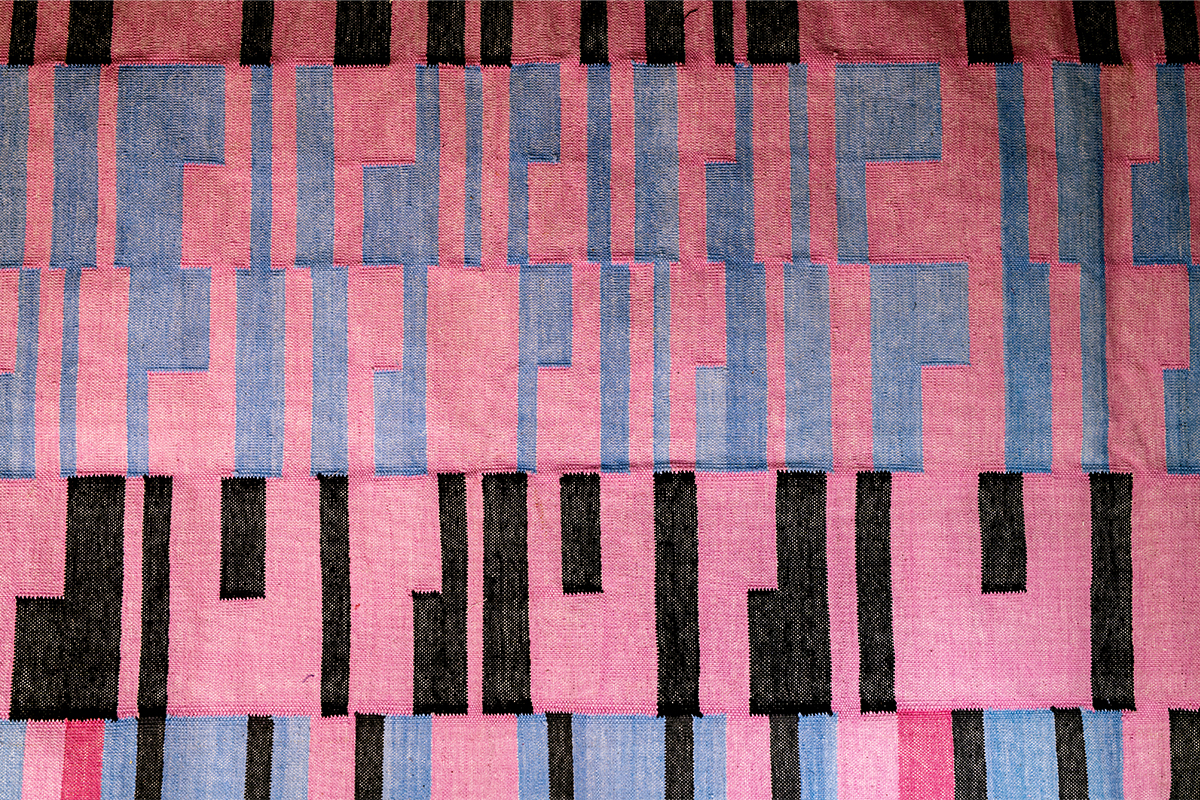
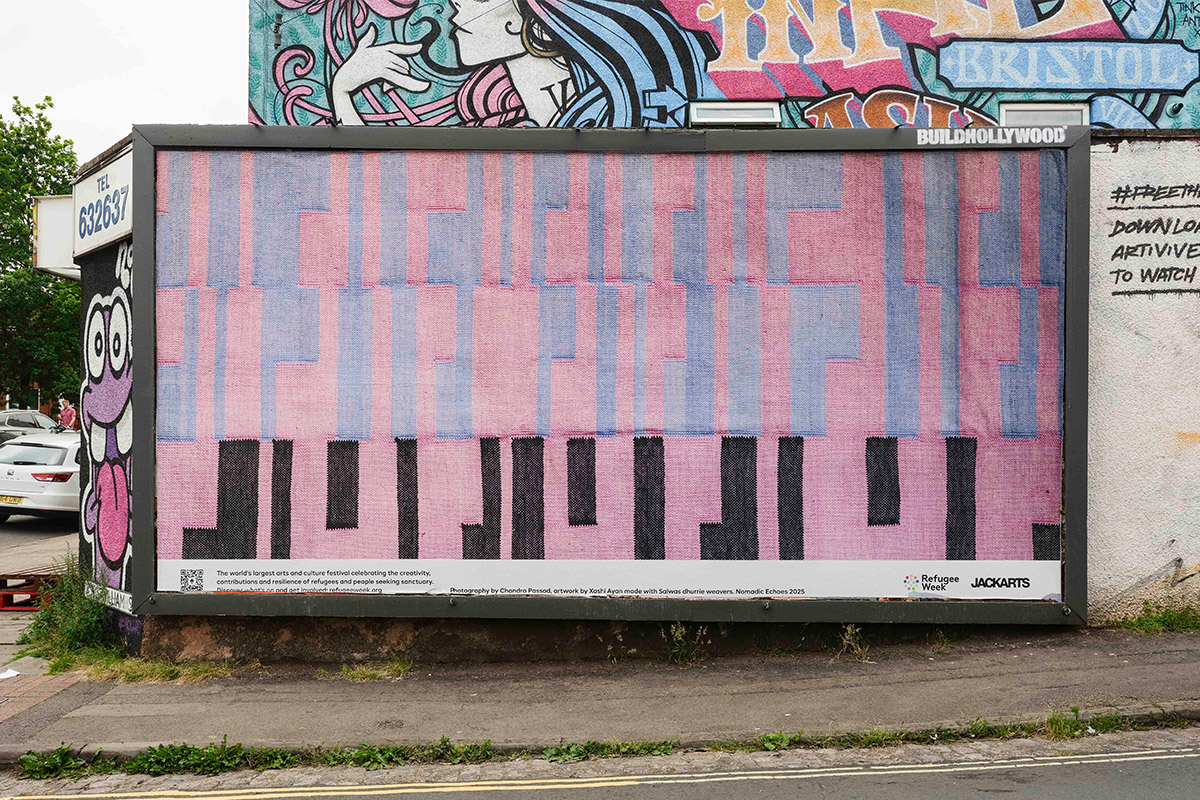
Nomadic Echoes, photography by Chandra Passad, artwork by Xashi Ayan made with Salwas dhurrie weavers. Created through the dhaqan collective project “Nomadic Echoes,” the artwork celebrates resilience, interdependence and wisdom within nomadic communities, from the camel-herding Raika of Rajasthan to Somali nomads whose weaving songs carry generational knowledge. Thriving in harsh, arid landscapes, their traditions offer vital lessons in sustainability, adaptation, and coexistence with nature.

Bristol, United. Kingdom 

@xashi.ayan

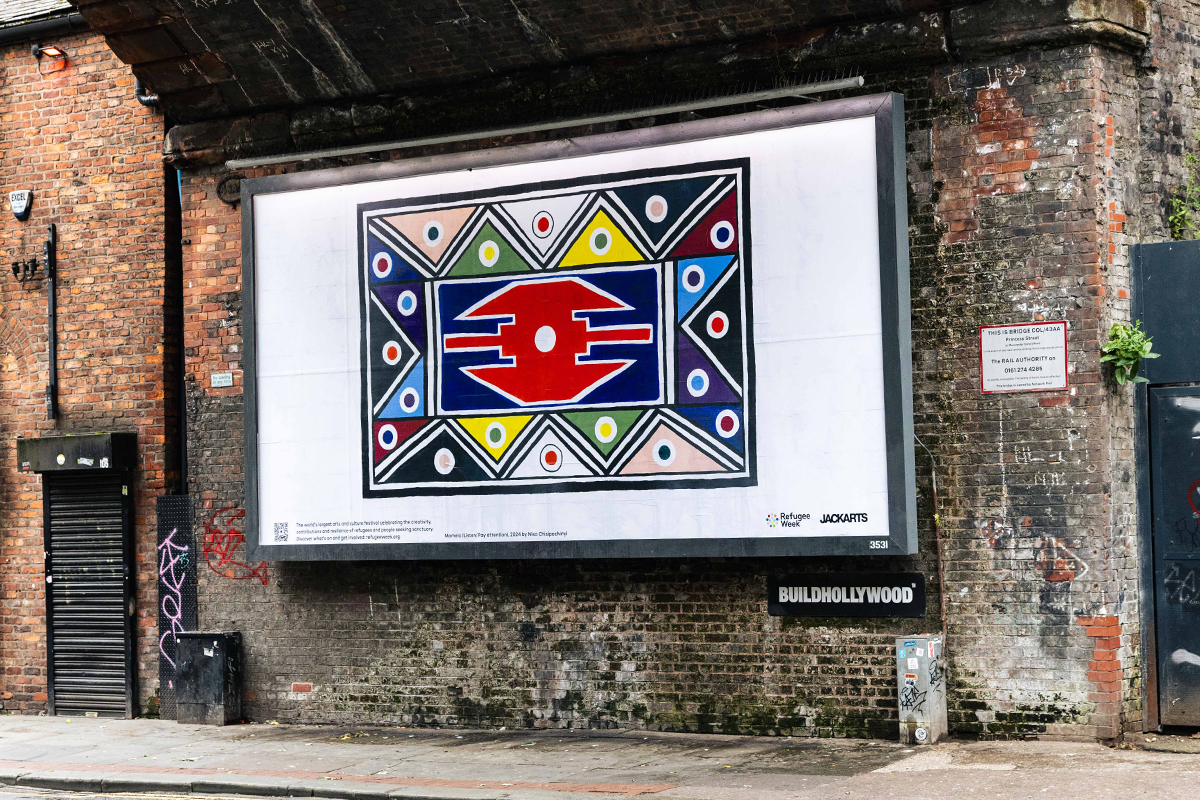
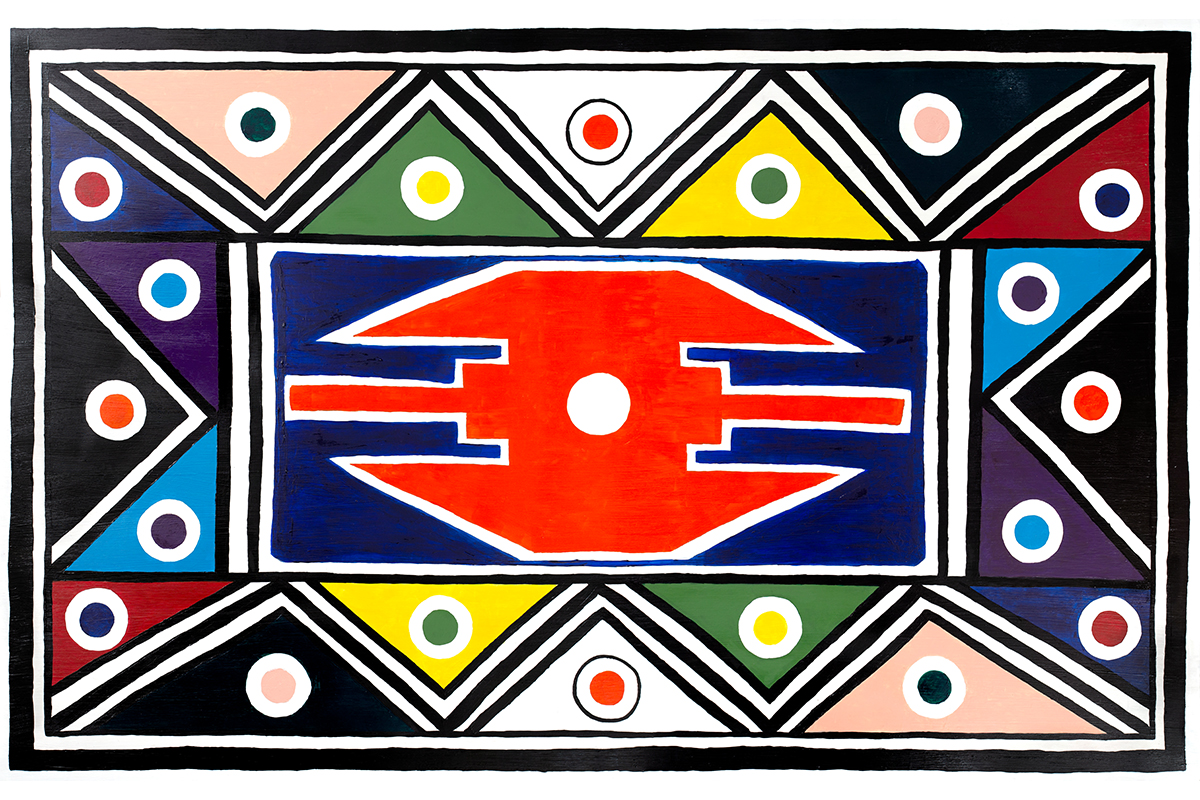
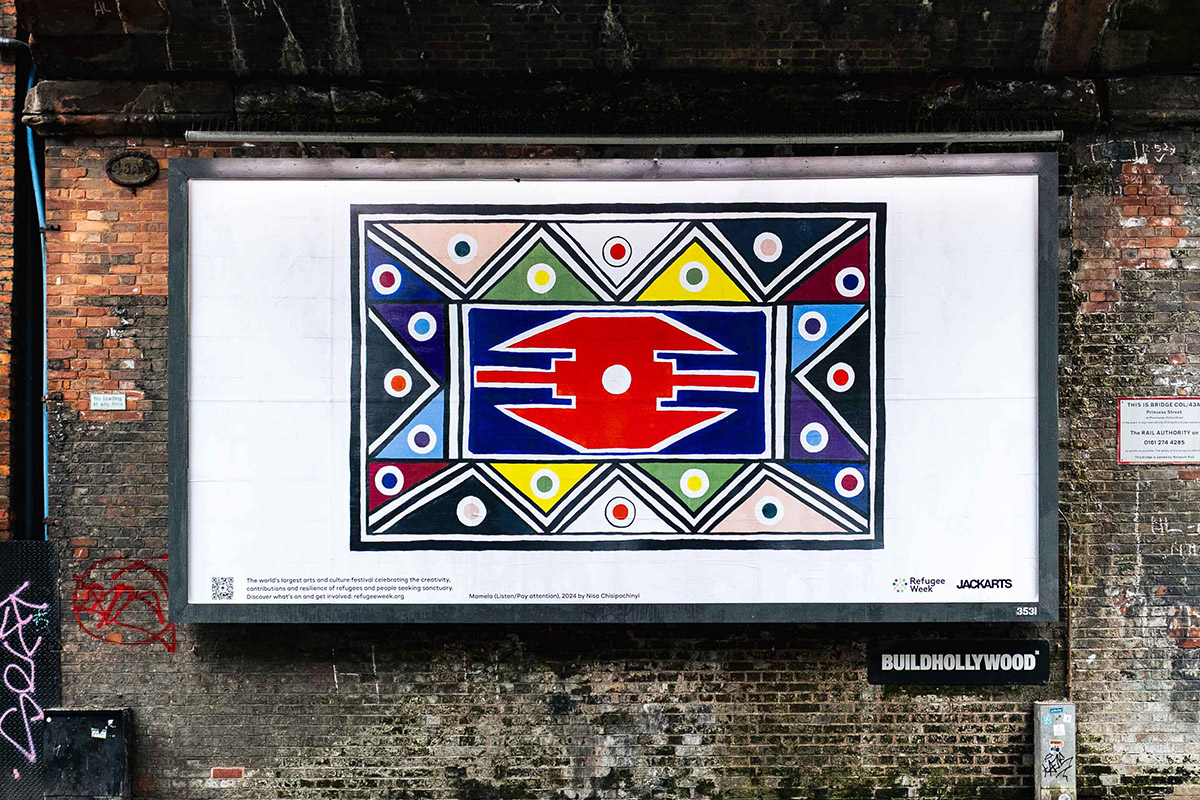
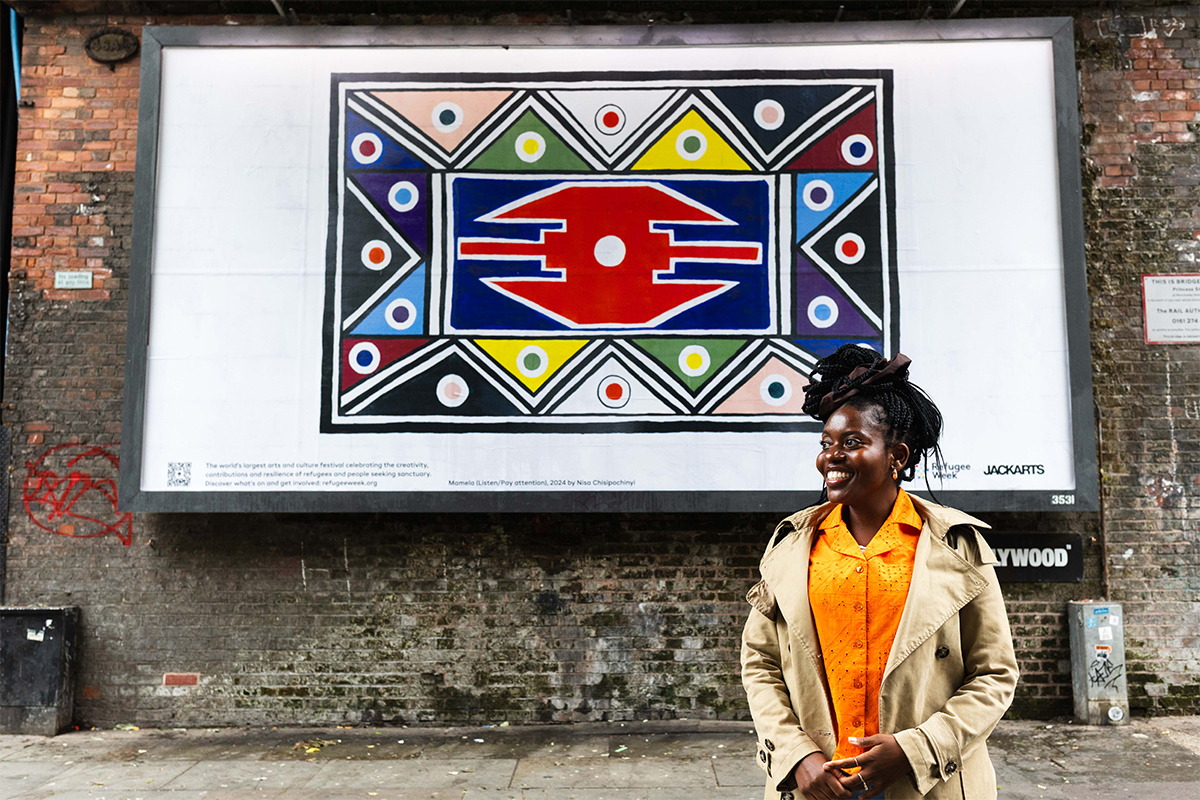
Nisa Chisipochinyi, Mamela (Listen/Pay attention), 2024

Nisa is a storyteller at heart. Born in Zimbabwe and raised across Botswana, South Africa, and England, she has spent nearly two decades finding her way back to herself through art, through paint, pottery, journals, and the quiet act of putting feeling into form. Her work is an archive of her becoming; a living, breathing dialogue between memory, culture, and the ever-evolving question of home.

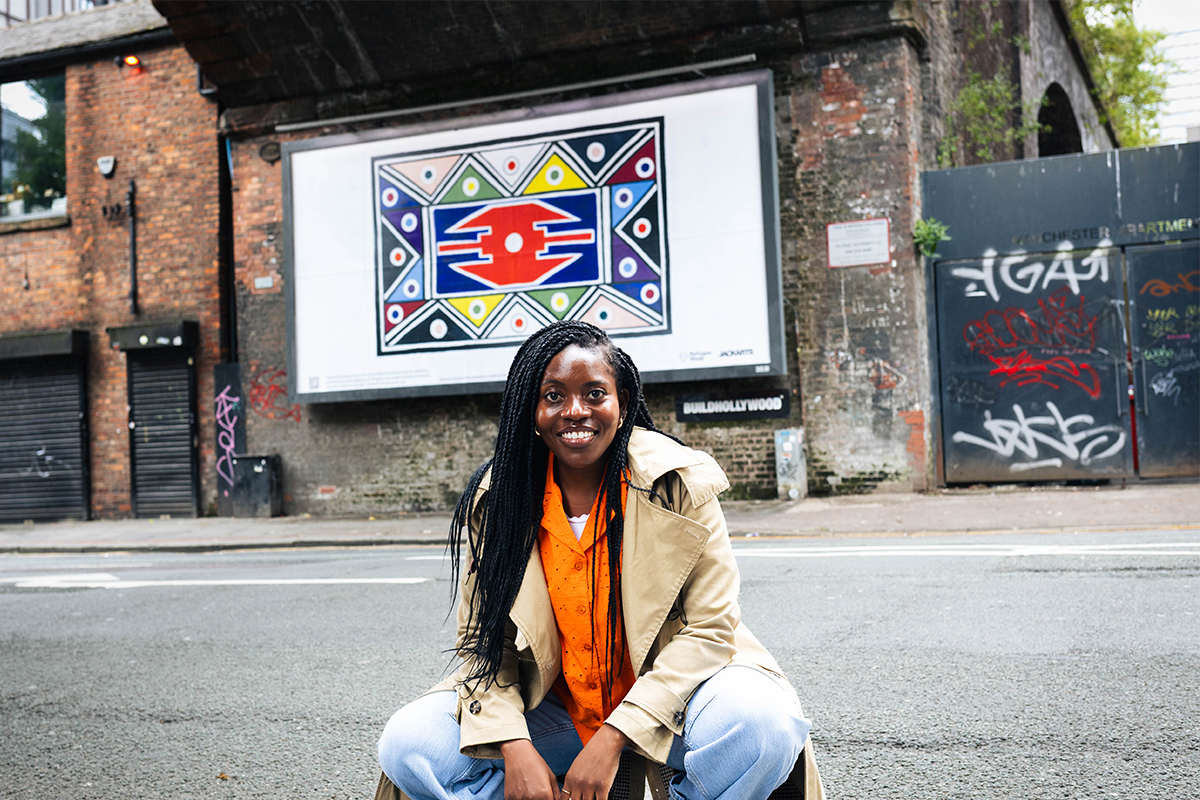
Mamela is a most personal piece inspired by Nisa’s lived experience of seeking sanctuary through the UK asylum system. The piece draws its visual language from the Ndebele house painting tradition of Northern Zimbabwe, a centuries-old form of vibrant, visually symbolic storytelling in which each home carries a unique design, rich with meaning and community memory. Created without rulers or mass-produced paints, Ndebele murals achieve remarkable symmetry and vibrancy using naturally derived materials: animal dung, clay, berries, and plants. It is beauty made from what nature discards.

Honouring this tradition, Nisa first sketched Mamela at 15 x 20 cm before transferring the design onto the face of a reclaimed dining room table measuring 73 x 118 cm, a deliberate act that demonstrates her fluency across both intimate and expansive scales. The table itself carries symbolic weight; a domestic object repurposed as a canvas, echoing the Ndebele practice of transforming everyday surfaces into sites of story and identity.

Through Mamela, Nisa brings her two homes into conversation, Zimbabwe and Manchester, inviting Manchester audiences into a fragment of a Southern African homestead mural. The title, Mamela, meaning listen in Zulu and Ndebele, is both an instruction and an invitation: to slow down, to witness, and to receive another’s story with openness.

At its heart, Mamela is a bridge between cultures, between continents, and between the personal and the universal, affirming that our stories, like our homes, are never ours alone.

Manchester, United. Kingdom 

Previous article

Marathon Season: Hit The Ground Running

Next article

Partnerships

A Star That Burns Forever: Tahliah Simumba