Newsletter

Join our mailing list for latest news and features

Build Hollywood

Build Hollywood

Build Hollywood

Build Hollywood

Partnerships

The Freeing Power of ABCs : Words Are Let Loose in the Granite City

This year’s motion for the legendary Nuart Aberdeen Street Art Festival ‘Fight Club’ (aka the Pub Debate) pitted image against text. Which holds primacy?

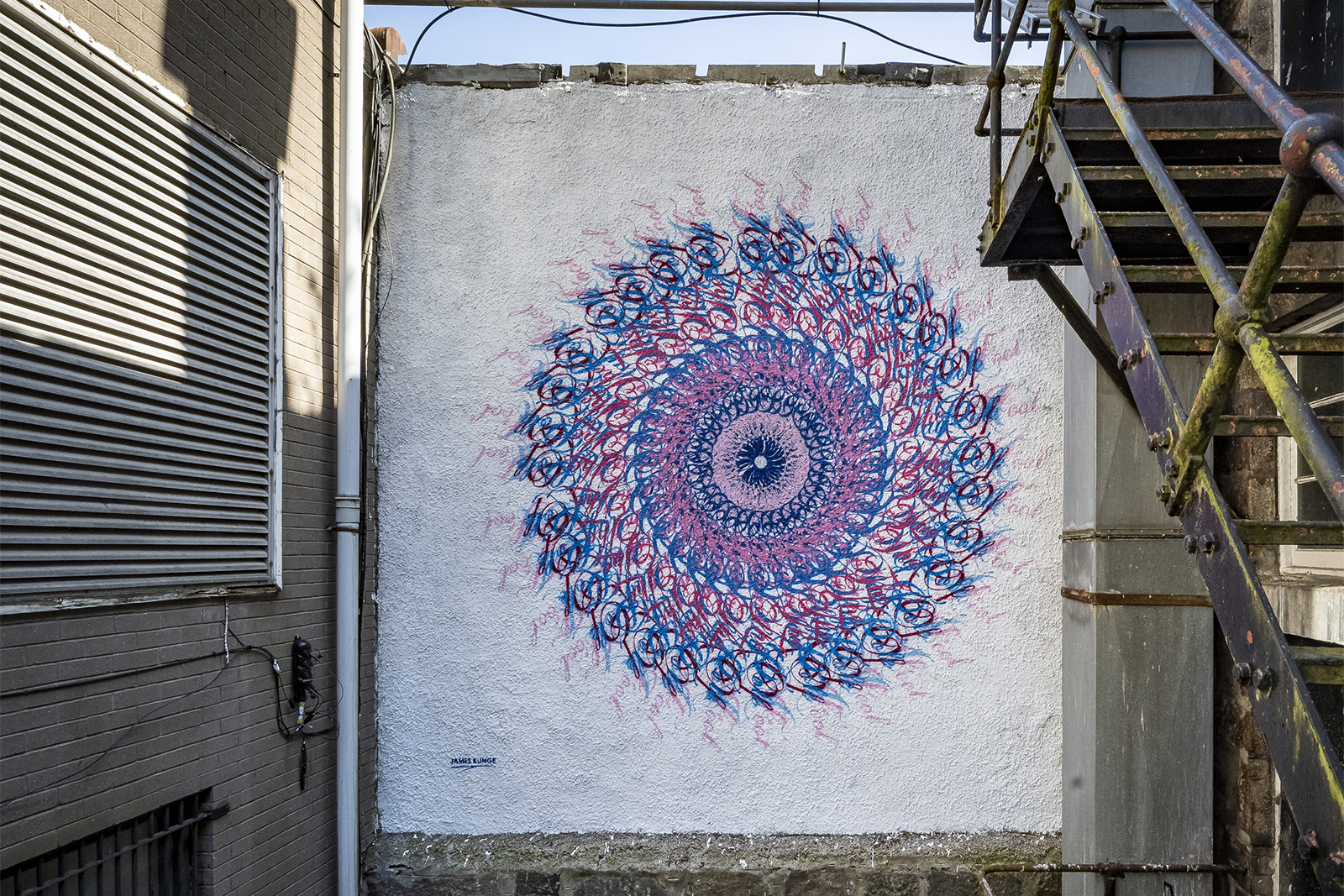
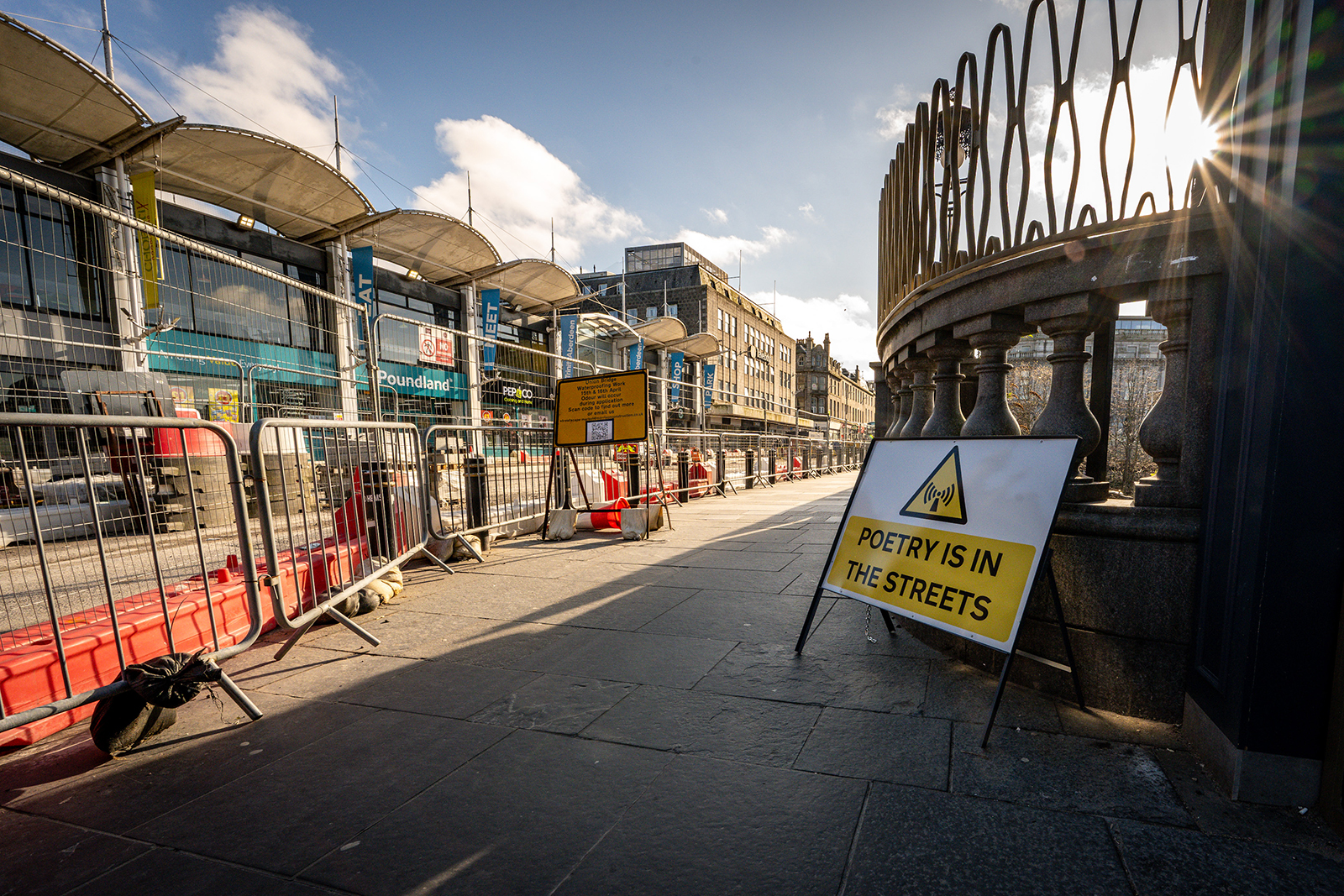
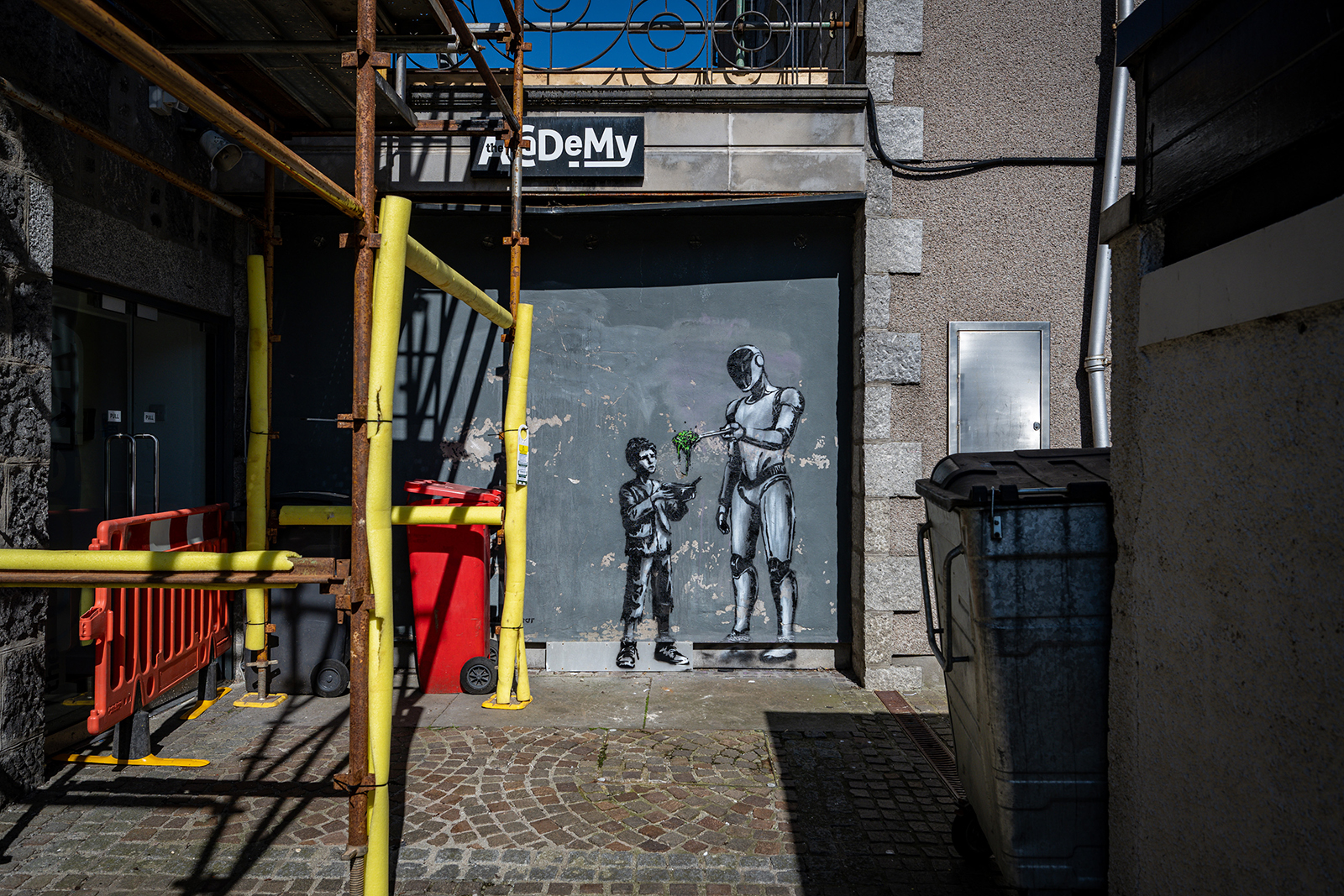
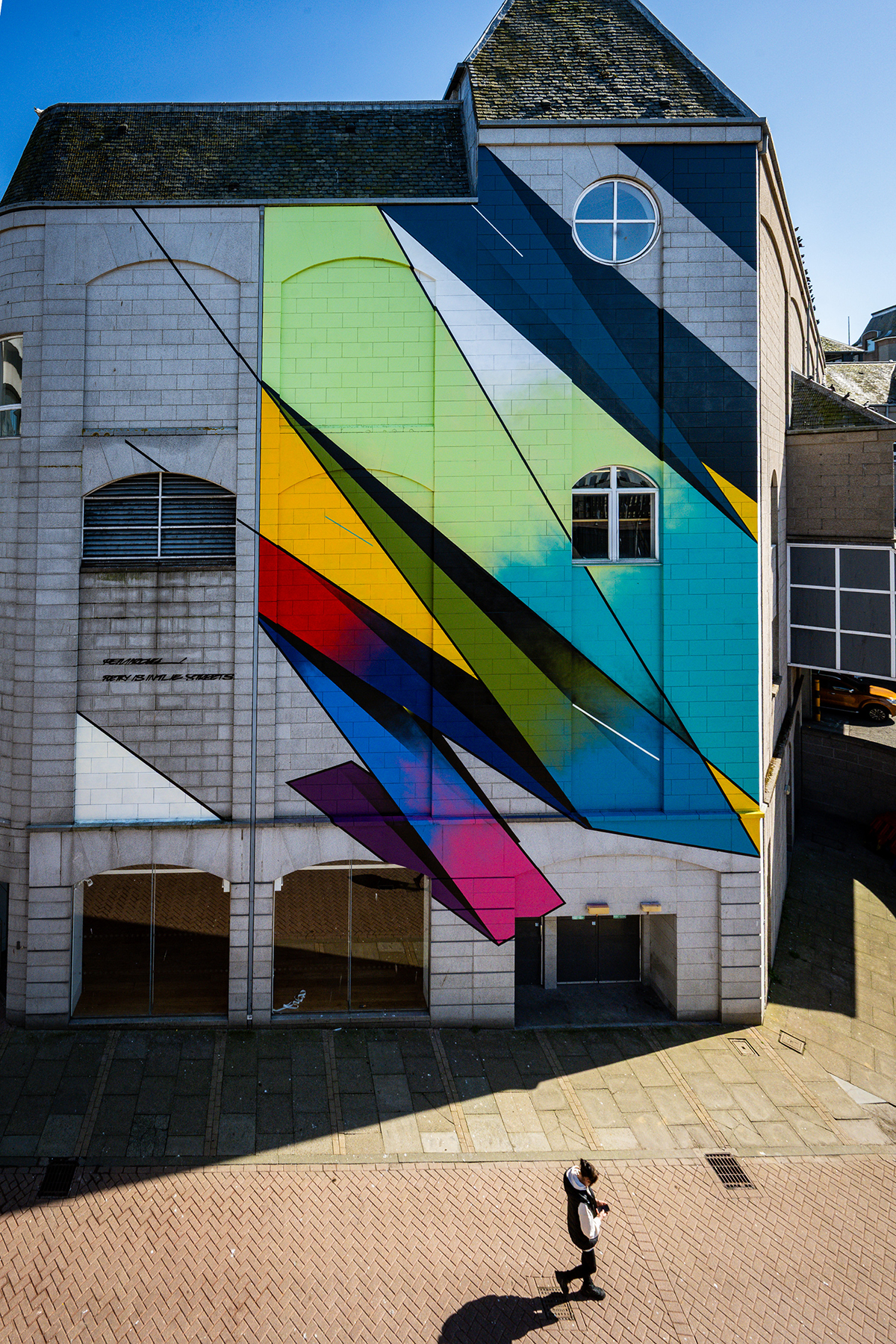
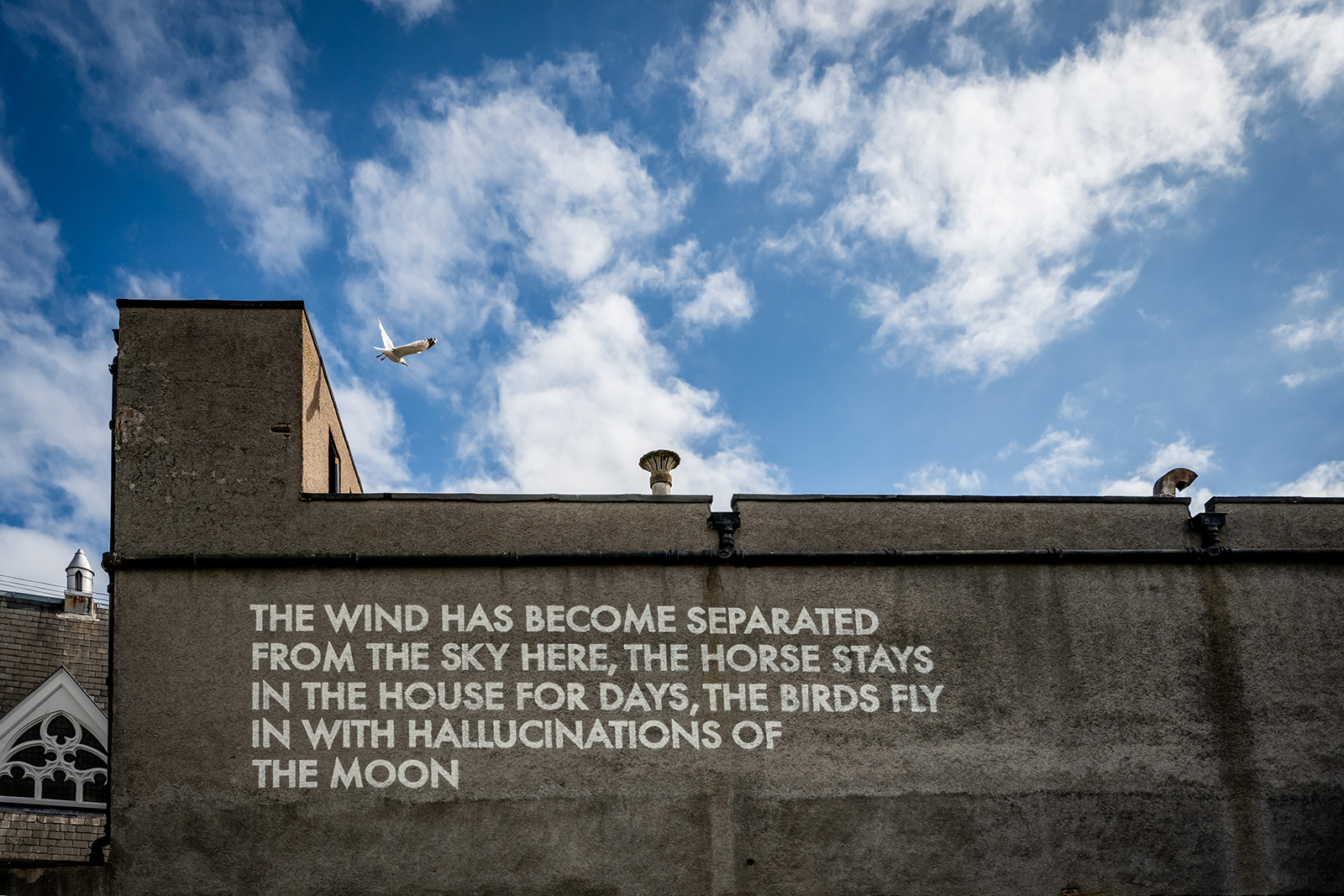
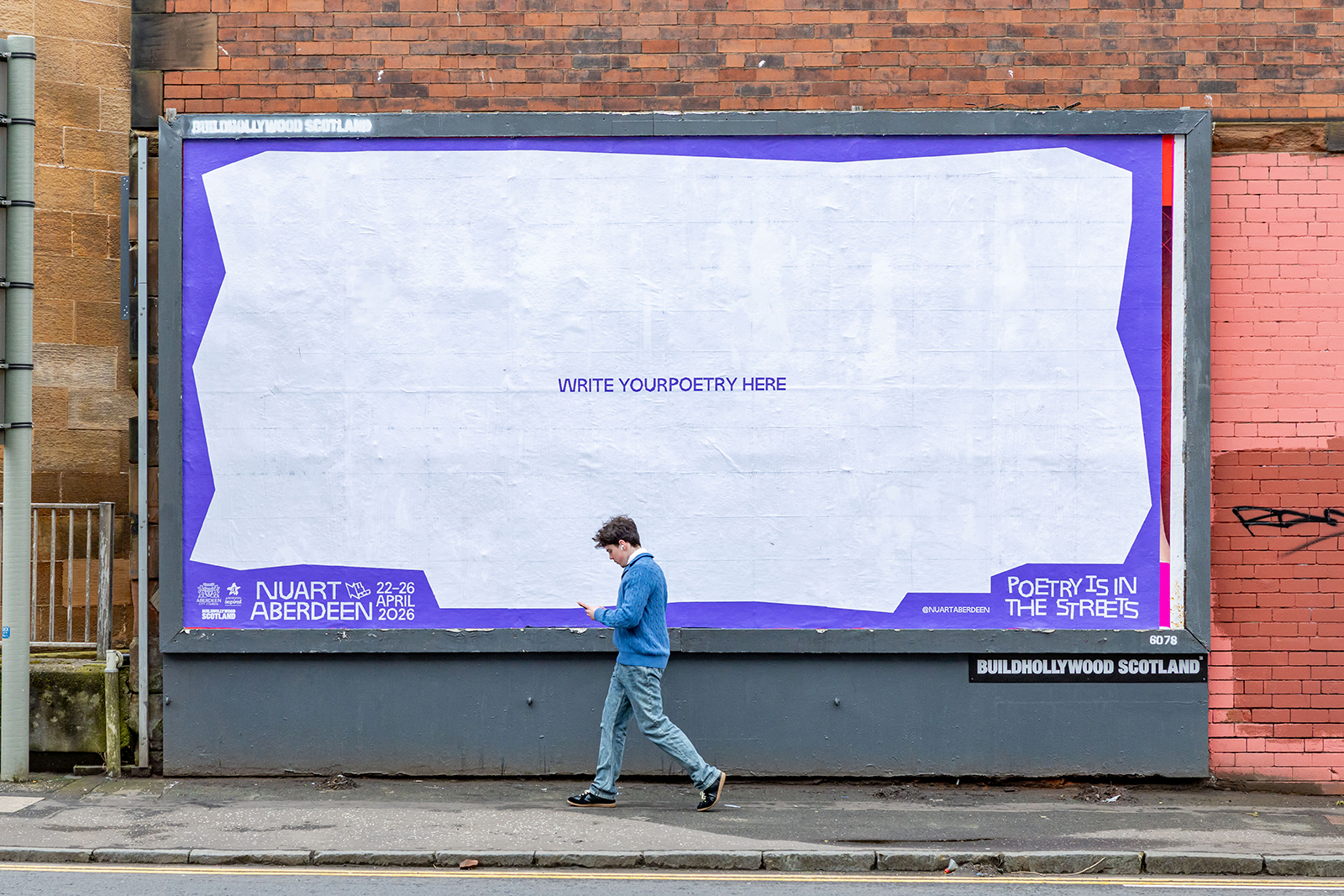
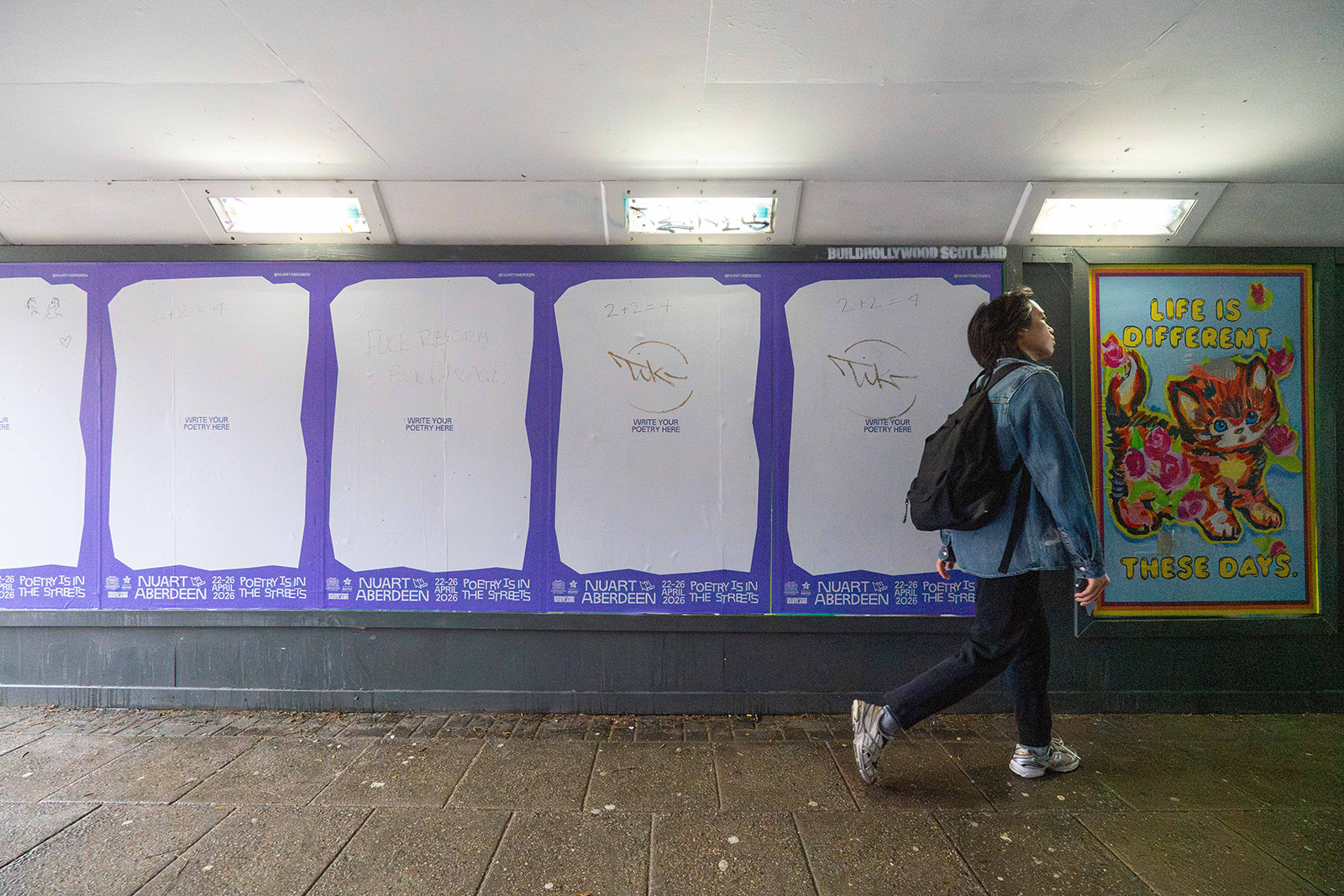
An apt contention given that since 2017 Aberdeen has hosted some of the world’s greatest figurative street muralists and abstract urban image makers, meaning there are visual treats almost at every turn. But the 2026 theme – dreamt up by festival founder, director and curator Martyn Reed – being POETRY IS IN THE STREETS meant it was the turn of words to blaze a trail, to burn brightest throughout the Granite City.

Amidst celebratory remarks and earnest thanks at the opening civic reception a six-year-old girl stole the show. Her poem wondering – after having been at school for a whole week already – why she ever had to go back again was amusingly poignant but, at the same time, suggested a rebellious touch that chimed impeccably with the vibe of this year’s festival.

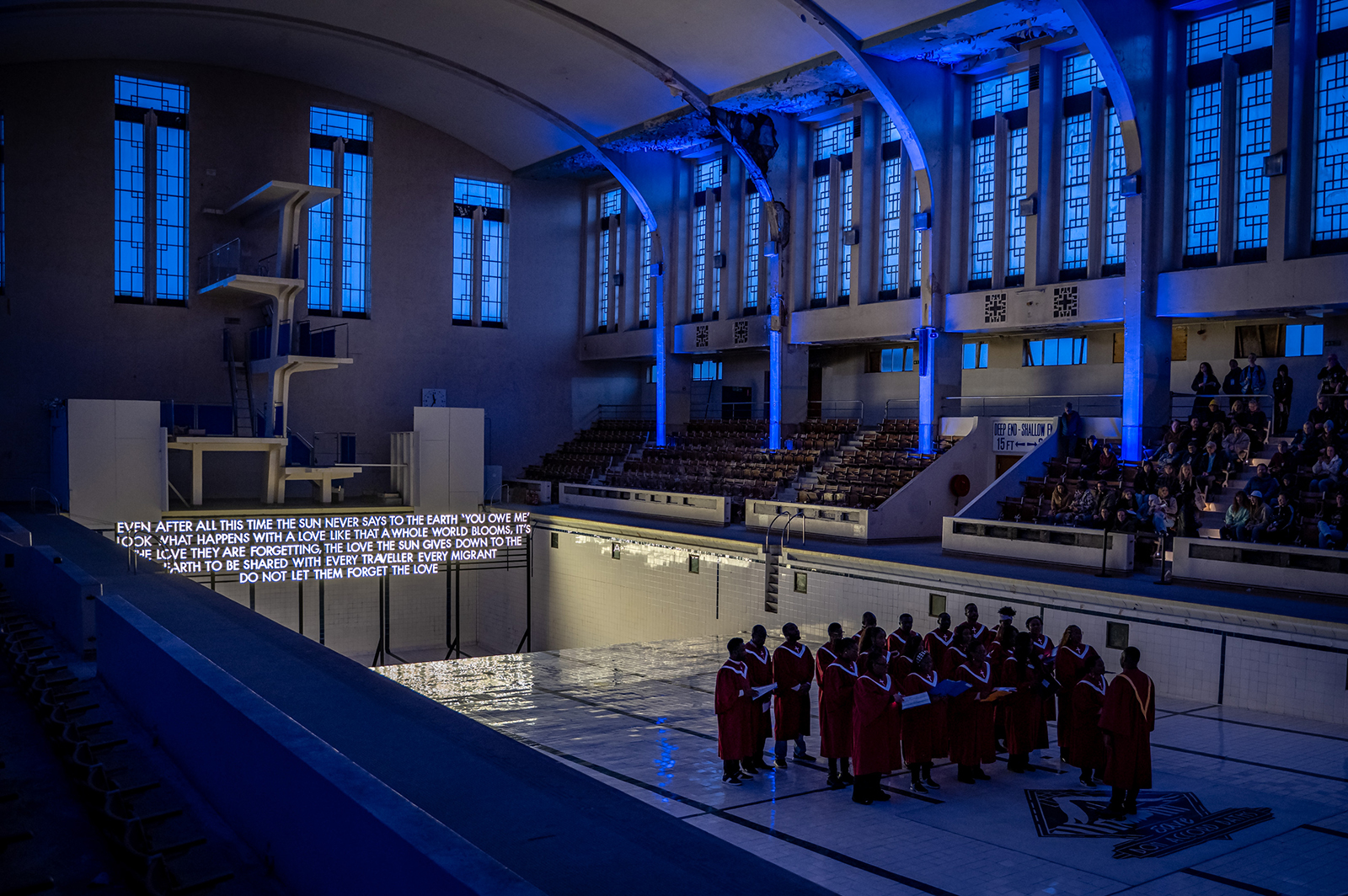
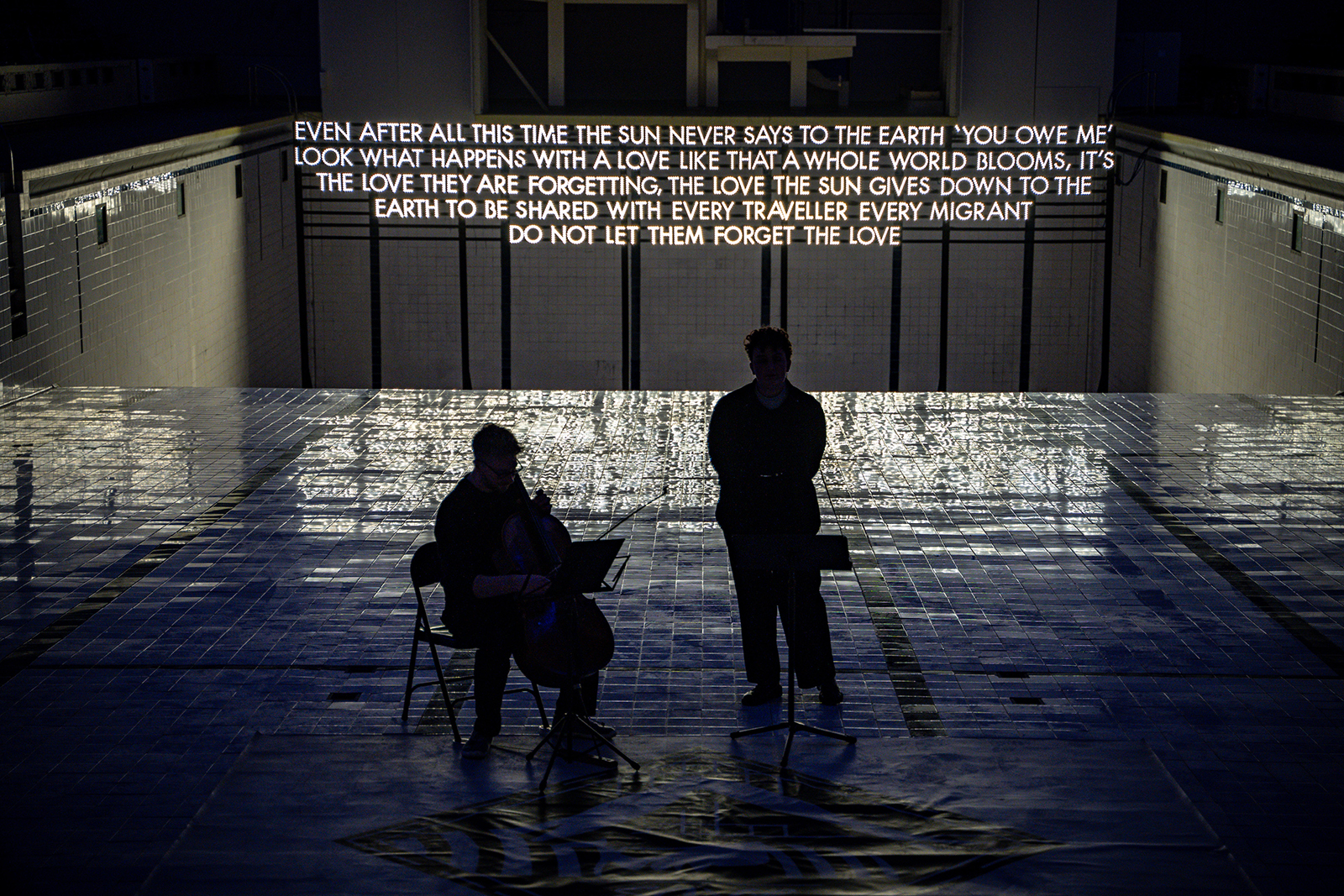
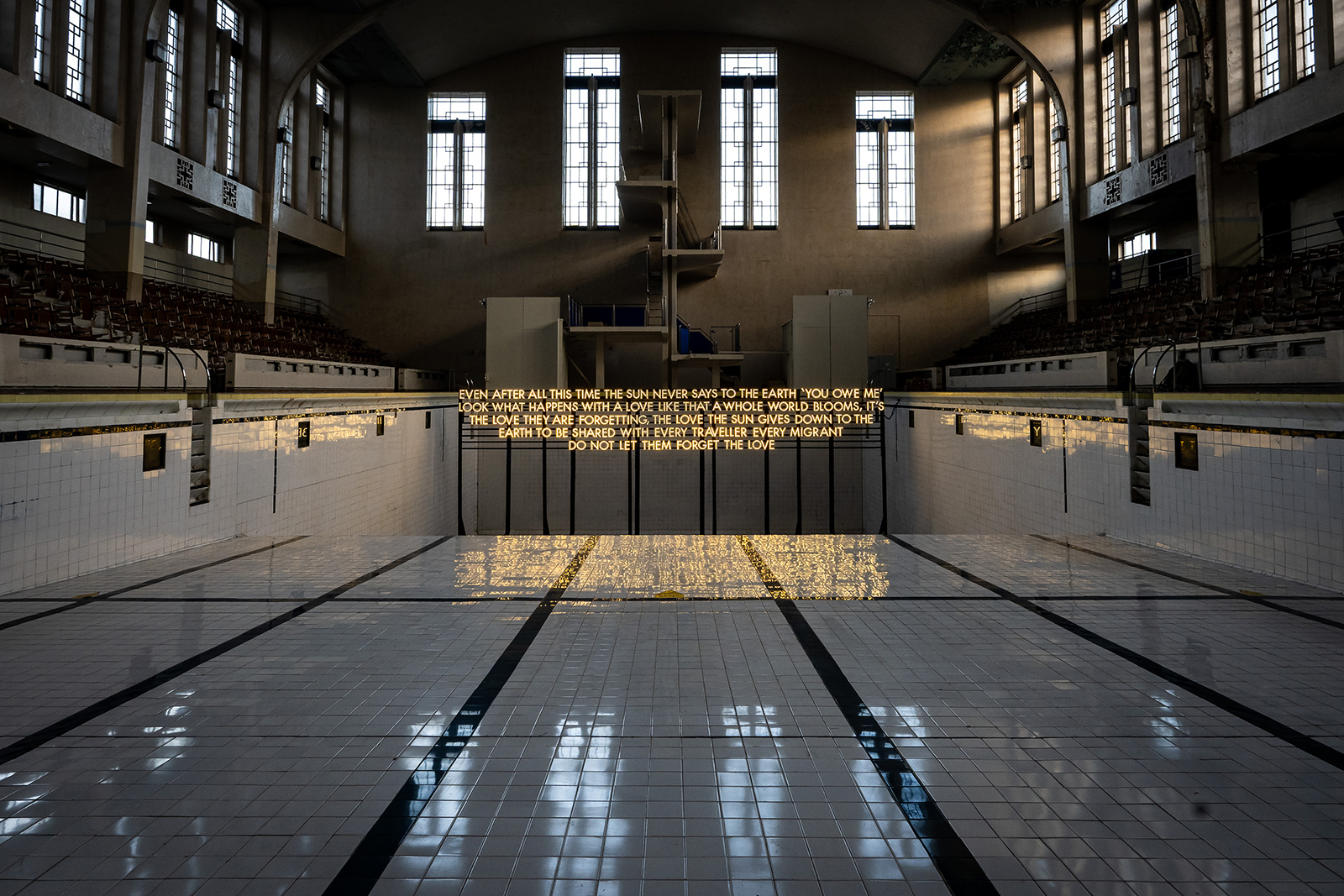
On the evening of day one, the festival opened with a breathtaking spectacle. Visiting Robert Montgomery’s light installation sited in the deep end of the formerly mothballed Bon Accord Baths could only be described as a spellbinding experience. Eleven metres wide, five metres high, and titled: EVEN AFTER ALL THIS TIME THE SUN NEVER SAYS TO THE EARTH “YOU OWE ME”.

08.05.26

Words by Adrian Burnham
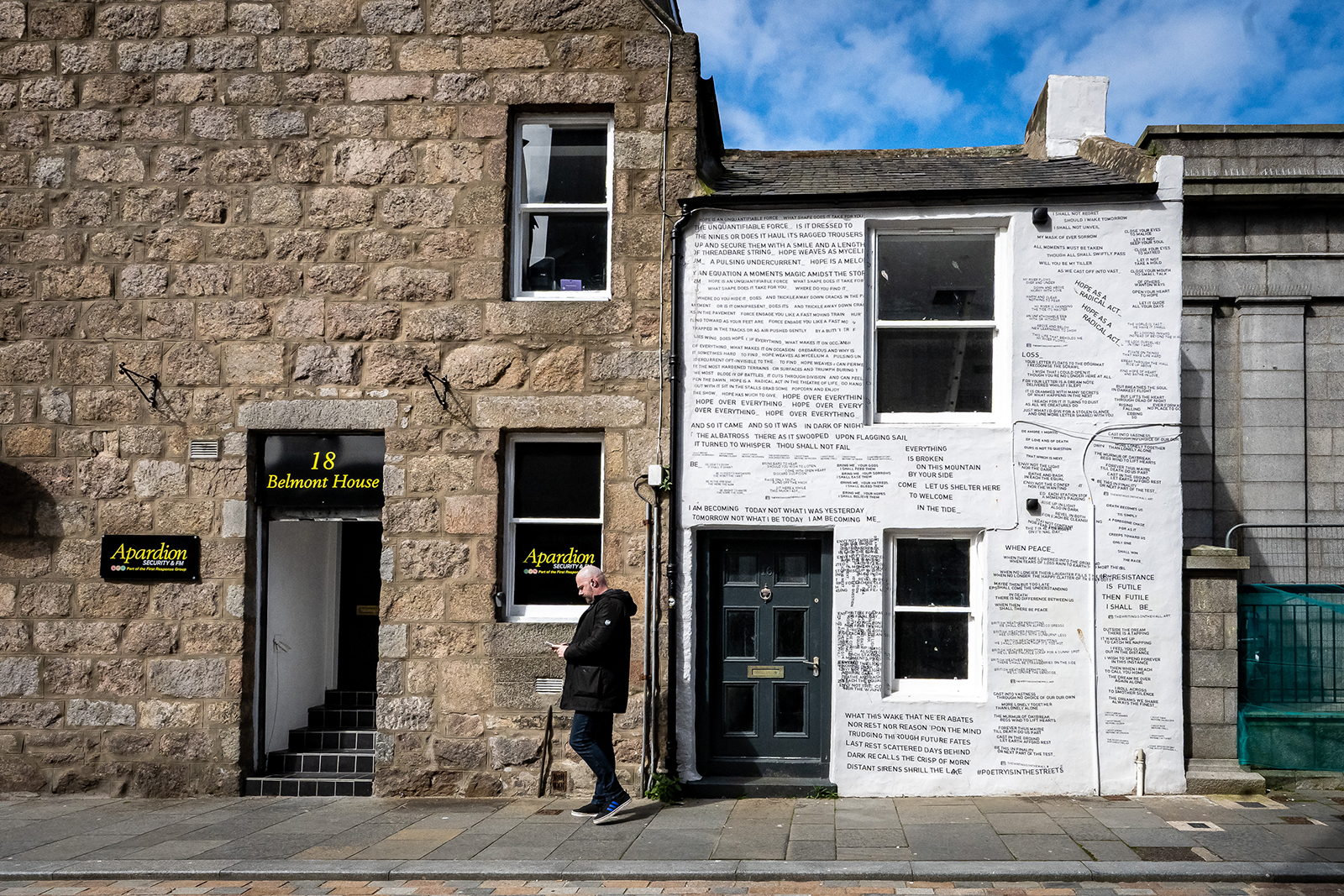
The Writing Is On The Wall (UK)

For its unveiling, Montgomery’s light installation was accompanied by a succession of local vocal ensembles – singing in the shallow end! – at whose delighting choral performances tears were shed, joy was felt, all in all the confluence of vision, sound and light caused this epic immersive art installation to be a cathedral like encounter.

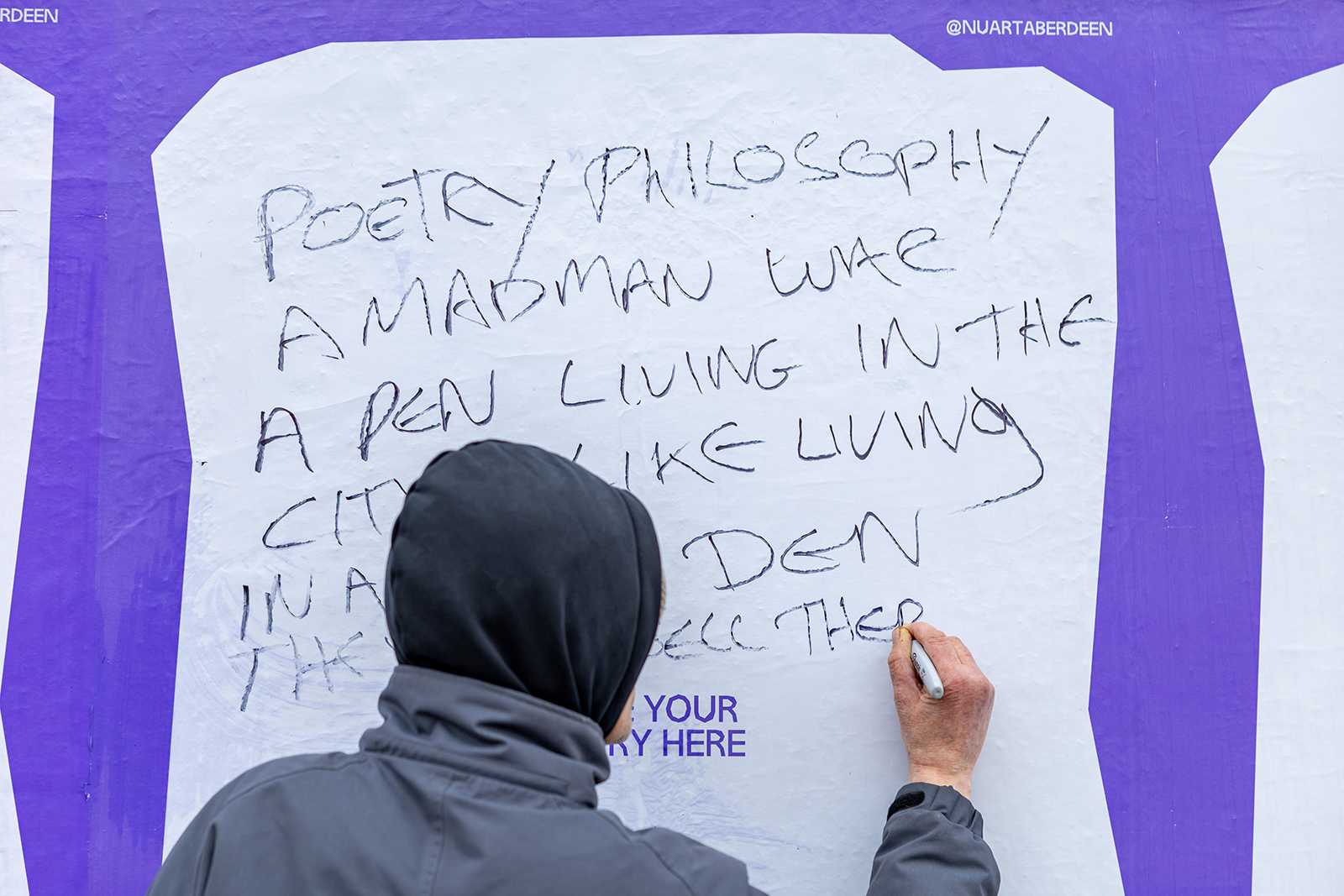
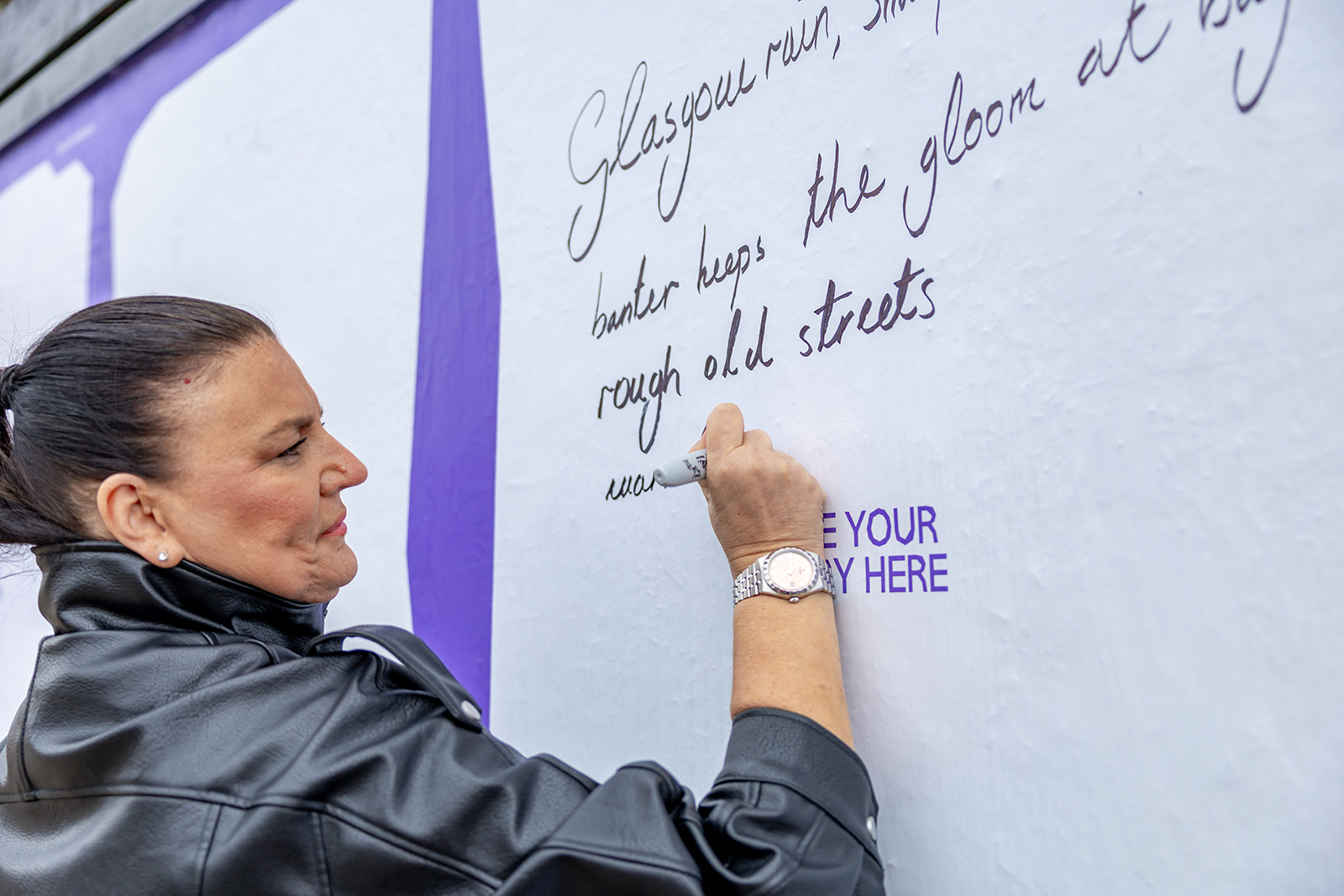
By contrast artist and trans rights activist Erin Holly seeded the city with perhaps the simplest, most democratic form of intervention on public space. Her epigrammatic texts written in chalk:


RHYTHM IS A DOORWAY

IS A WINDOW IS A

THRESHOLD_


In relation to which she further commented on social media: “Move through it to heal…”.

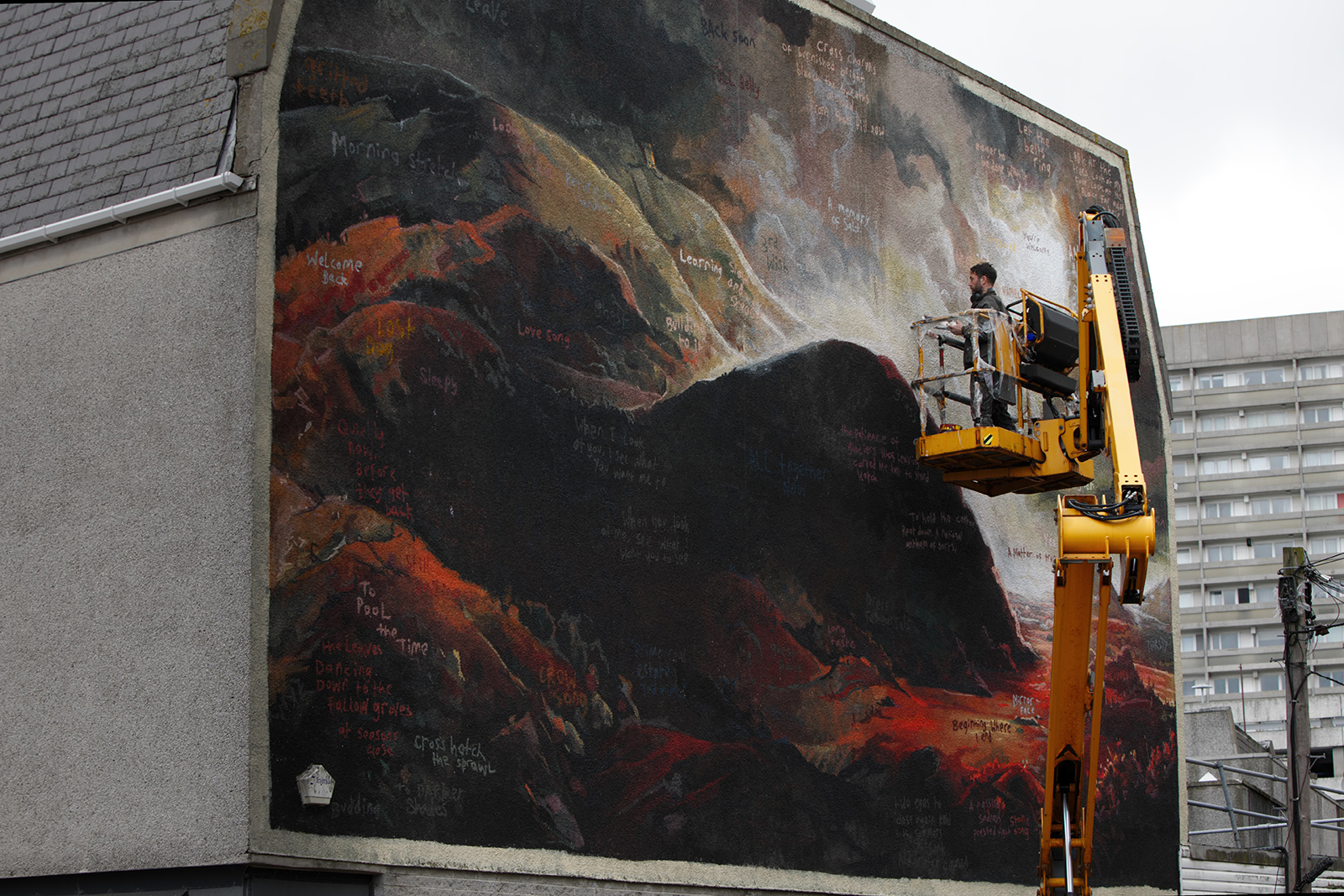
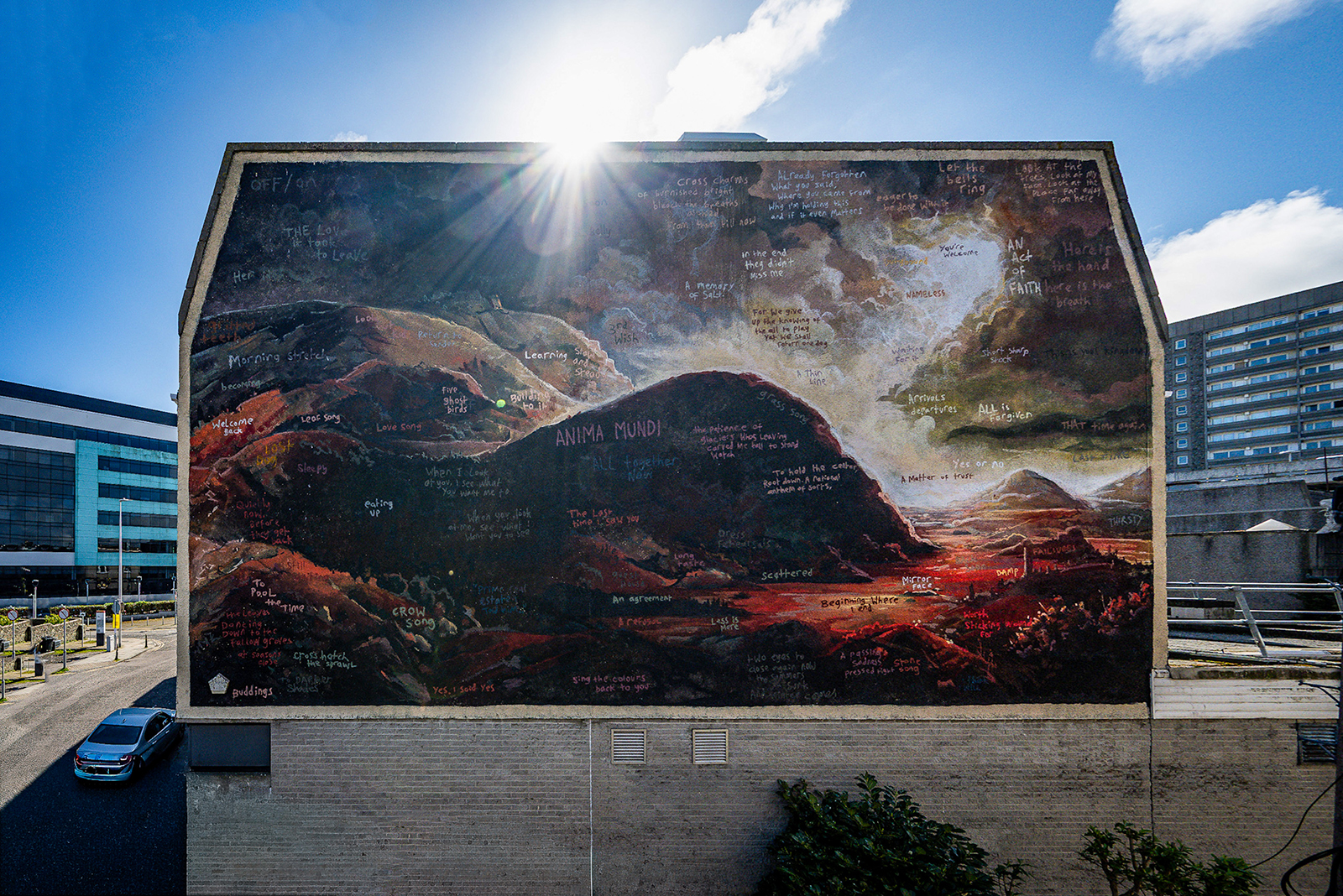
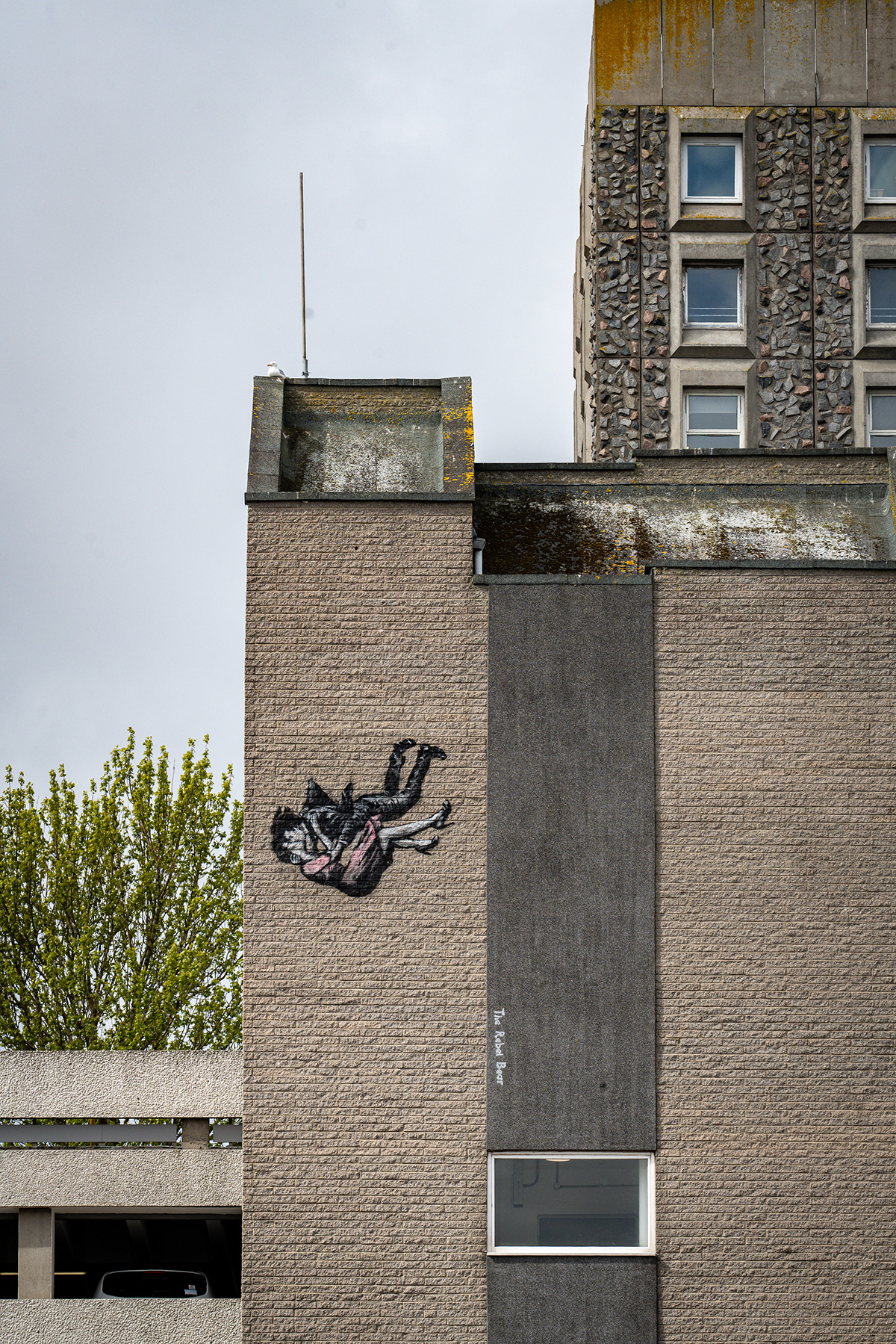
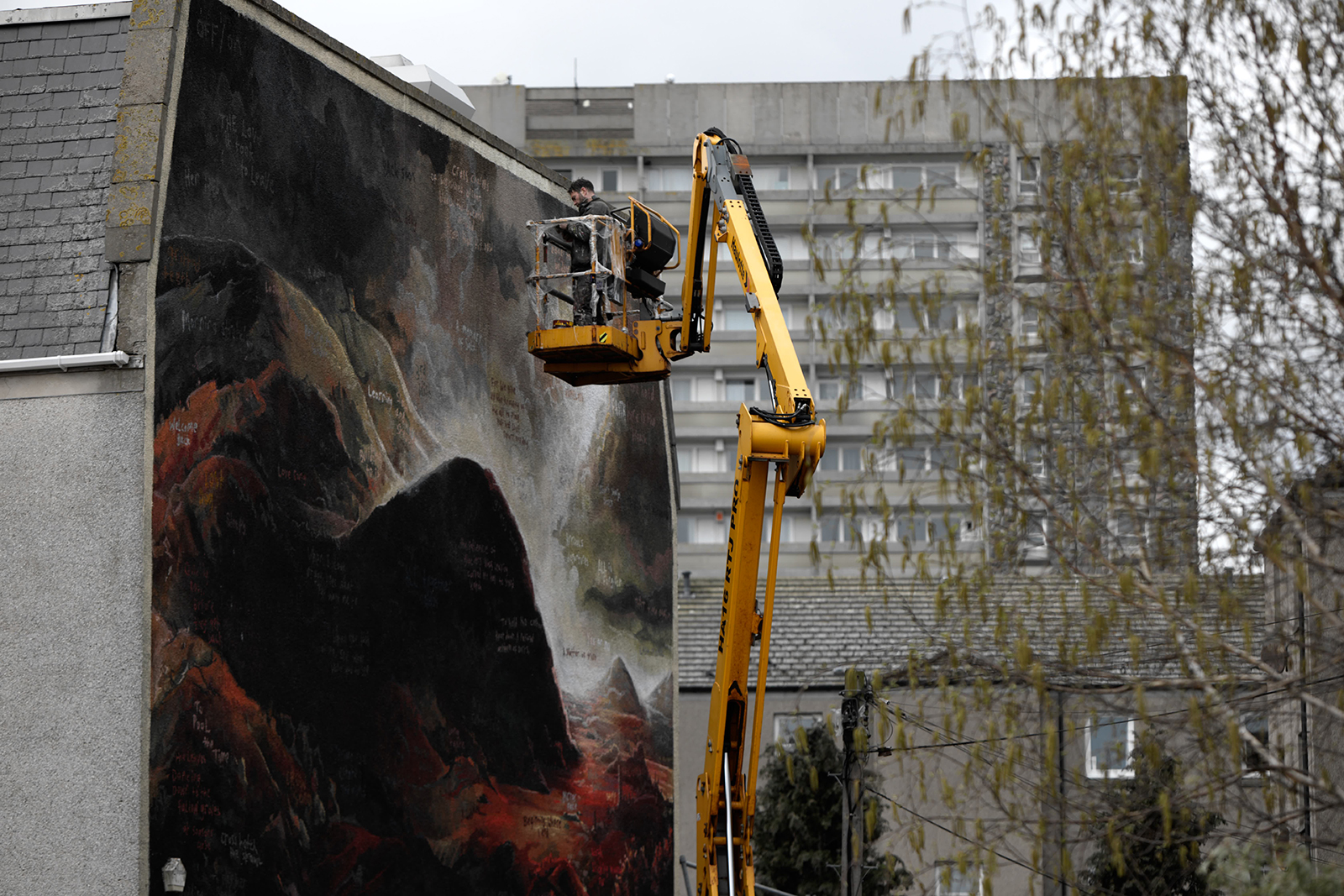
So, the scene is set, POETRY IS IN THE STREETS but comprising two distinct approaches. The MONUMENTAL: As mentioned, commandeering in an Art Deco swimming baths. Another example would be one of Hicks’ signature gigantic sublime landscapes which for Nuart 2026 was anomalously peppered with quizzical text.

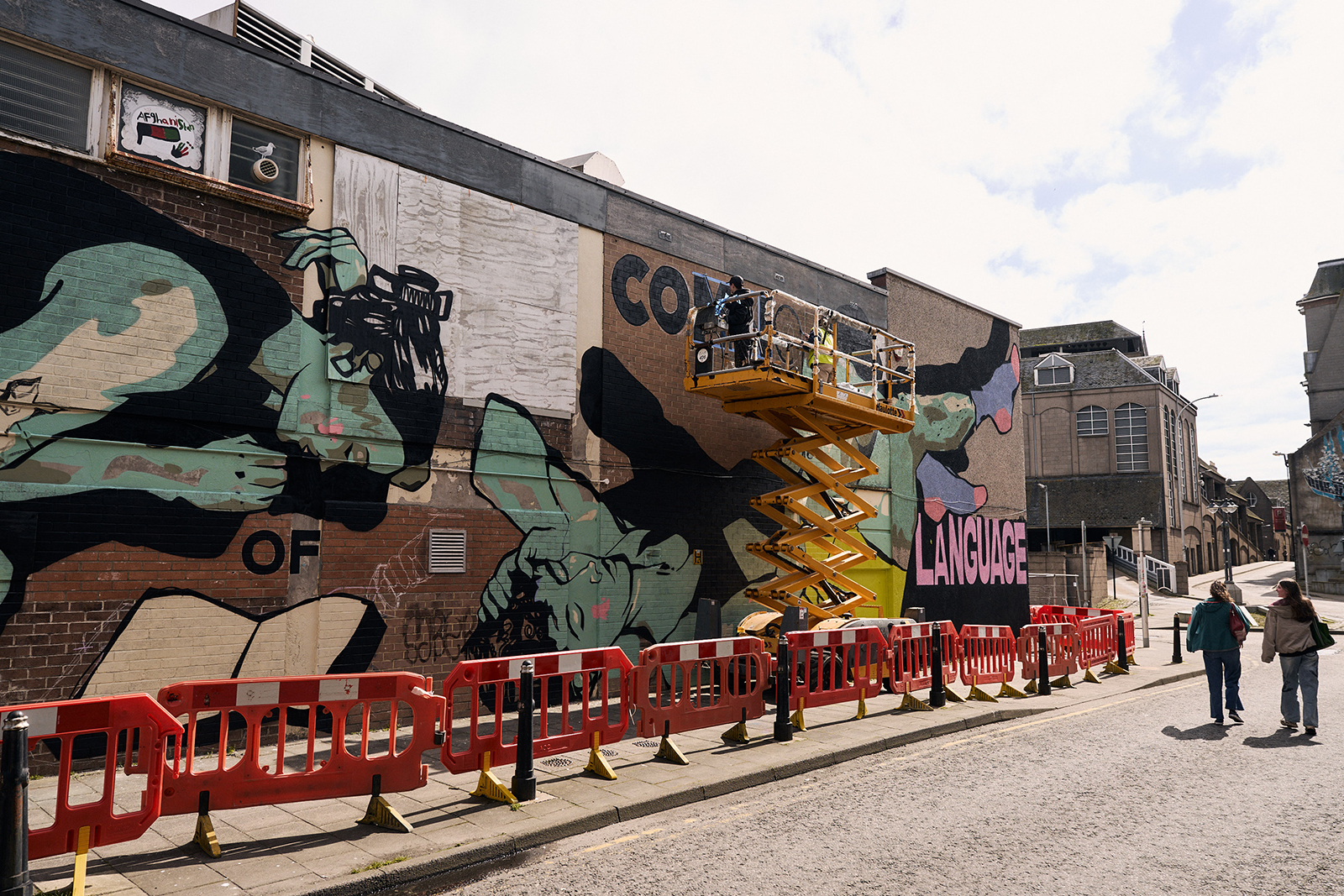
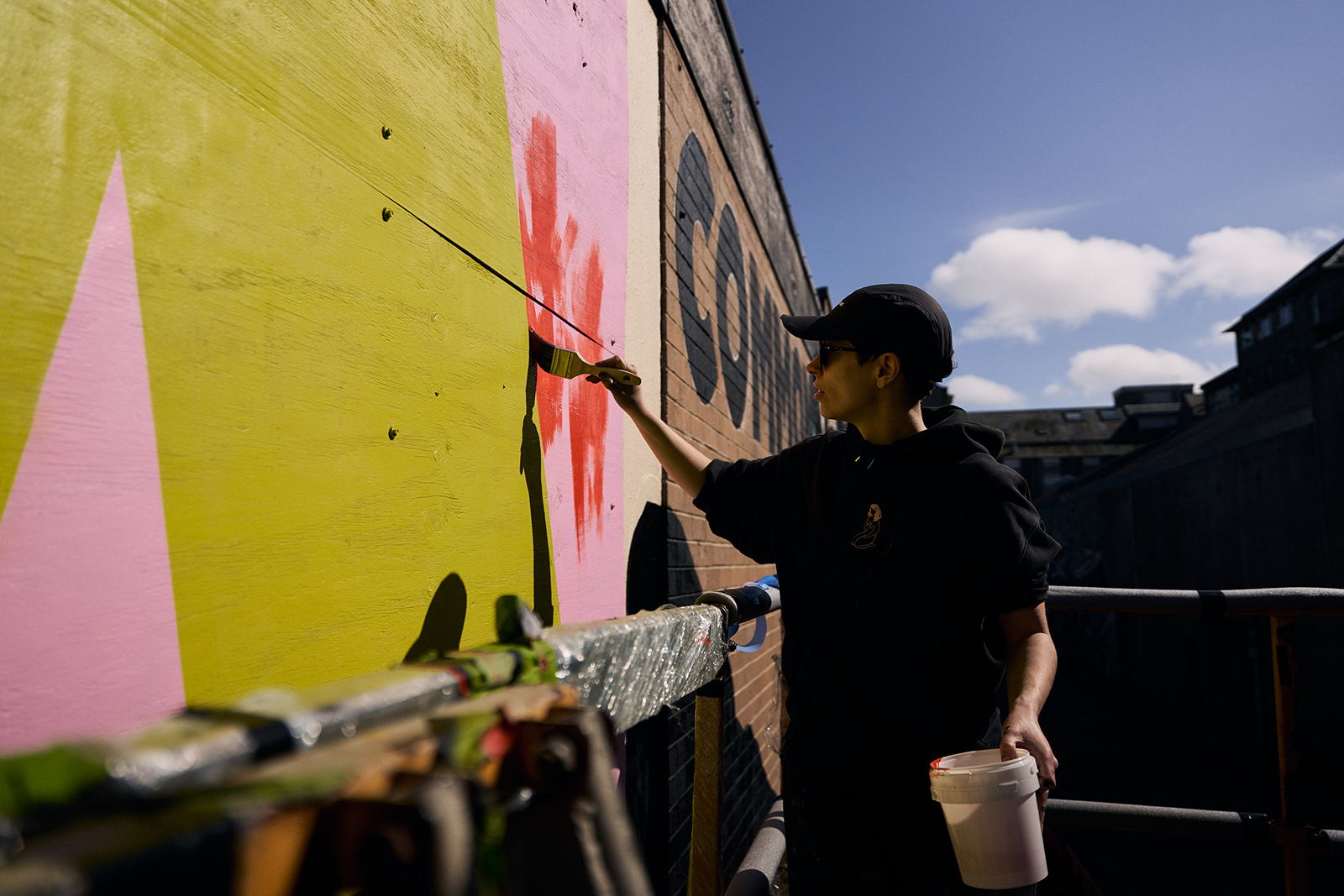
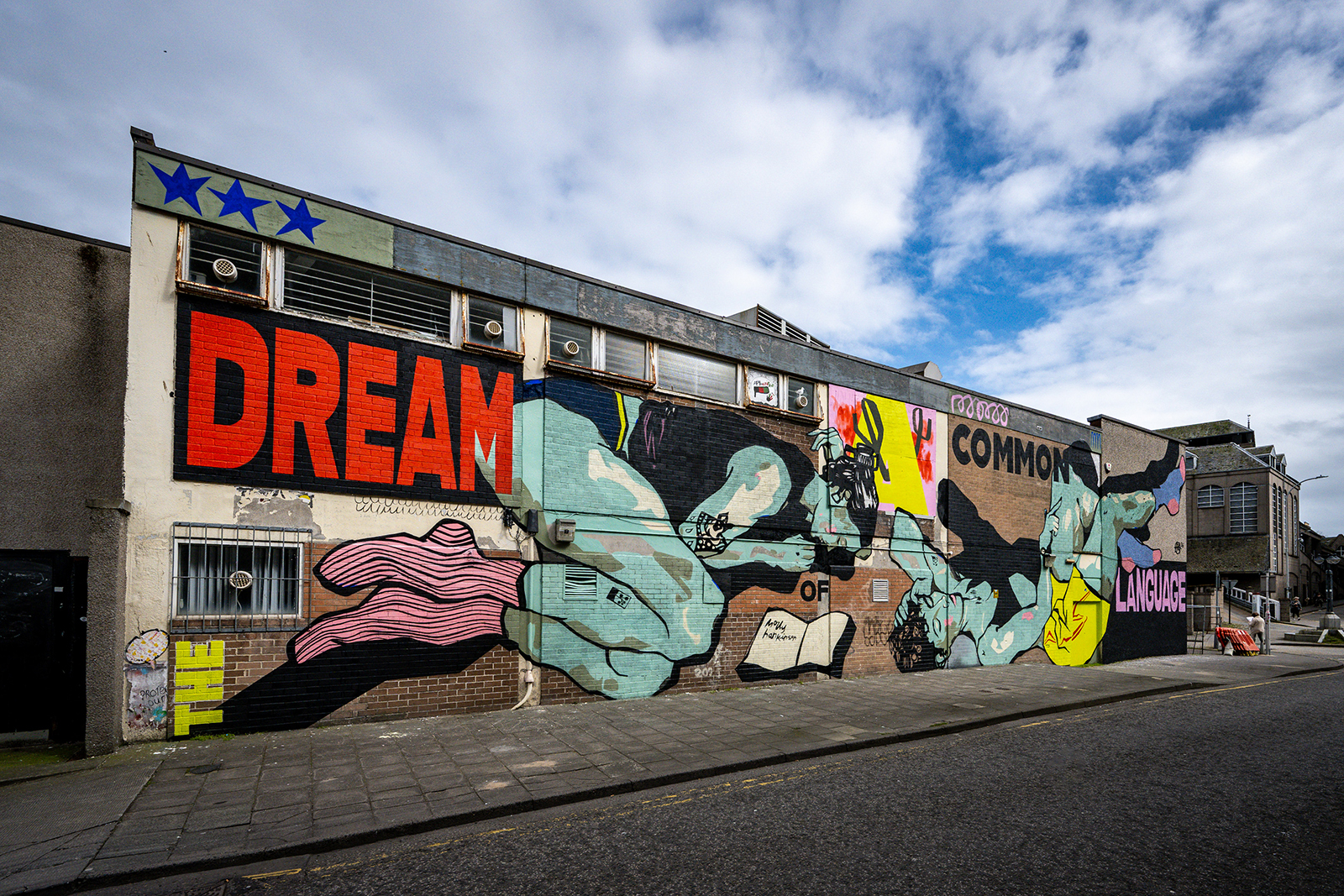
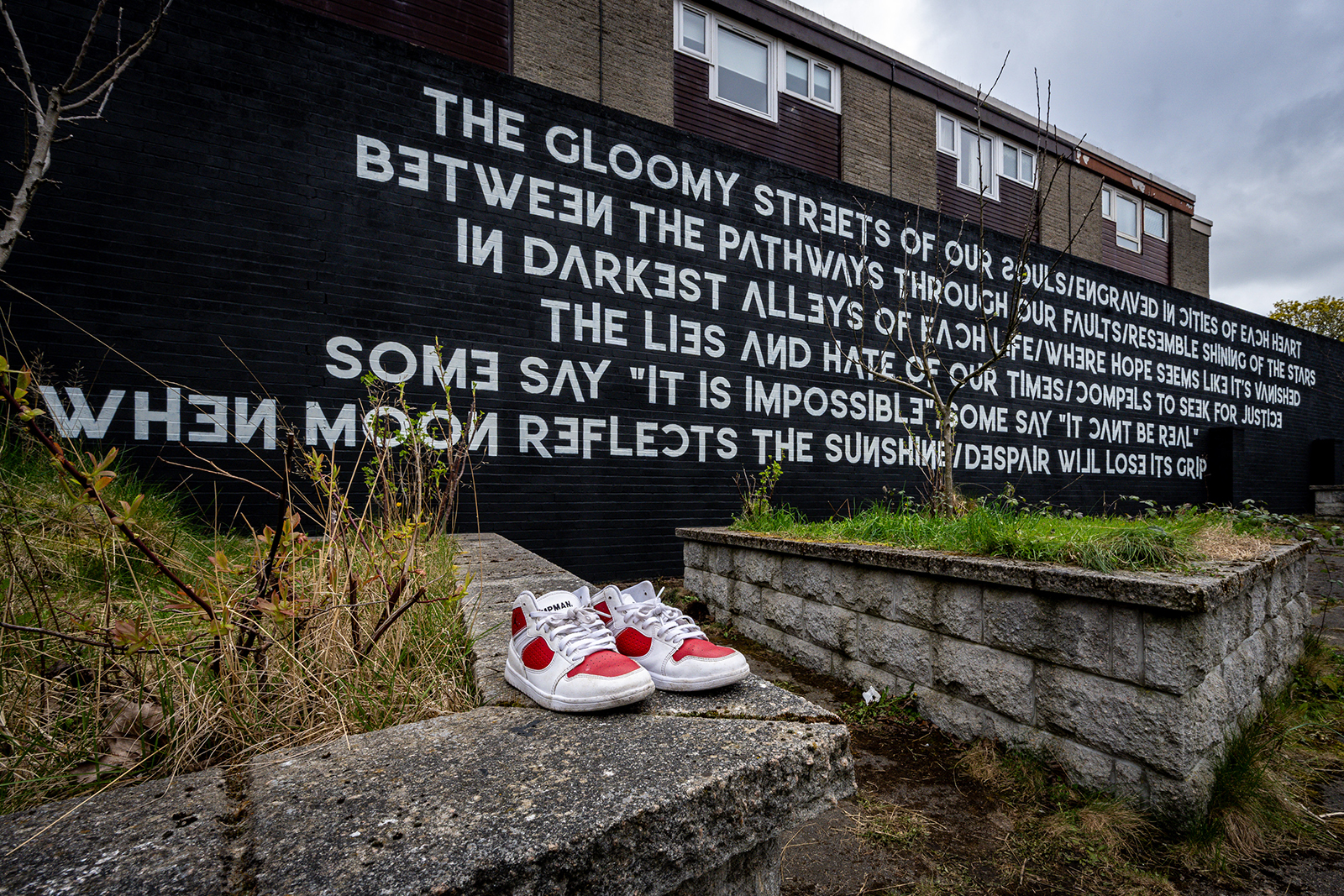
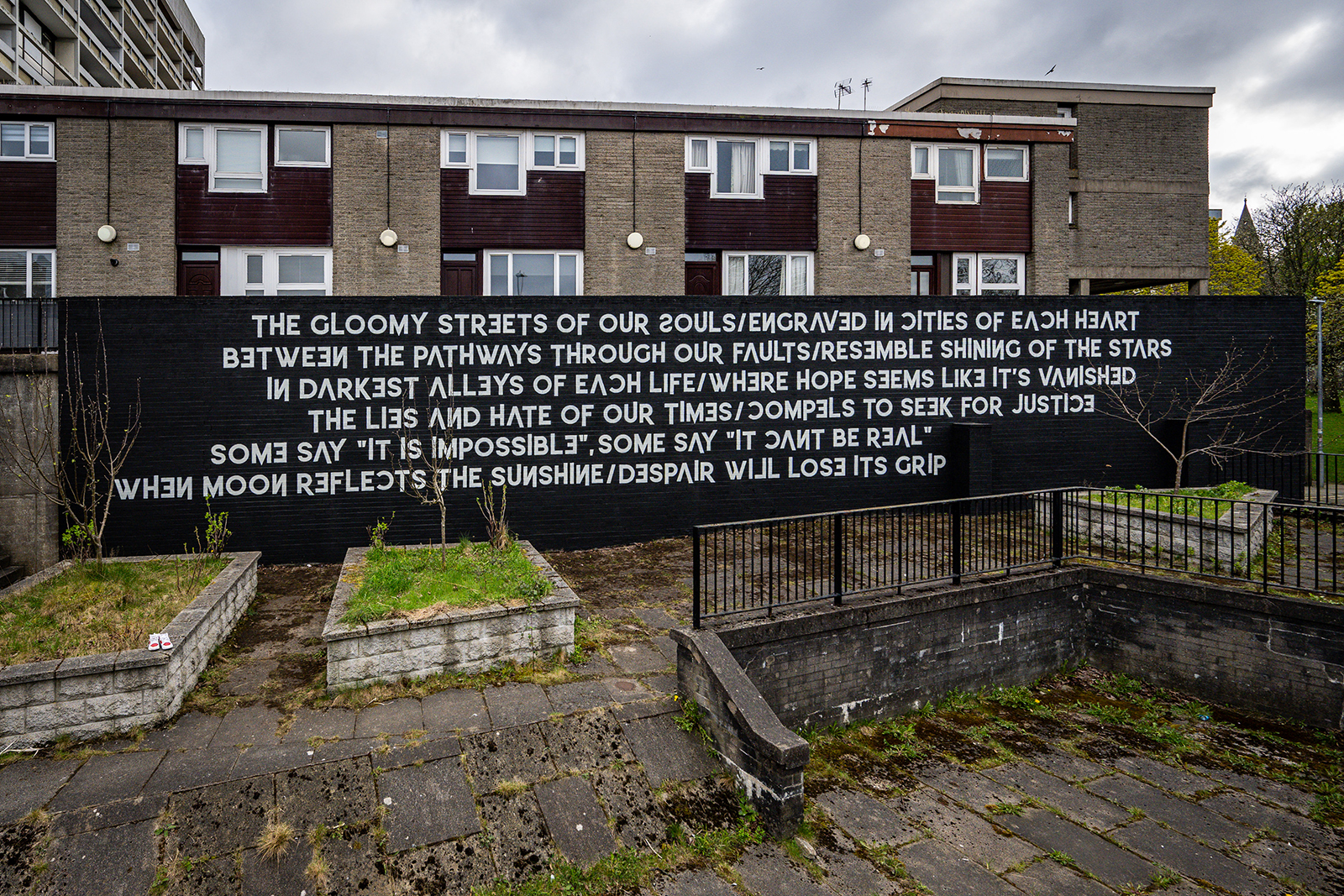
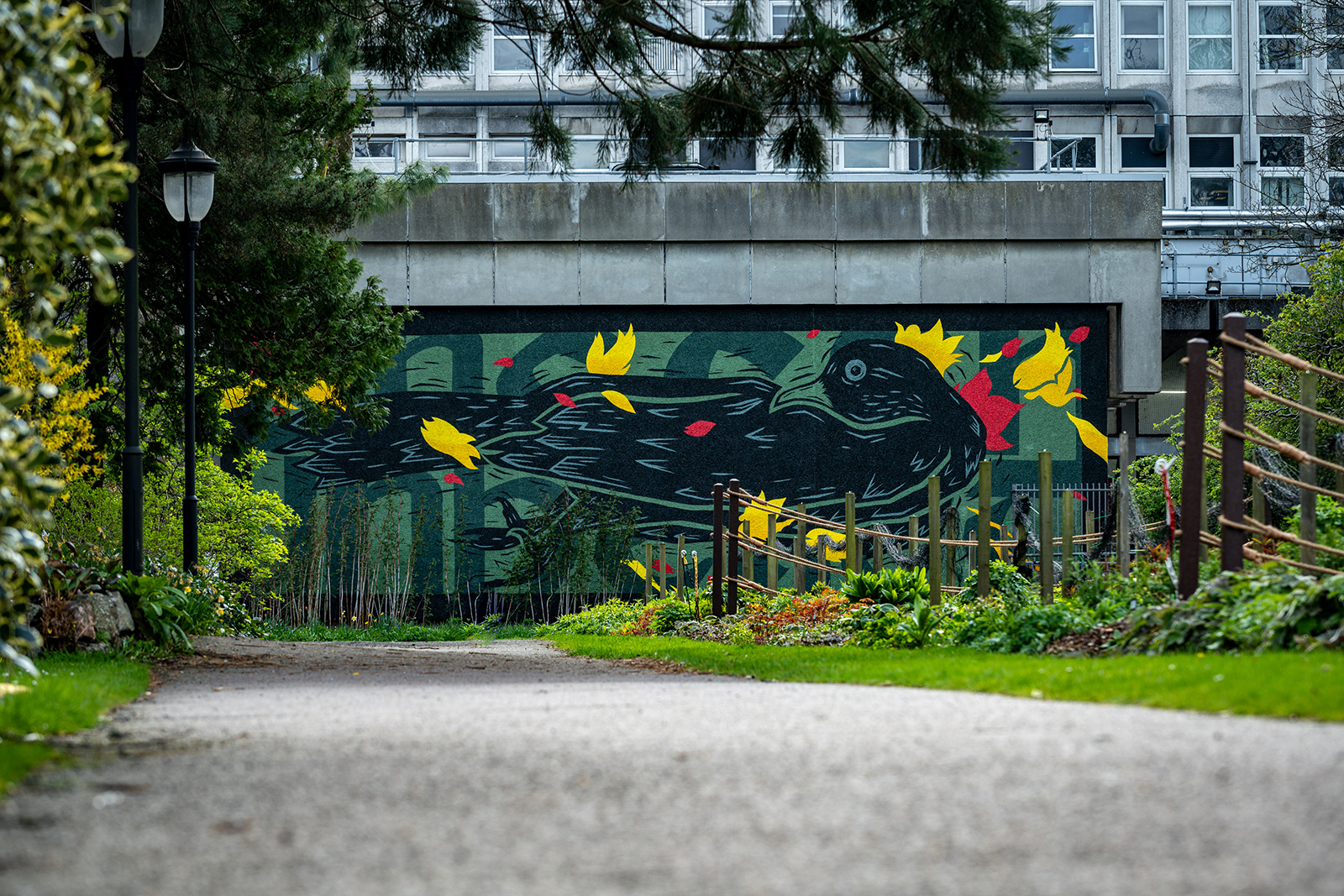
V2K’s melancholy work occupied a vast social housing wall. And Molly Hankinson combined image and text in her sumptuous twenty-five-metre-wide, 6-metre-high creation titled DREAM OF COMMON LANGUAGE.

AND…

Molly Hankinson (UK)
Trackie McLeod (SCT)
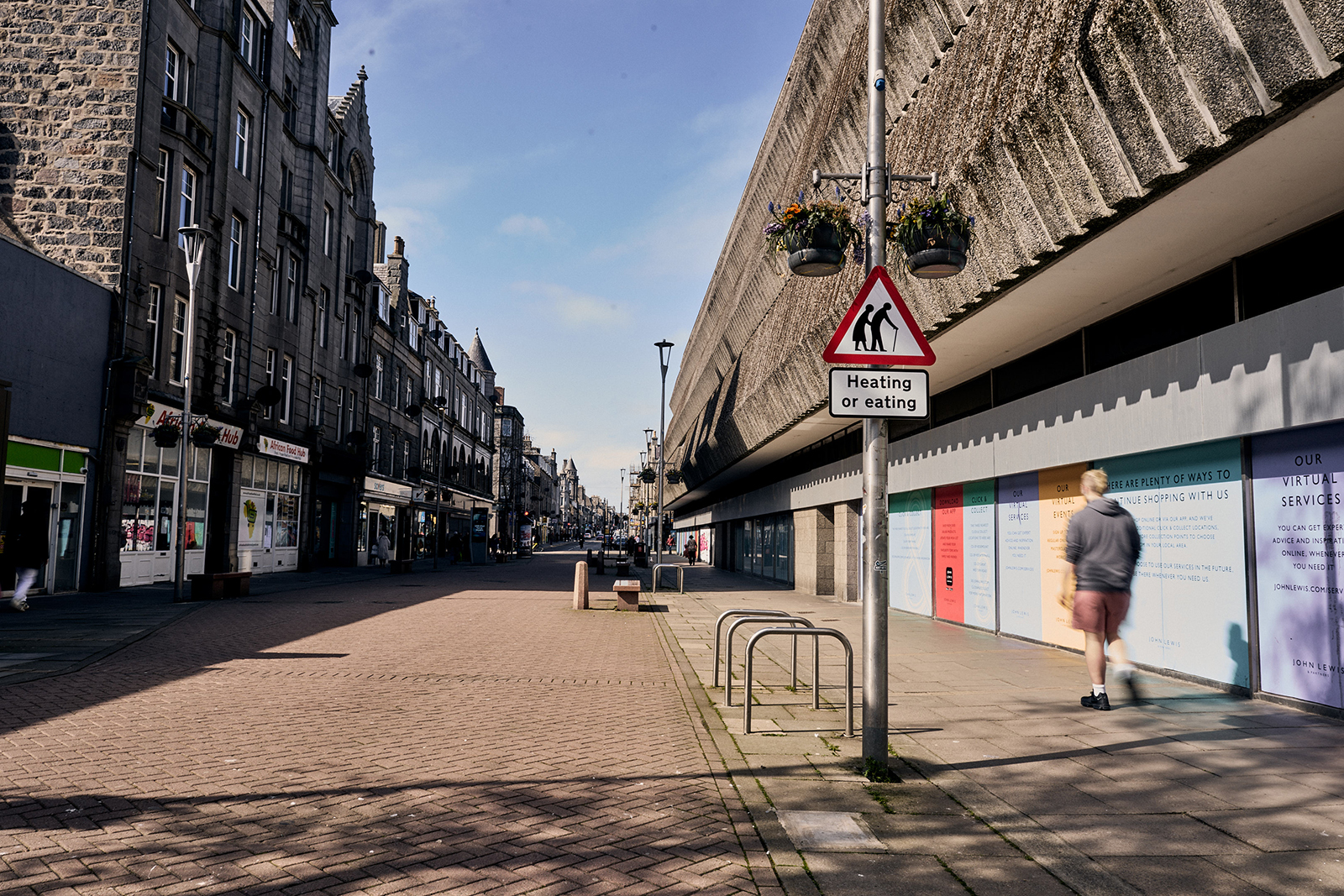
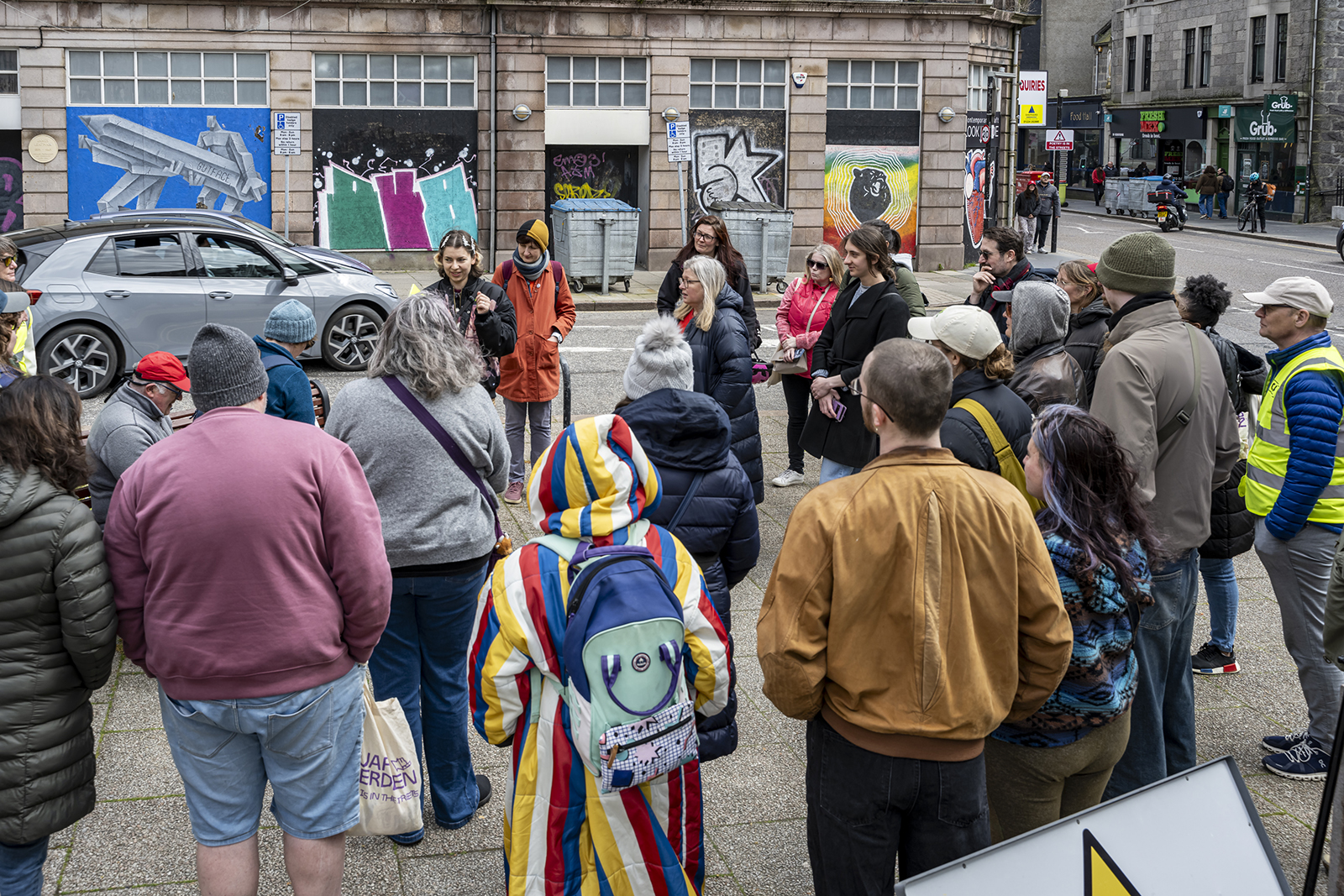
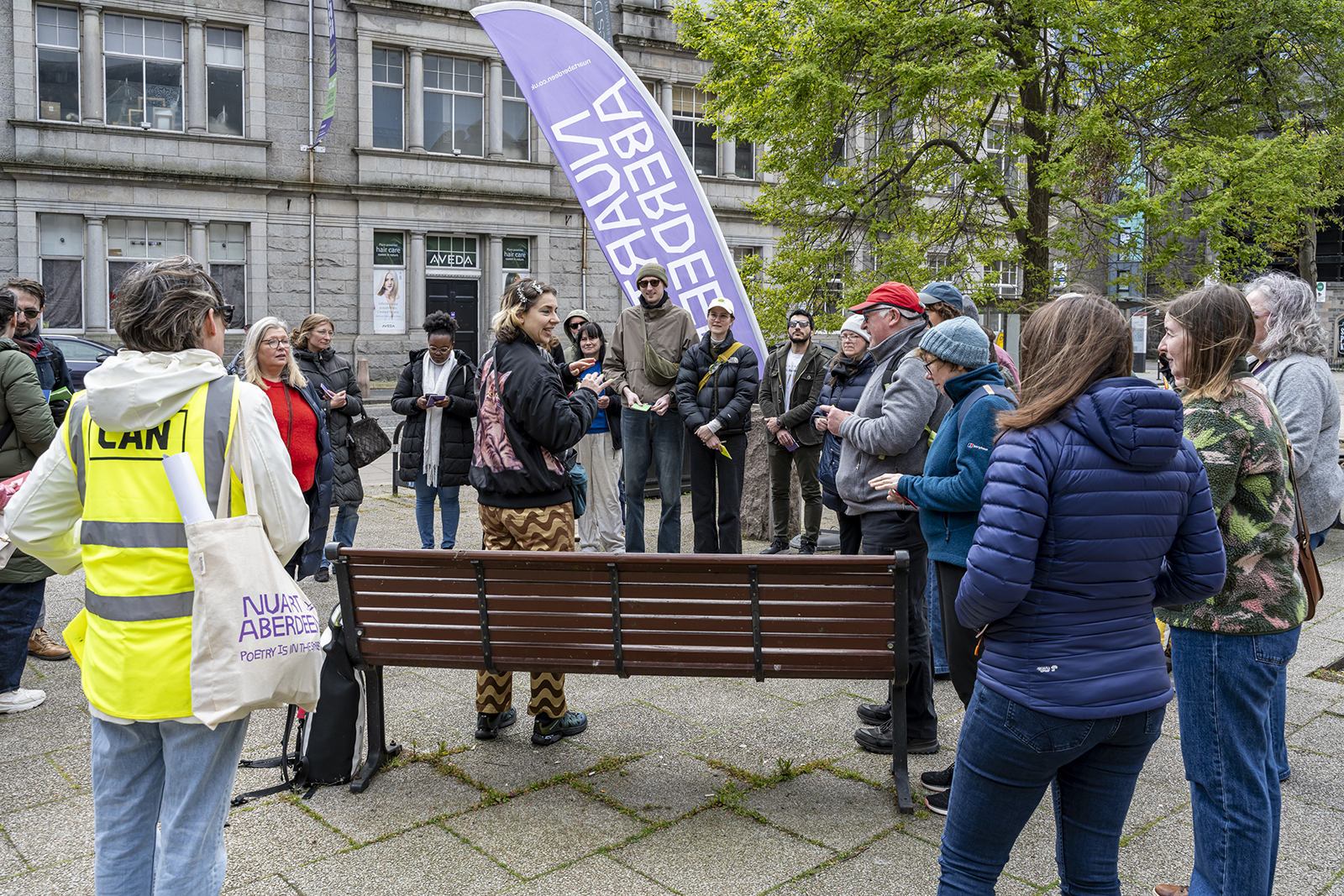
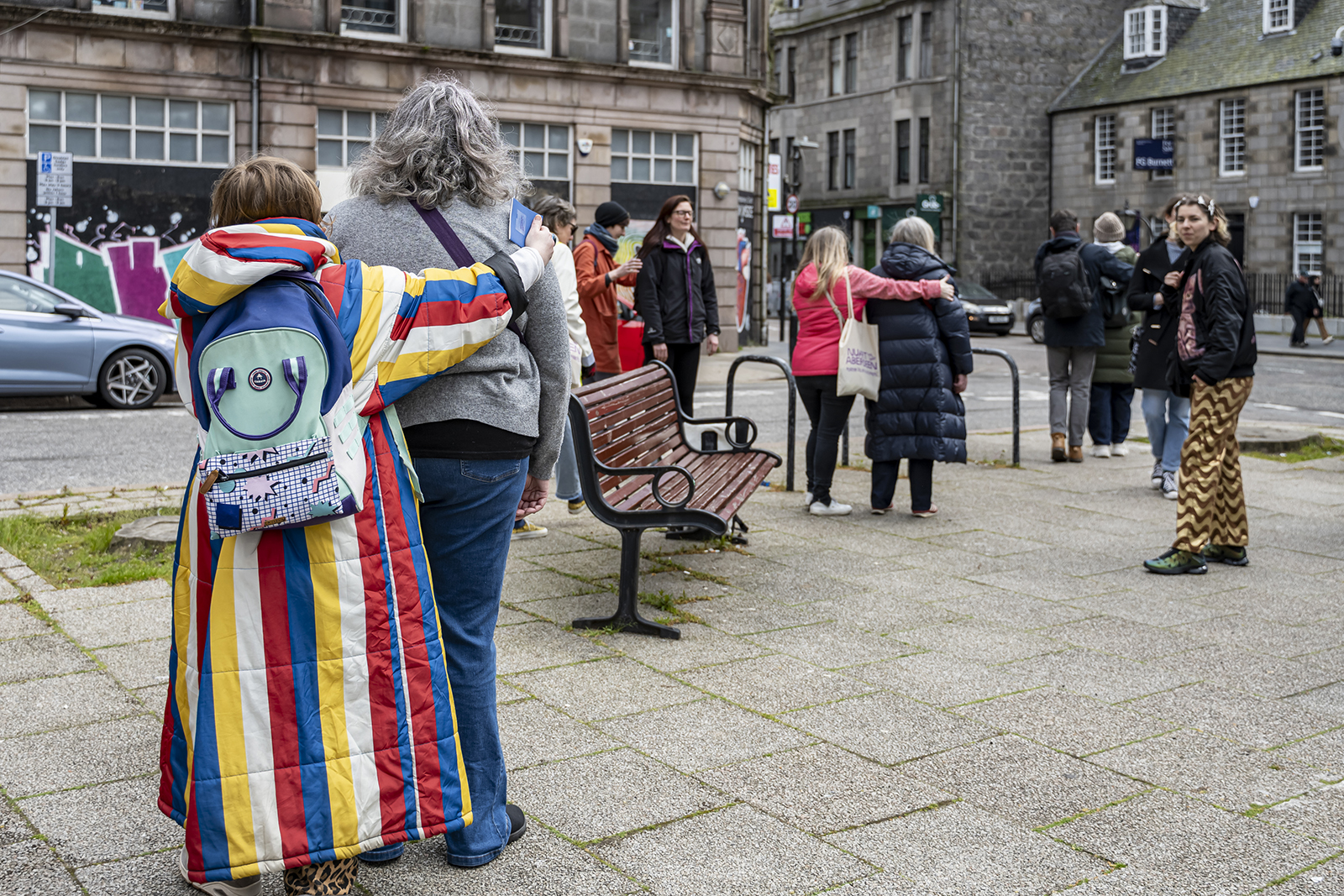
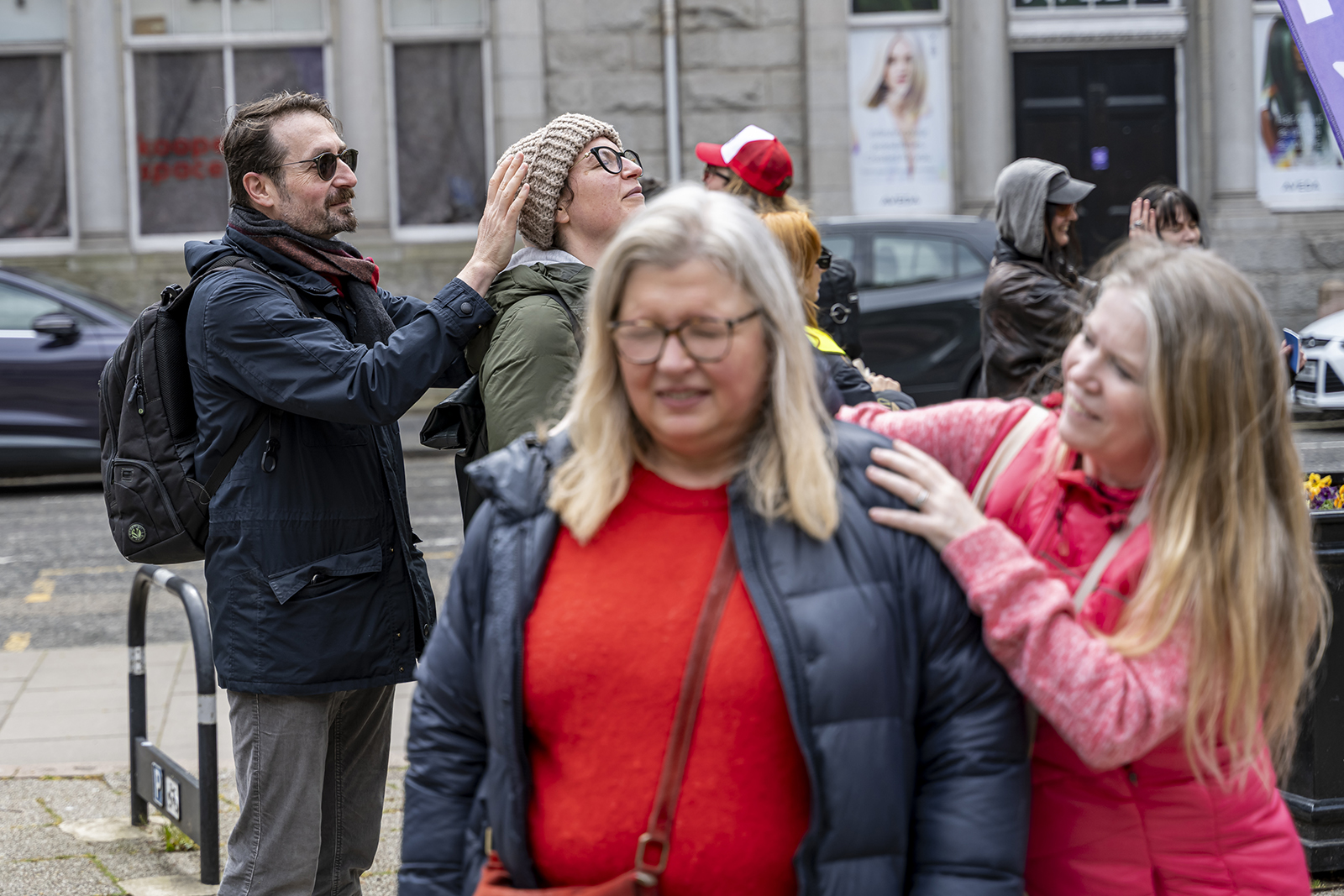
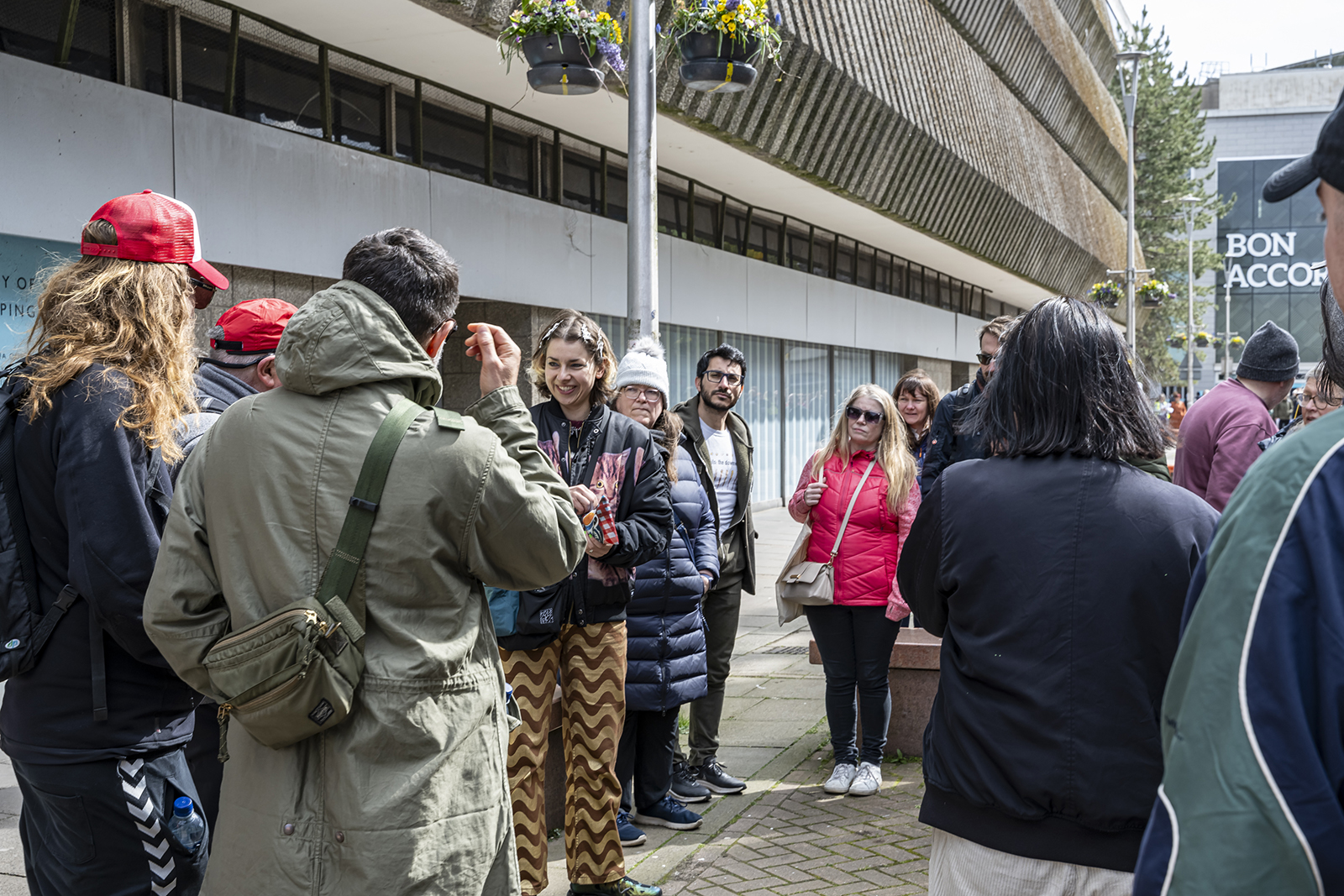
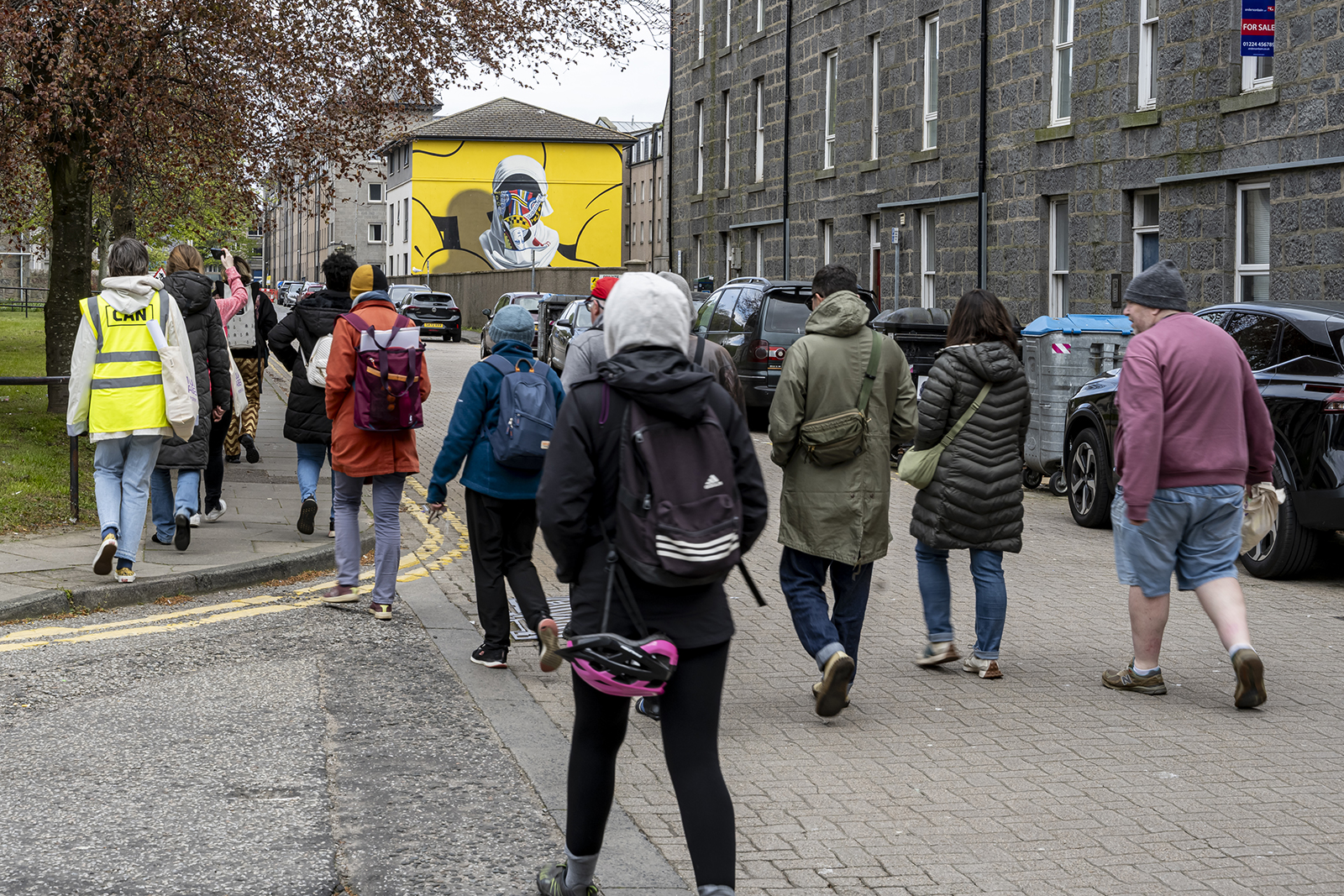
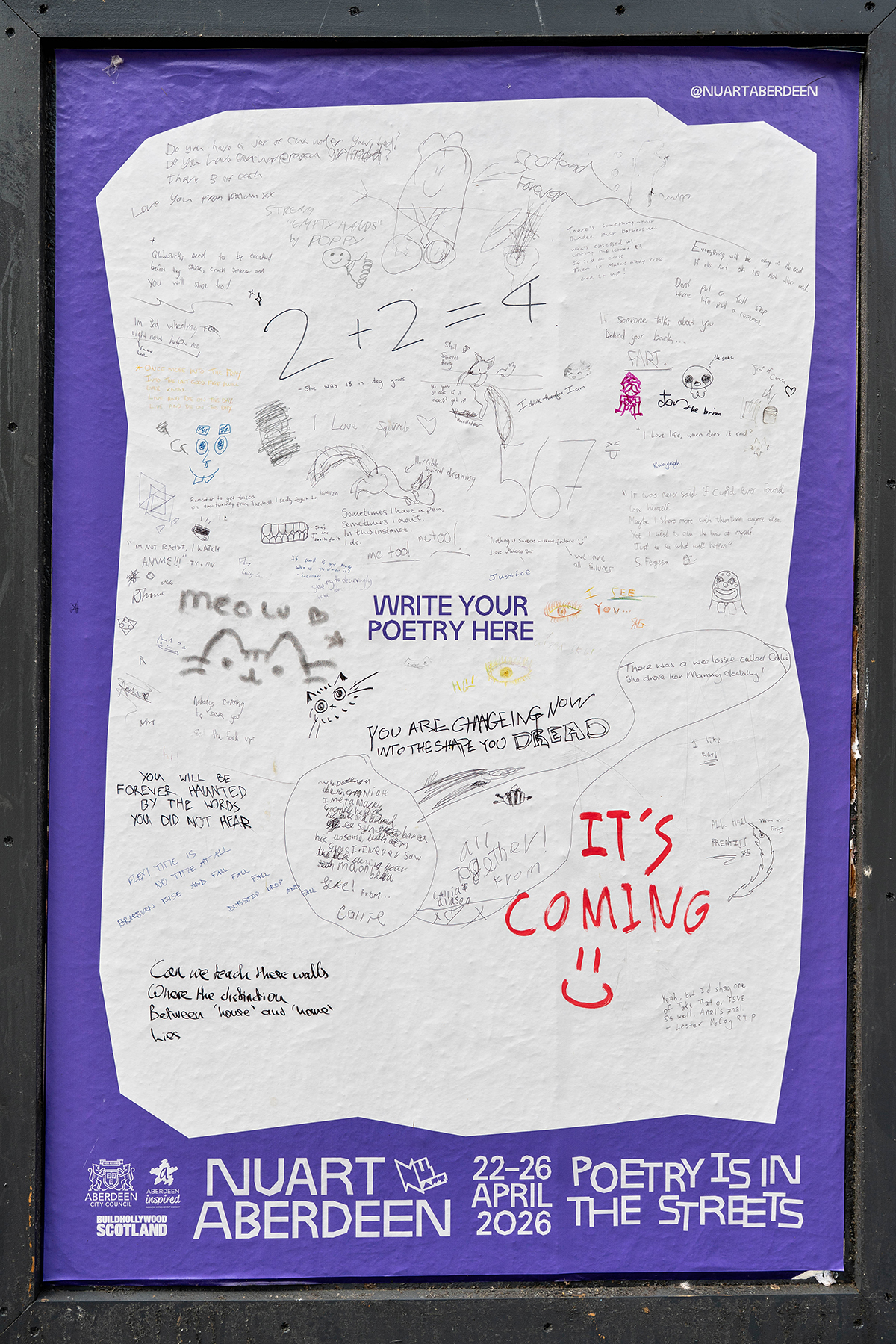
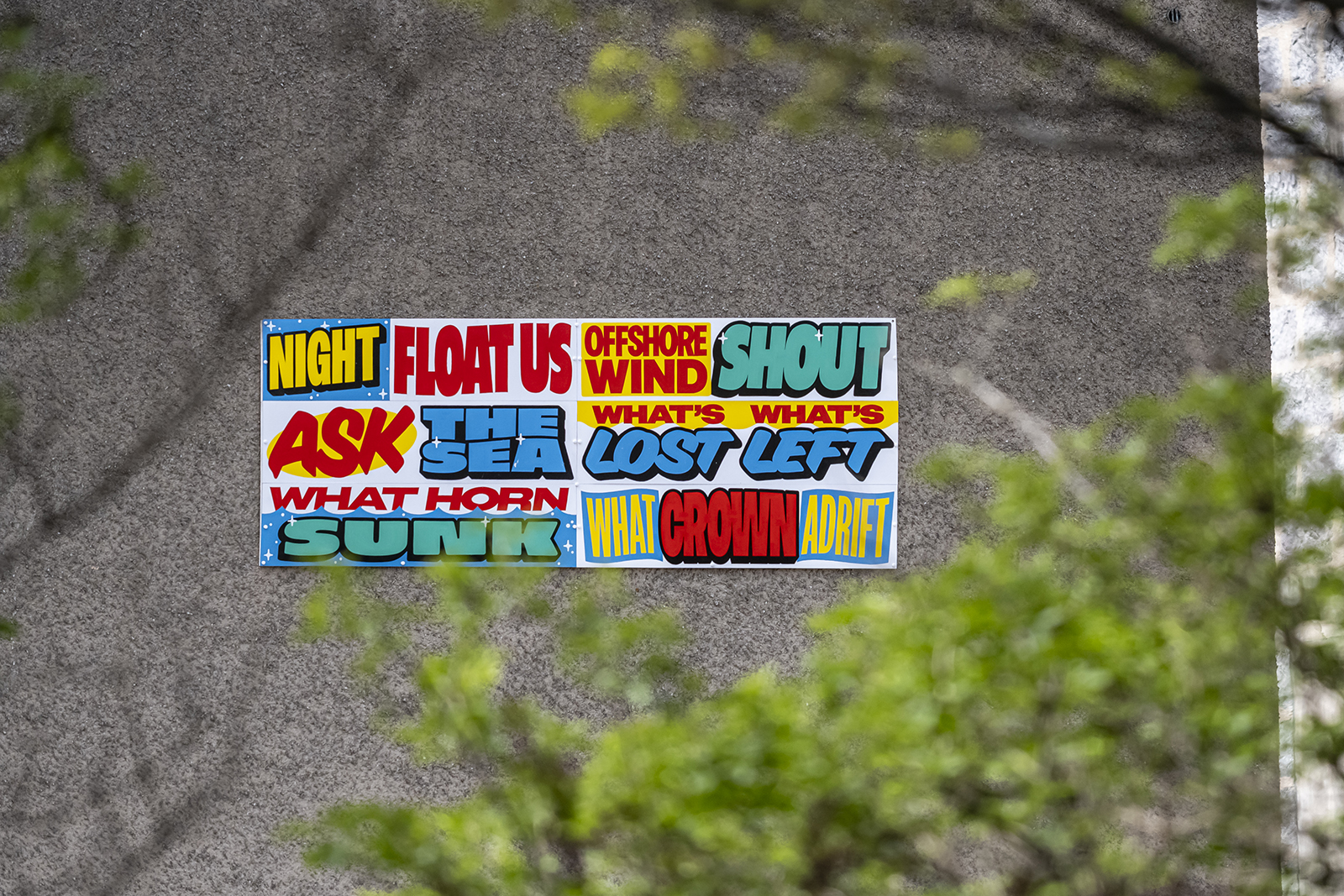
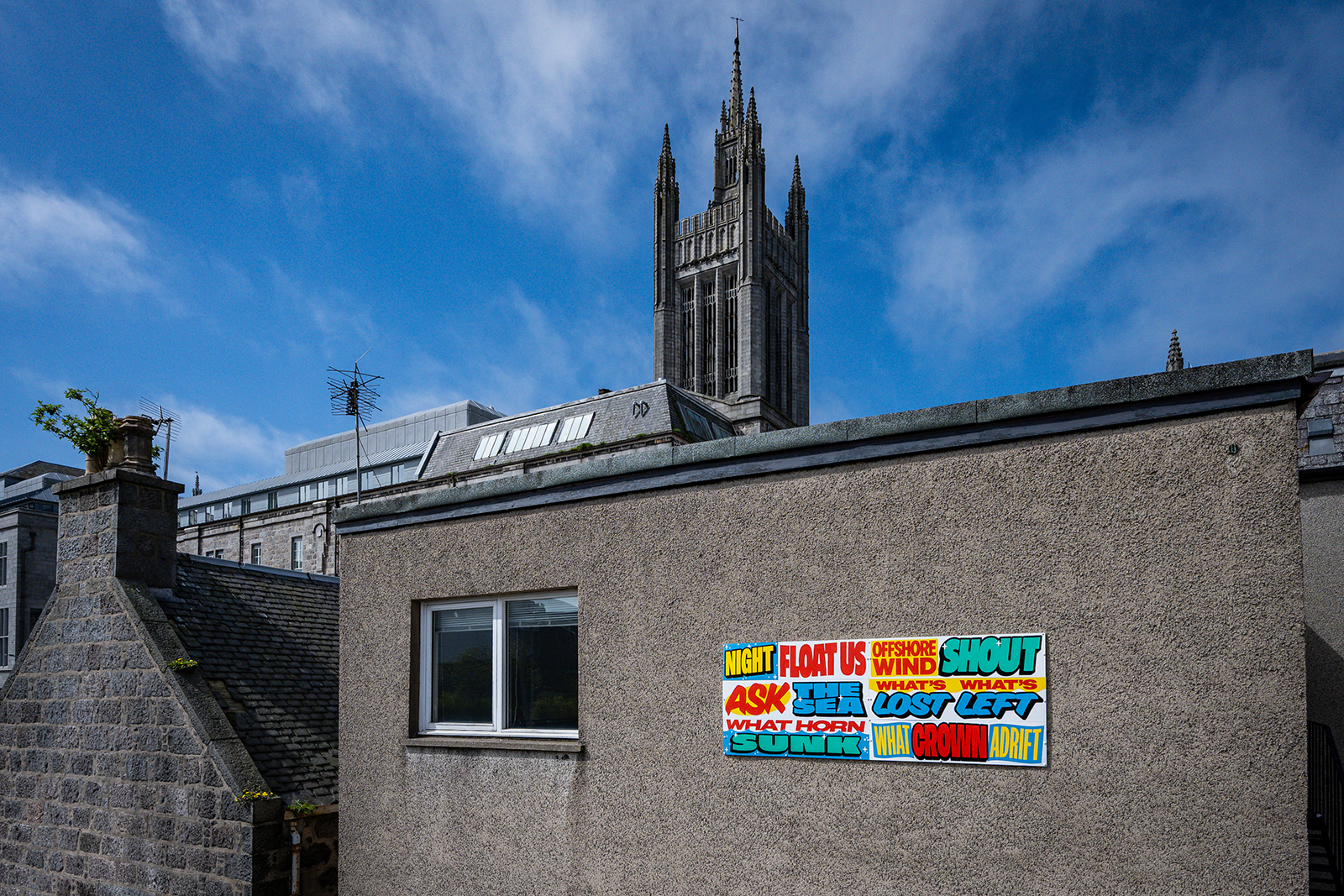
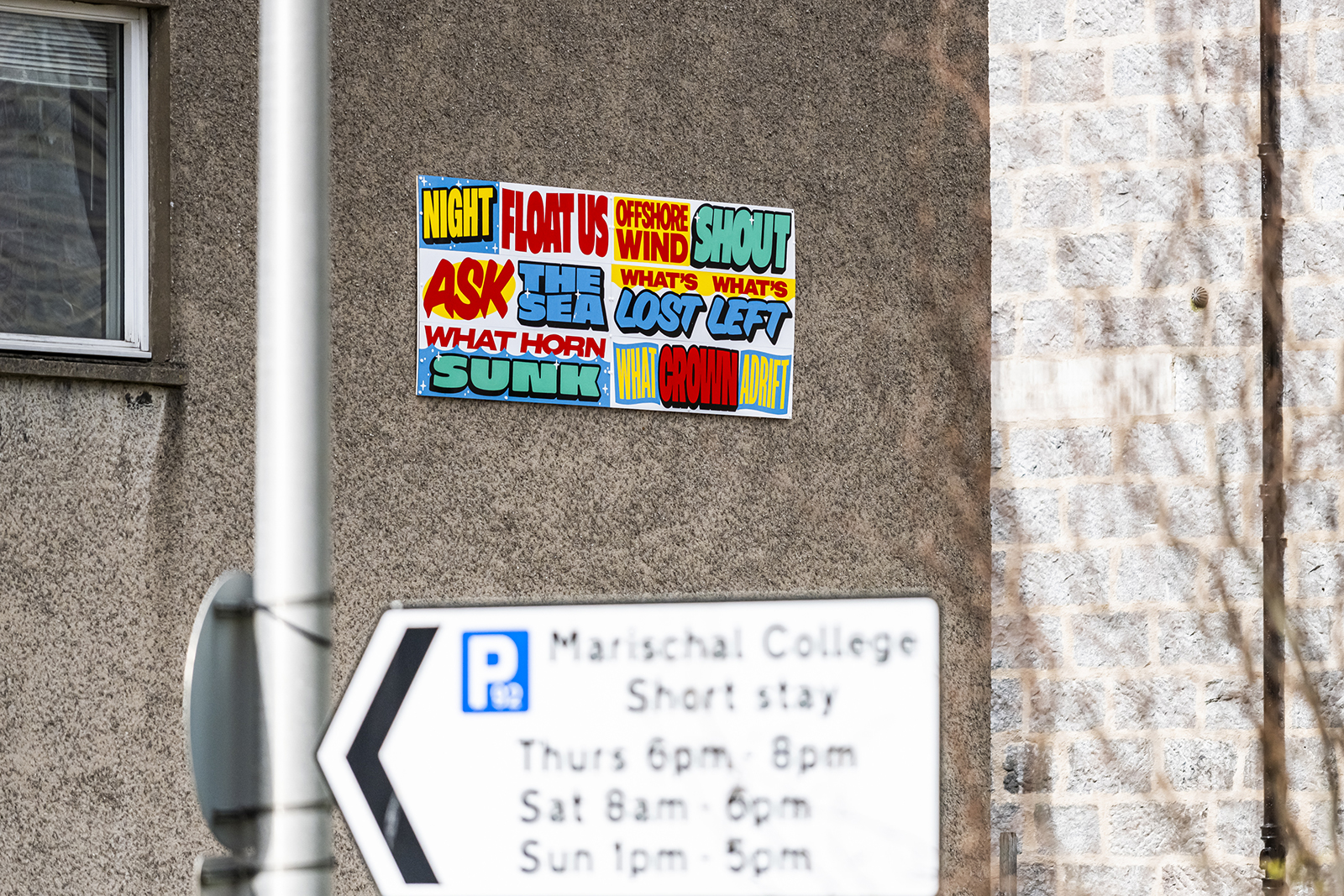
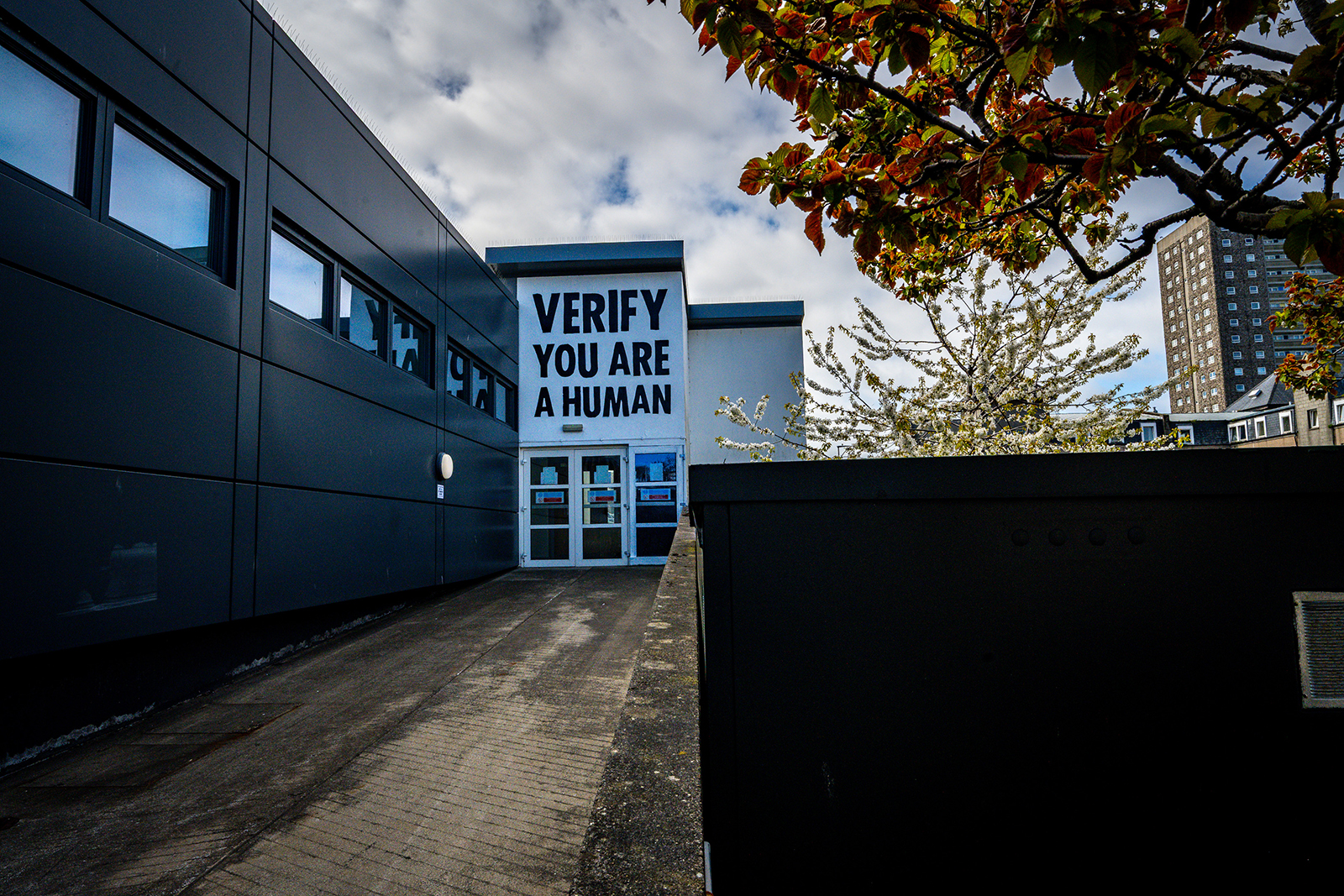
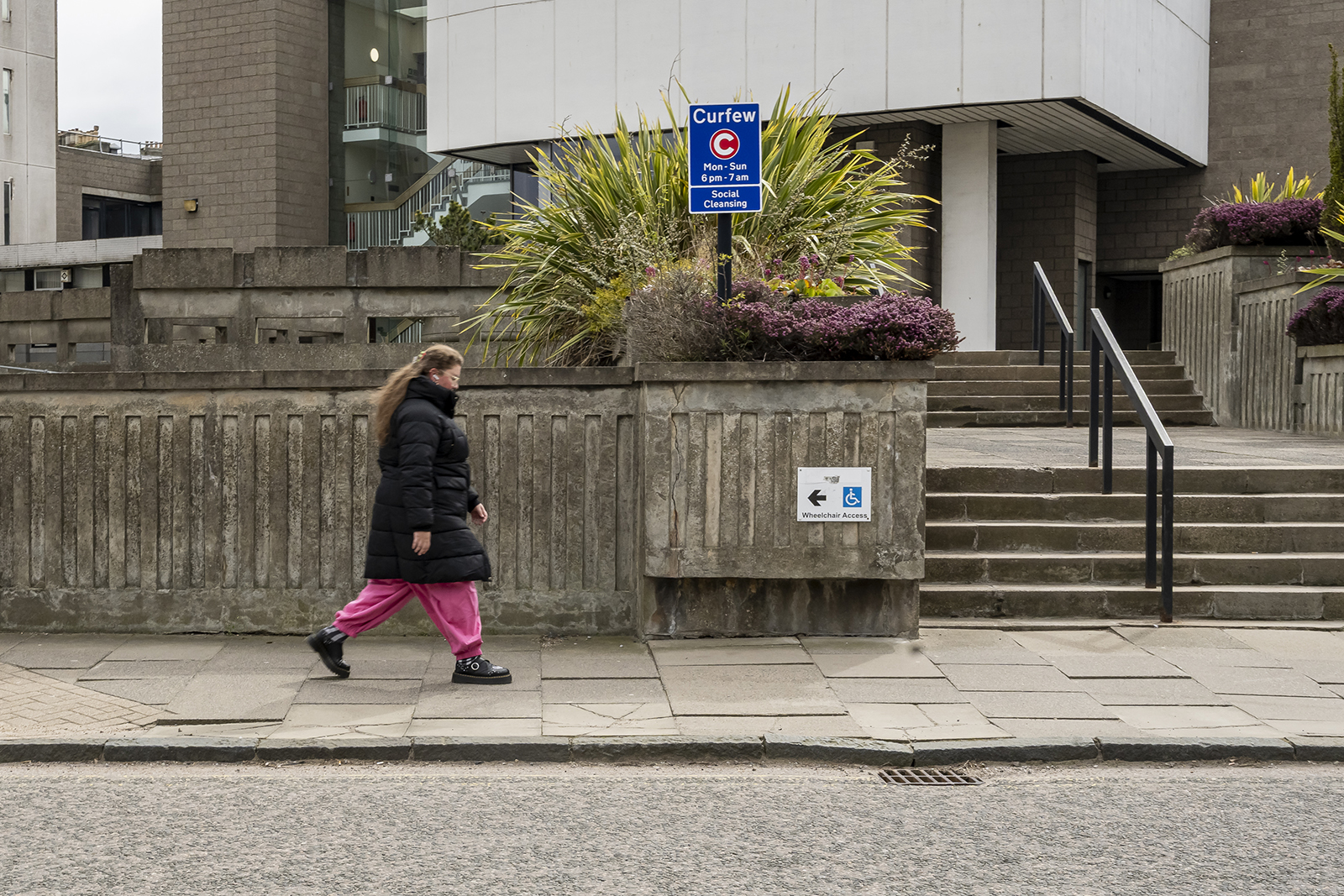
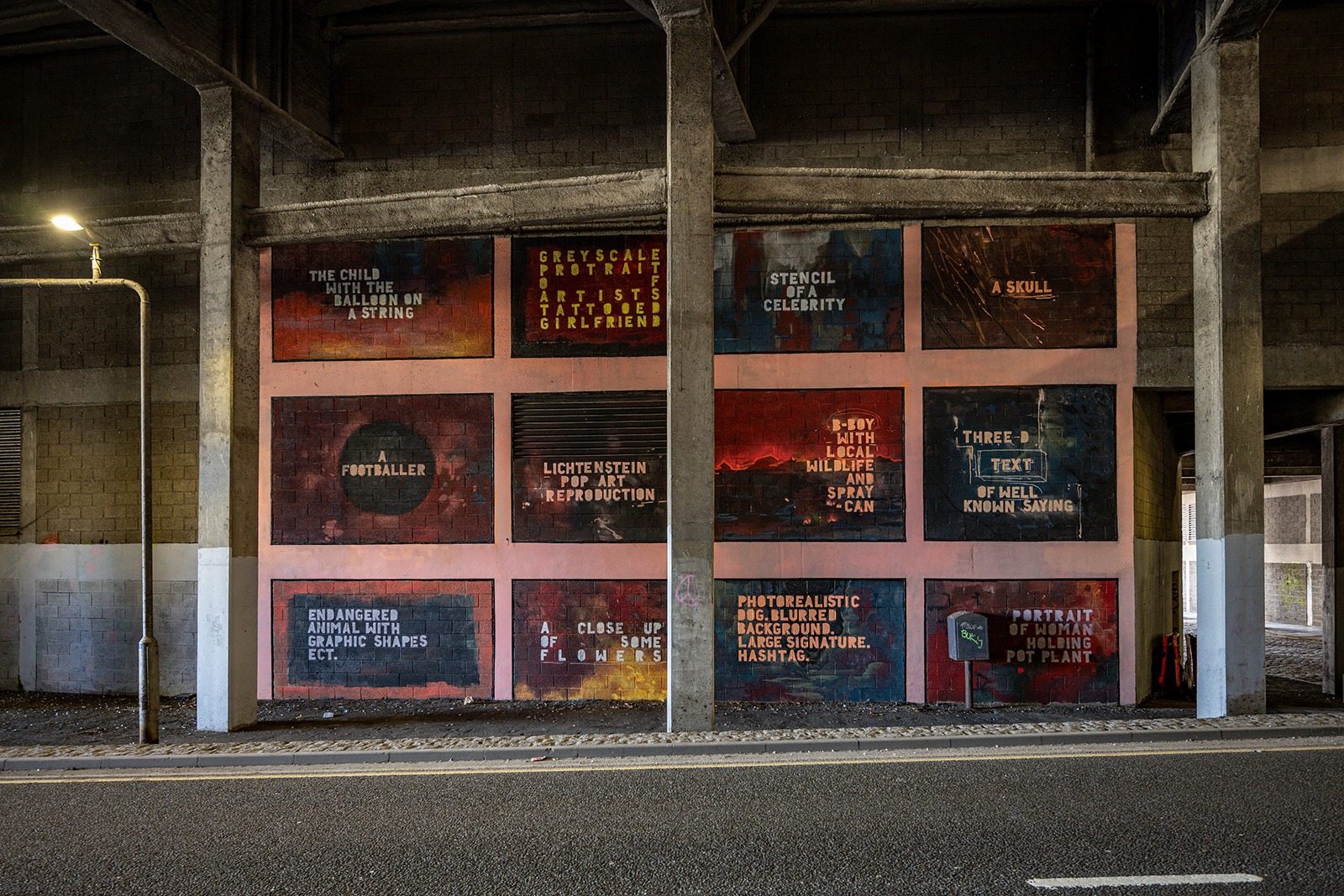
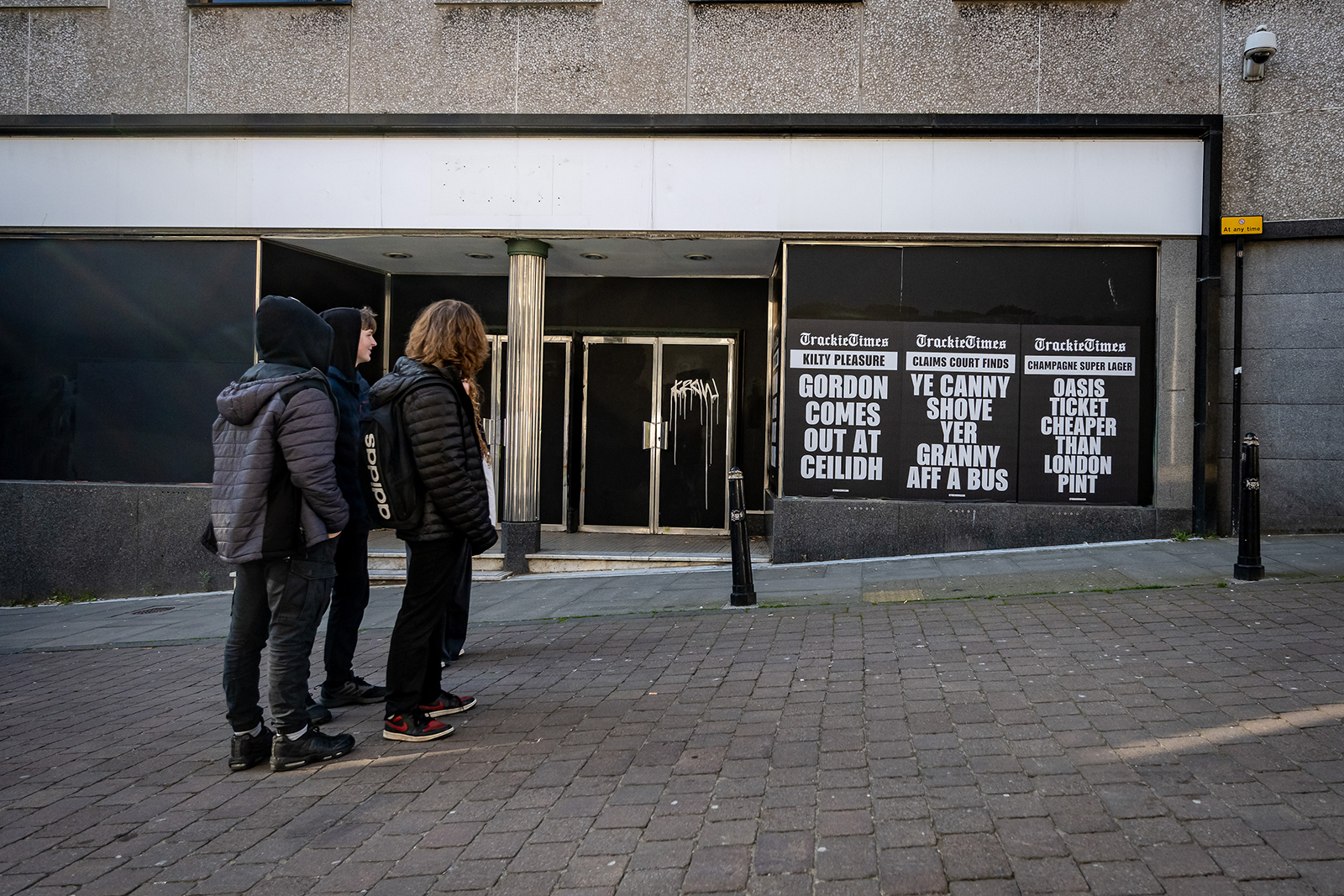
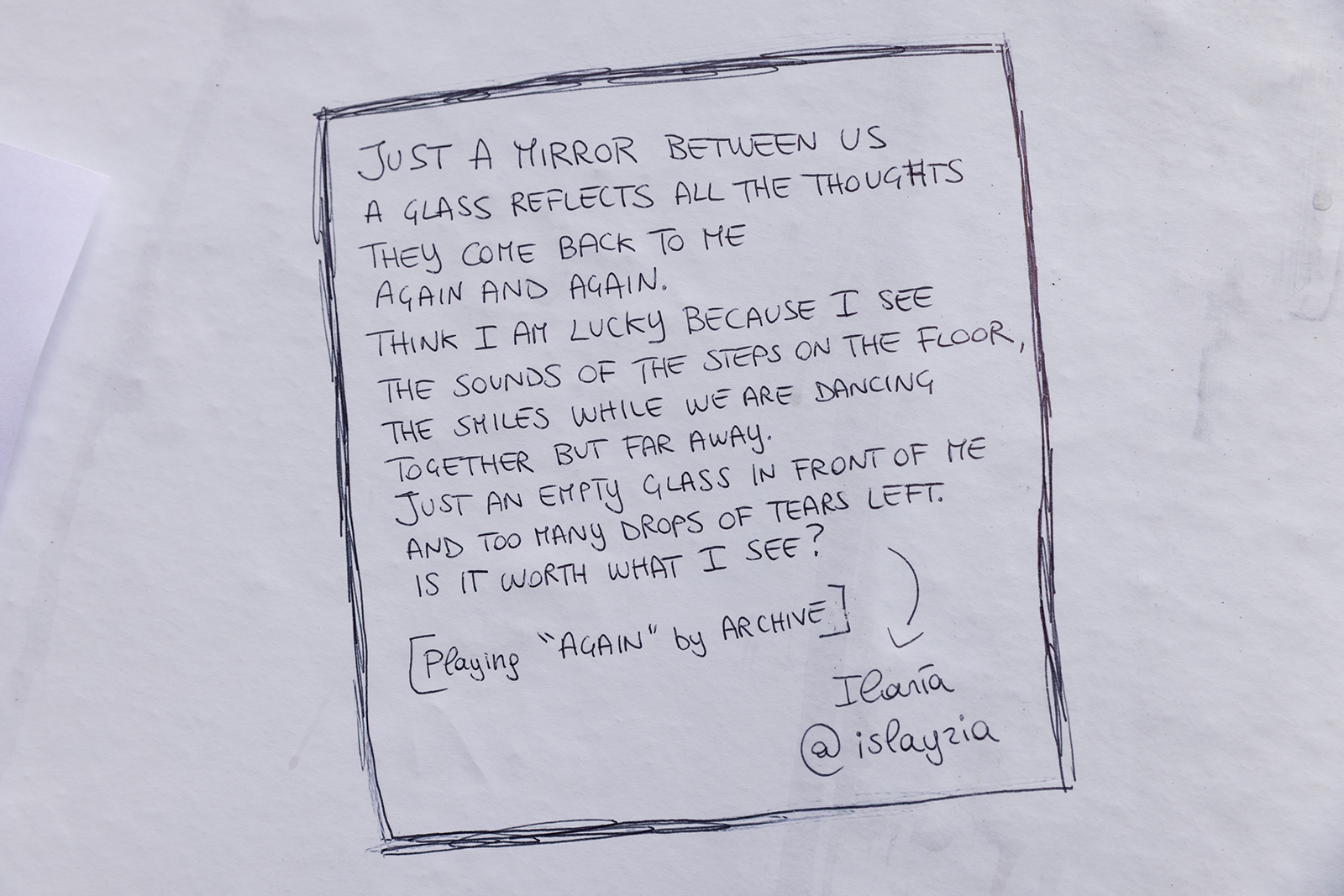
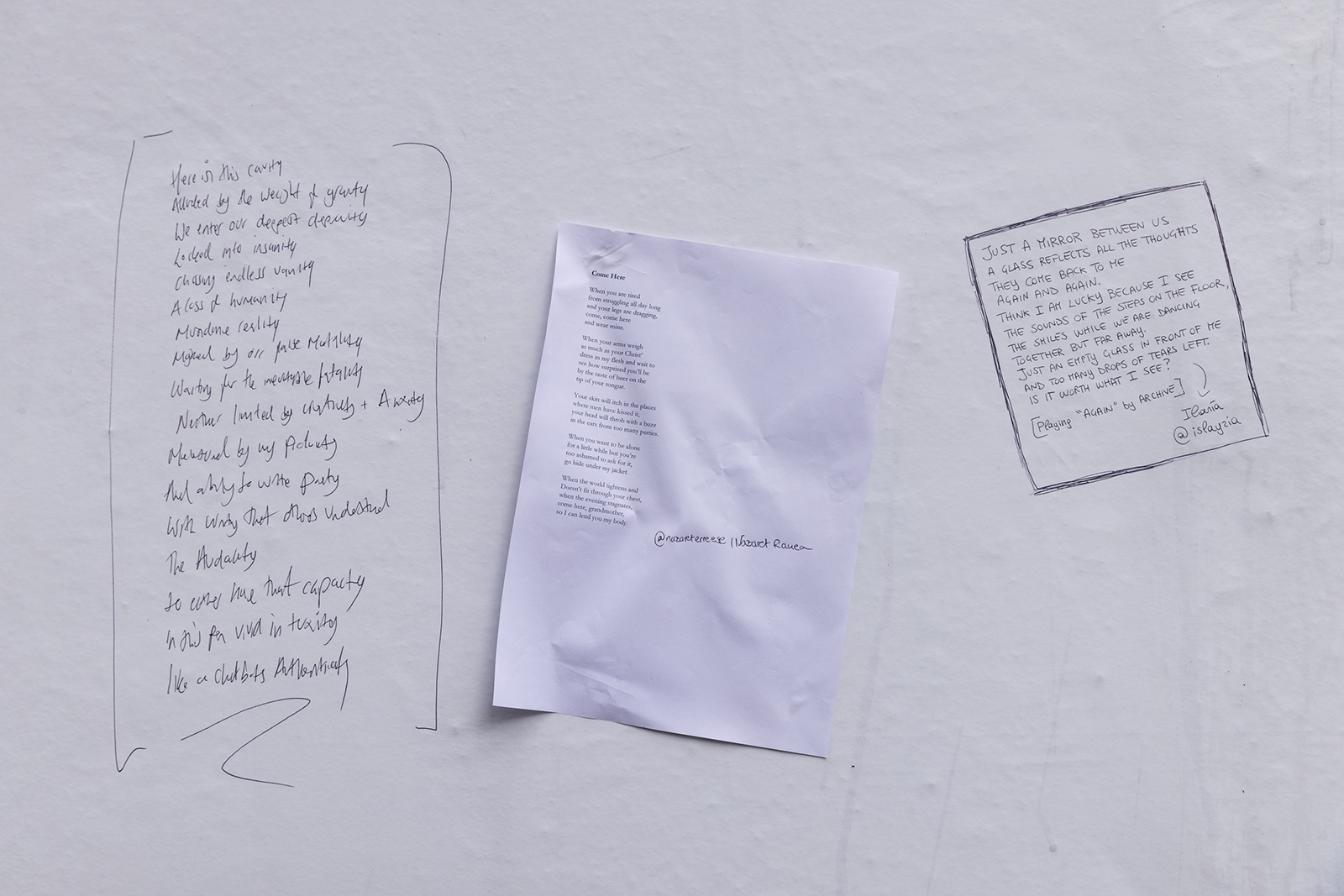
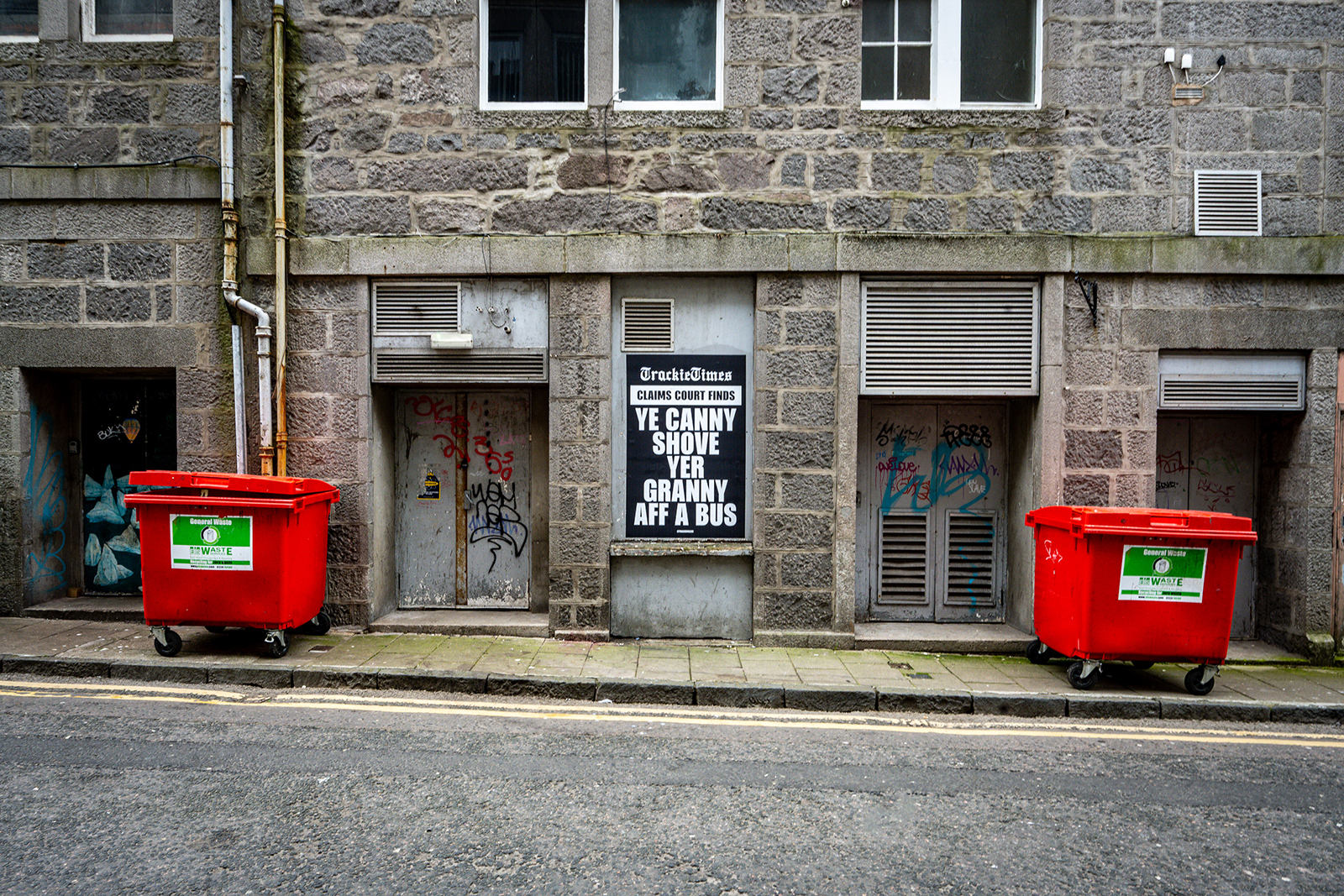
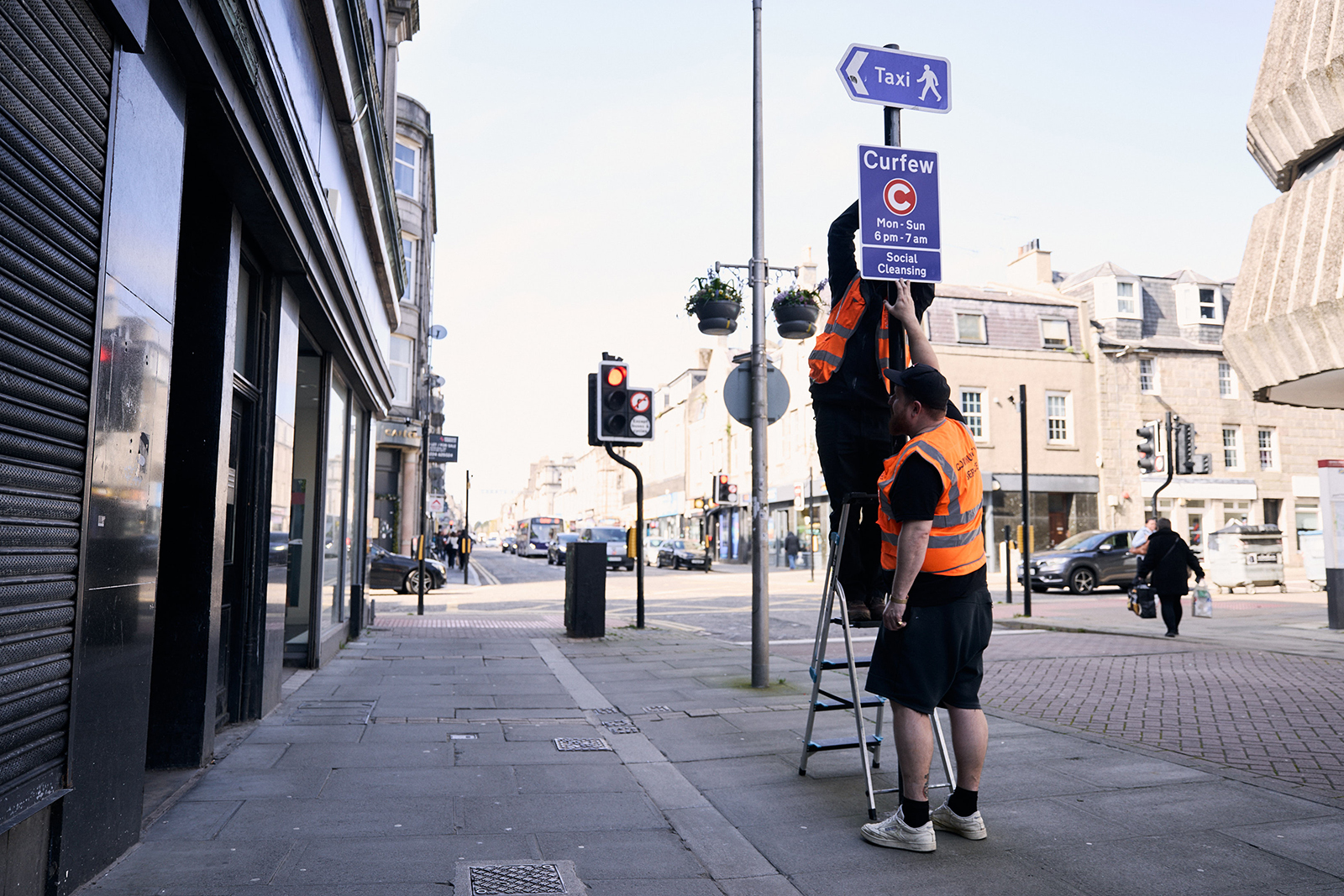
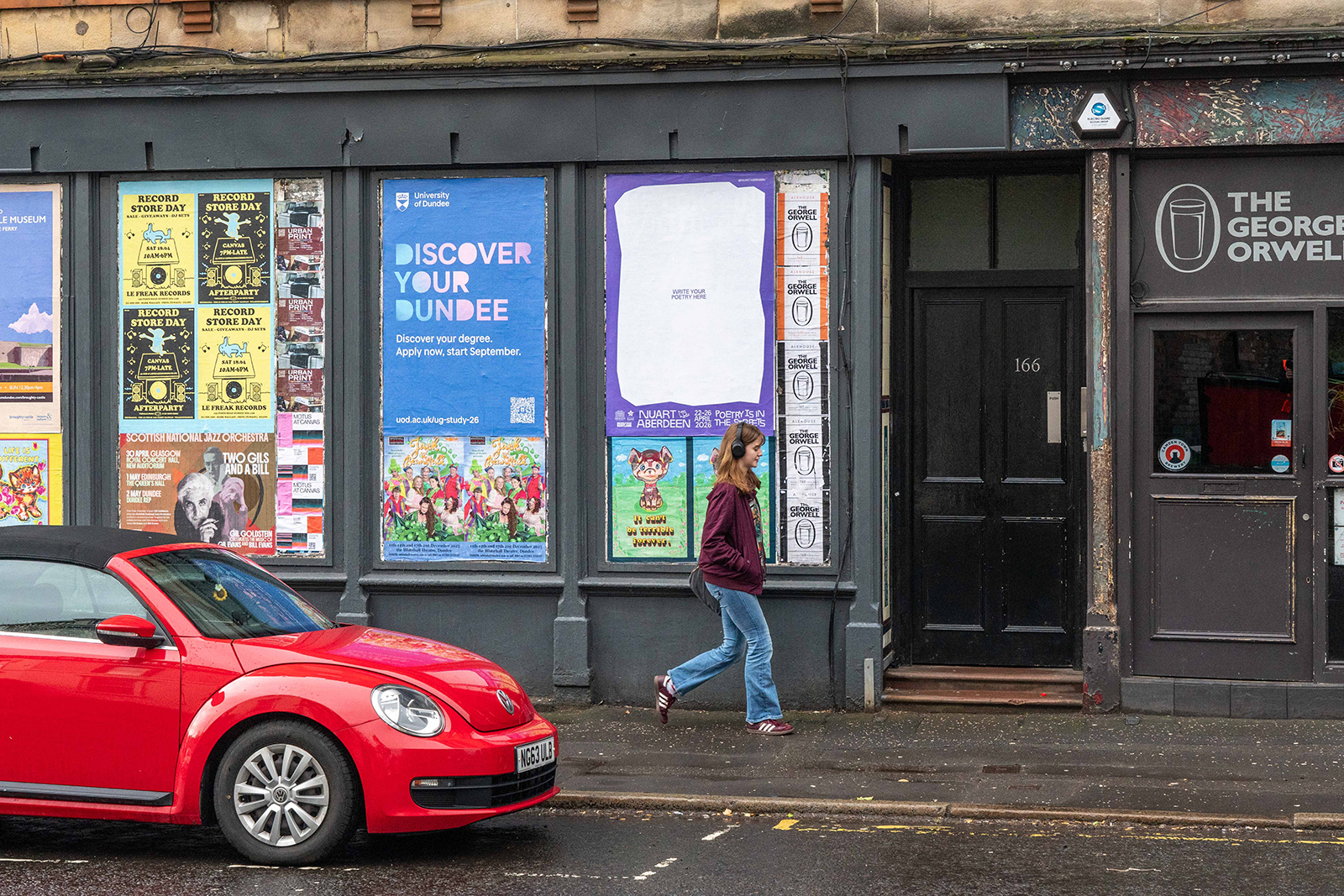
The INTIMATE: texts printed on abandoned detritus, waste as a canvas for storytelling (courtesy of street poet and ‘wall botherer’ @thewritingisonthewall.art); wittily cryptic street signage (thanks to Dr.D aka Subvertiser); laugh-out-loud fly-posting dotted around is down to Trackie McLeod; while walking artist Alisa Oleva’s exquisite multi-sensory sorties left no material trace at all, just feelings, memories.

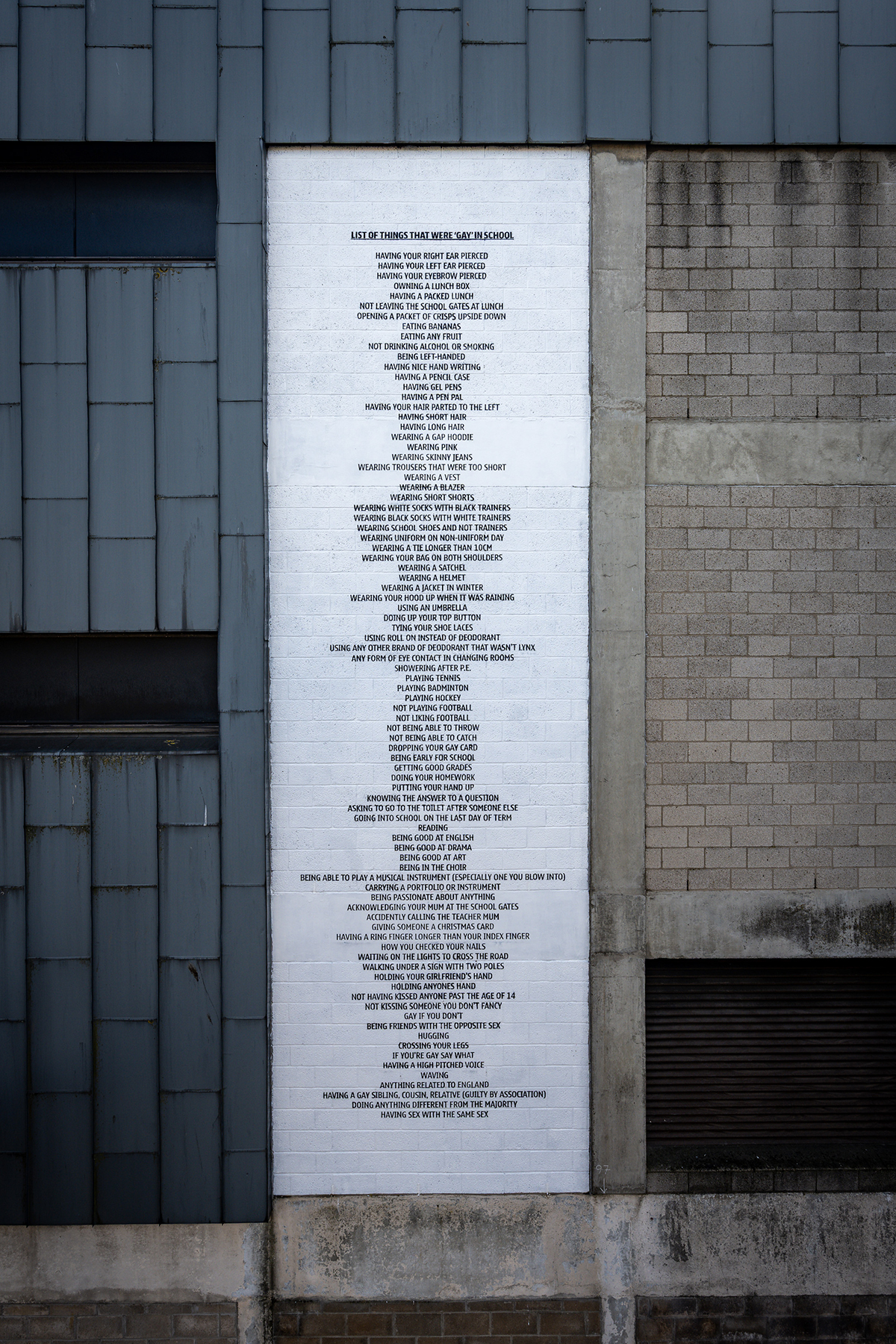
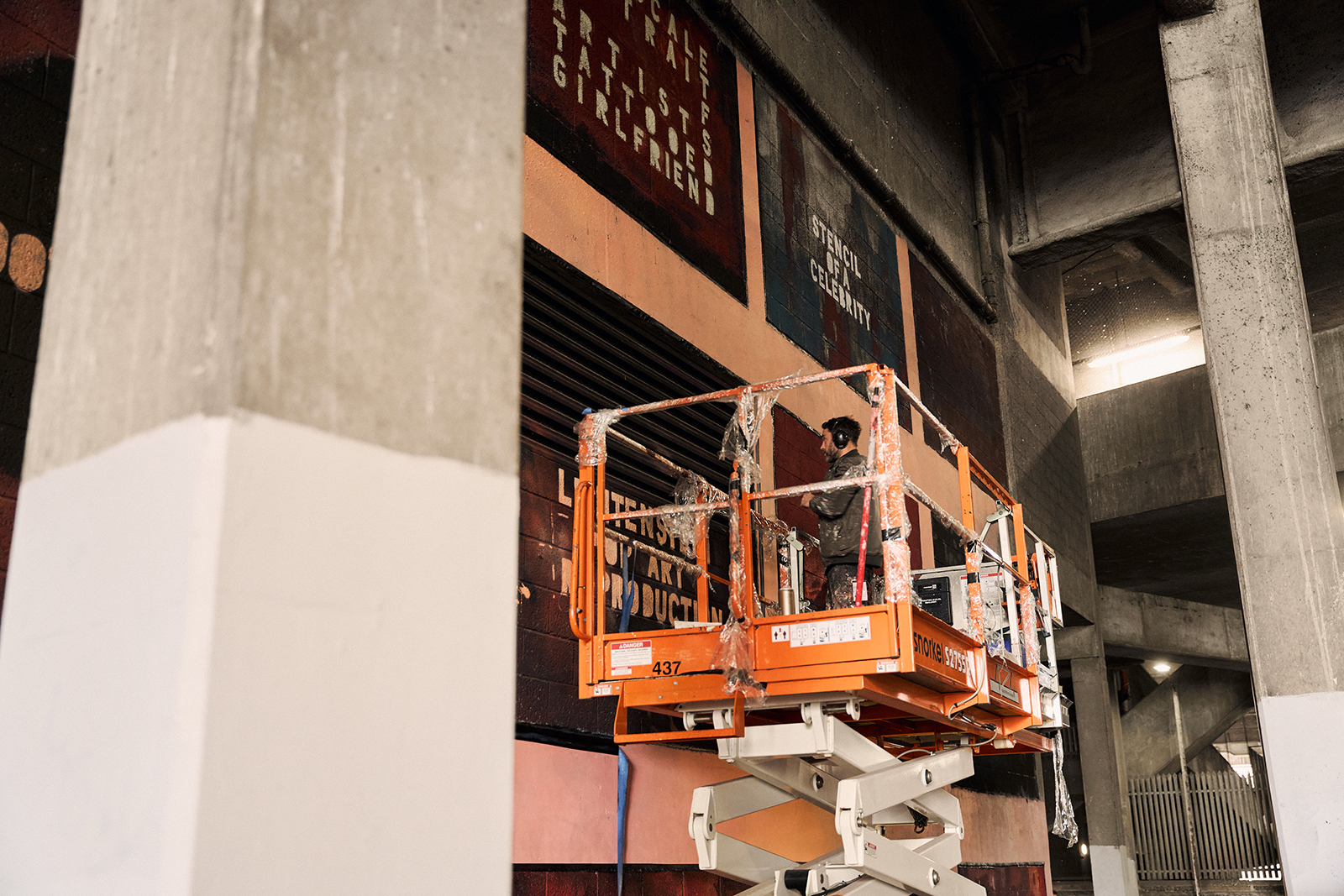
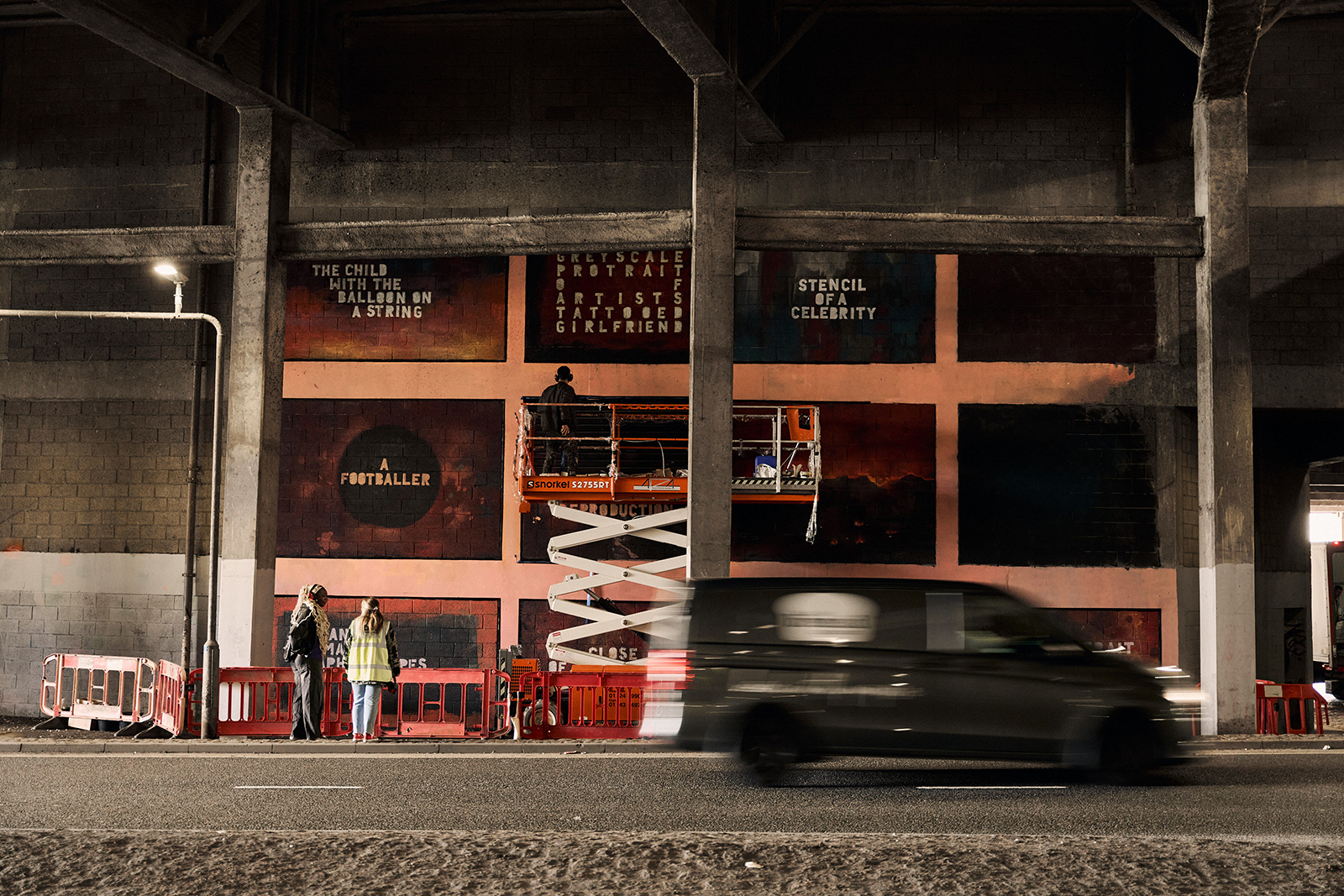
McLeod’s more permanent 2026 contribution is, according to the festival director, a key work. Titled: LIST OF THINGS THAT WERE ‘GAY’ IN SCHOOL, the towering ‘mural scale’ text makes us smile on one level, the absurdity of being called ‘gay’ because of:


HAVING YOUR RIGHT EAR PIERCED

HAVING YOUR LEFT EAR PIERCED

HAVING YOUR EYEBROW PIERCED

OWNING A LUNCH BOX

HAVING A PACKED LUNCH

NOT LEAVING THE SCHOOL GATES AT LUNCH

OPENING A PACKET OF CRISPS UPSIDE DOWN

EATING BANANAS

EATING ANY FRUIT


The list goes on. And it is funny. But harrowing too. Especially if you were called ‘gay’ at school for liking or, even worse, trying to write poetry (been there, got the T-shirt).

Anyway, to try to get a handle on how and why text has moved ‘centre stage’ for Nuart 2026 it seemed sensible to have a word with the festival founder, director and curator Martyn Reed.

AB:         So, how’s it all going…?

MR:        Just trying to find a moment of calm in the storm of production!

AB:         You’ve said you persuaded Adrian Watson (Director of major sponsors Aberdeen Inspired) to consider a text-based city-wide festival for 2026 by inviting him to your home in Stavanger, Norway, and showing him some of the text pieces you’ve collected over the years but what gave you the first inkling of an idea?

MR:        All my private taste is text. Although I’ve a heavily visual way of navigating the world since childhood. It’s probably a symptom of some neuro-spicy disorder, though I wouldn’t call it a disorder. And I think visually, all my ideas are visual. But it also means that I process language differently. So, even though I’ve been in Norway for close to thirty years, I still can’t speak the language because my brain doesn’t process auditory, or sound, in the way a ‘normal’ person’s brain does. But I can read Norwegian, I can look at the page, and my brain will process it, translate it visually, and so I can read a Norwegian book, and a Norwegian newspaper. But I wouldn’t be able to, if that was spoken to me it would be gone within, you know, like mist.

So, it’s always been at the heart of my personal art practice, I’ve always been fascinated by language. I regard myself as literary. And it’s a very kind of ‘brown’, erm, you know, the heart of a Russian poet, this melancholic, brown, varnished literature. The Hansens, Ibsen, Dostoevsky, so pre-Modernism, you know? I took that to heart, and it forms a core tenet of my personality, I think. And because it’s deep and serious, I absorbed that deepness and seriousness at a young age, to separate myself from working class environments of ignorance and bullying. Anything cultural was a, you know, reading a book was… Gay! Which is why the Trackie McLeod piece is so important, right. You know, it’s gay if you carry and instrument, gay if you read a book, gay if you’ve got long hair, gay if you’ve got short hair. Have you seen the mural?

AB:         Yeah.

MR:        And so naturally I’ve been attracted to text in my practice for decades. But not consciously, and I wasn’t consciously aware that ninety percent of the art in my house was text-based. They’ve all been produced by artists, always visually very beautiful, I mean a photograph of a Robert Montgomery piece is a beautiful piece of art and the text is just part of the work. I feel the same about Jenny Holzer or John Fekner and everyone related to early graffiti culture…

AB:         And text lends itself better to activist statements, doesn’t it?

MR:        And it’s weird because even at an early age graffiti really repelled me in a way since it started becoming wild style: all the colours, all the shapes, all the arrows, all the lines, really did something to my head.

AB:         And not in a good way!?

MR:        I had an instant aversion to wild style lettering. Bubble letters I loved. And I think that’s also tied to how you’re wired, how your brain processes an image. So, I lost interest in graffiti, or I never really had it after bubble letters to be honest. It’s too busy, too showy.

AB:         A lot of show but not much content.

MR:        As a visual in your head, one of these massive wild style pieces, there’s just so much noise and mess and scribble. Whereas a bubble letter is just really clean, my brain has space to process it. And, I think it was pioneering British graffiti artist Mode 2, in an interview, said the reason why graffiti became so popular, got traction, was because there were all these – well, expanding on his thoughts, he didn’t say this but he implied it – all the kids in the classroom who enjoyed making art, enjoyed the process of making art, were criticised because they couldn’t make it as good as ‘Sarah’. You know, because she could draw a hand or a cabbage ‘properly’. So, all the kids in the class, who didn’t have time, nice middle-class parents, taught about drawing, they were just not very good, but they enjoyed it. And it was frowned upon, they were told their work wasn’t very good. And that we should all emulate or strive to be like ‘Sarah’. And later, when graffiti came along suddenly you didn’t need hours and hours of practising drawing lessons. You just needed to know your ABCs. And that was fucking revolutionary. For a kid to understand, how worthwhile it is to stay involved in a thing you have a passion for, even though you’re not very good at it at the time.

You just needed to know your ABCs. A kid will go, well I know that. I write my name, I write my letters, of course, it evolved into wild style, and characters got added. But it is very foundational to the idea of street art democratising access to public art practice. Democratising access to public space. And empowering people to shape each other.

AB:         Do you think that in some ways Aberdonians, or any Nuart Festival visitors, will find the poetry more accessible than some of the visual art?

MR:        Yeah, absolutely.

AB:         I mean, a big mural, you can admire the painting style or whatever, but you know you could never do it. Whereas with poetry, or short text pieces…

MR:        Yeah, for sure, we’re part of the problem, we’ve commissioned, I don’t know, globally renowned street muralists Herakut or Hera to do a tower block mural, and wow, it’s amazing, the technique’s great but if you’re a practising artist yourself, it’s like, “Hmmm!” I mean they do it in theatres every week, paint massive murals for the backdrops, it’s just that these are in the street. They look really difficult but in some cases it’s actually more difficult to represent that scale on an A3 sheet of paper, it would be more challenging for an artist than to do a tower block mural. Because on a tower block you don’t need to get into details, to an extent your eye completes the picture.

And you’re right, it just creates a passivity amongst citizens, where you stand in front of it and applaud it. And of course, it has social and economic benefits, helps with mental health and everything.

AB:         One of the things I liked was the kids’ acrostic poems on Union Street and elsewhere, the first letters of each line spelling out W A R M T H, L O V E…

MR:        Yes, so getting into the classrooms as well was important this year, showing kids that poetry can be something you can put on the streets, rather than just in your schoolbook. I think there was ten thousand kids taking part in the county wide education programme for Nuart Aberdeen 2026.

AB:         Yes, because sometimes poetry is seen as quite a private activity but by pushing it out there and letting everyone see your words, it’s inspiring…

MR:        I think there’s so much wrong with how, like you’re not allowed to be vulnerable, I mean men think poetry is gay, they think being vulnerable is gay! And that’s a real problem, it’s at the core of the toxic manosphere. And if you want to challenge that warped masculinity the best way is not to berate these boys but to put poetry in their hearts at a really young age. Let them have empathy, poetry and love…

AB:         Yeah, my early interest in words came from nonsense poetry, and that is really accessible, you know…

MR:        Accessible, and funny as well…

AB:         “Every bee that ever was / Is partly bee and partly Zzzz!”

MR:        [Laughing…] You remembered it. And concrete poetry, you know making visual language out of written language. And I think the uprising of street art, what originally made graffiti ‘sticky’, was the fact that you only needed to know your ABCs, so everyone started doing graffiti.

The next, if you like, ‘revolution’ regarding public art practice, we all have the capacity to cut an image in a piece of cardboard with a knife. It’s something everyone’s got access to. So little Banksy went home, and this is at a time when everything was A4, A3 was a big deal, everyone went home and had a go themselves. You didn’t need an art degree, you just needed a kitchen table and a craft knife and to get it out there.

So, now, after it’s evolved into big, colourful murals, but for that you need skills and resources and facilities and public art bodies and cherry pickers…

Robert Montgomery (SCT)
AB:         Once again the words are liberating, the simplicity of words.

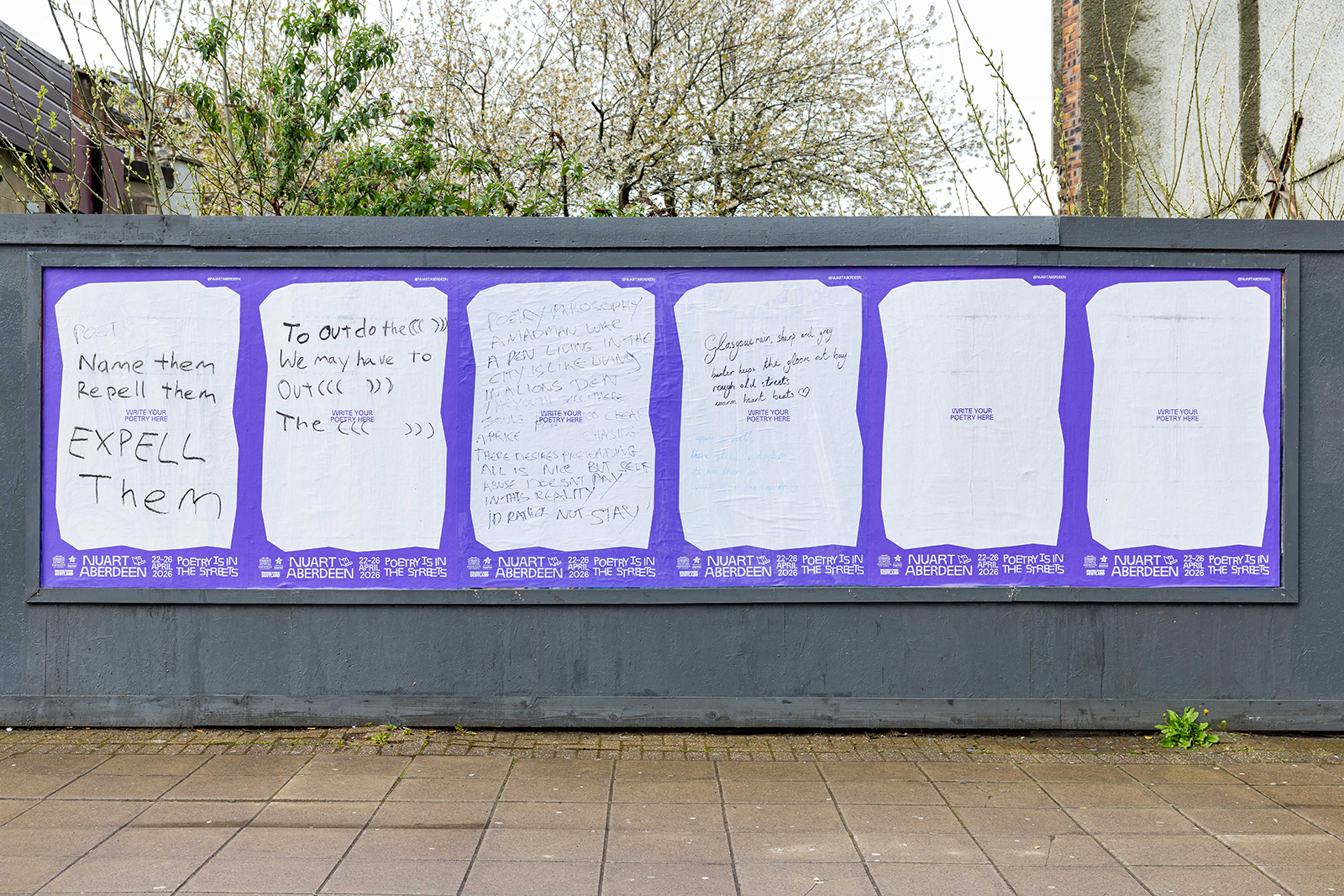
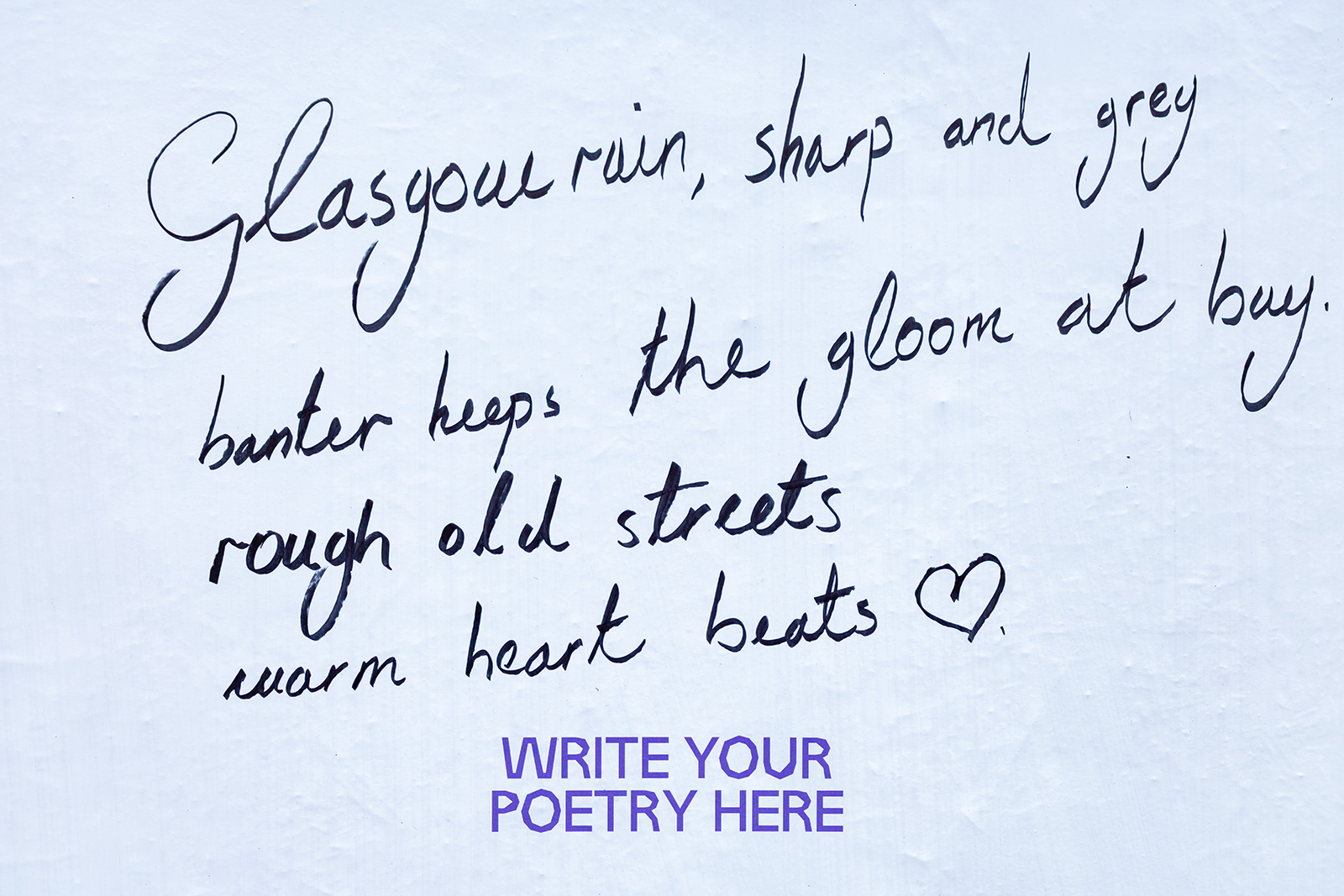
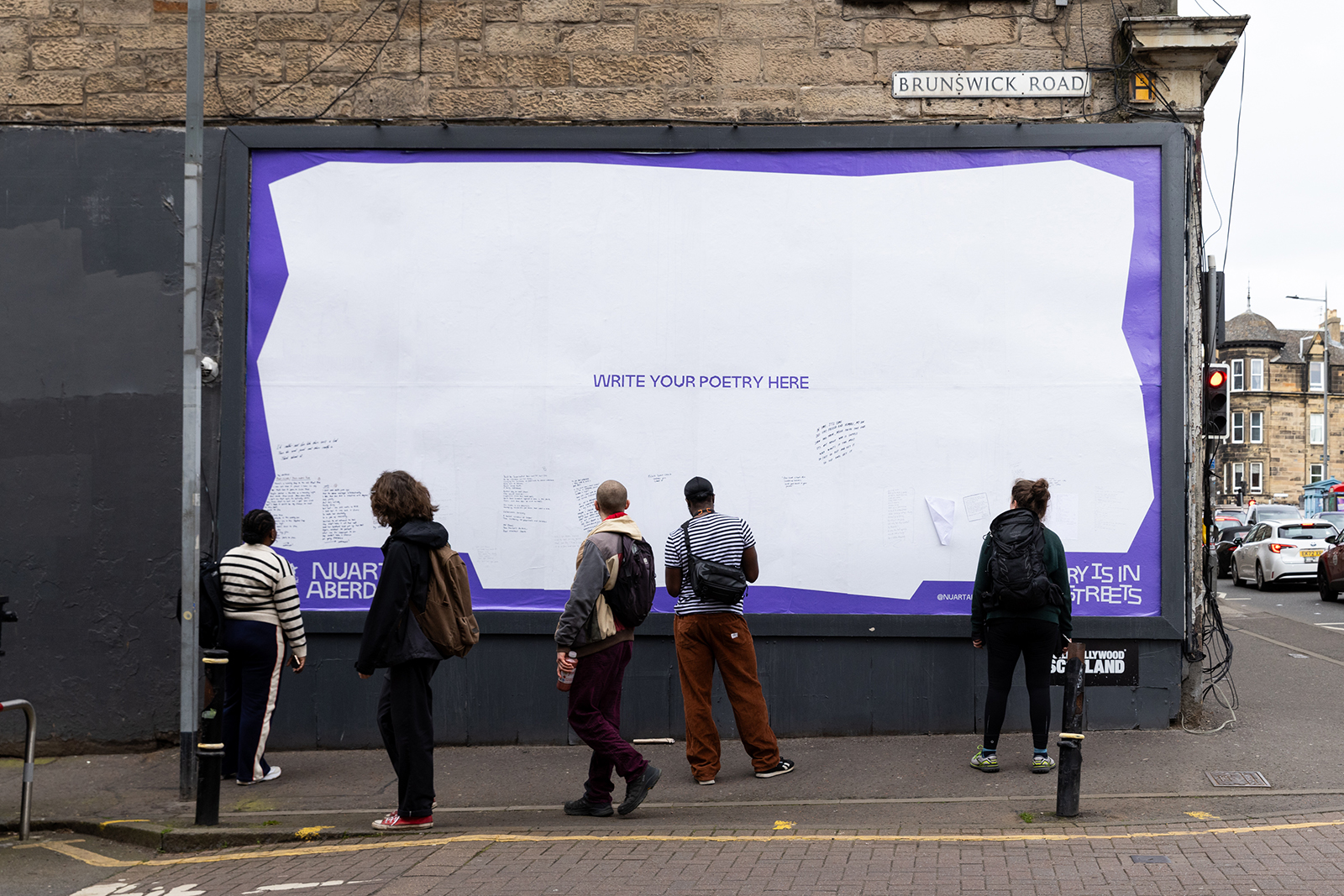
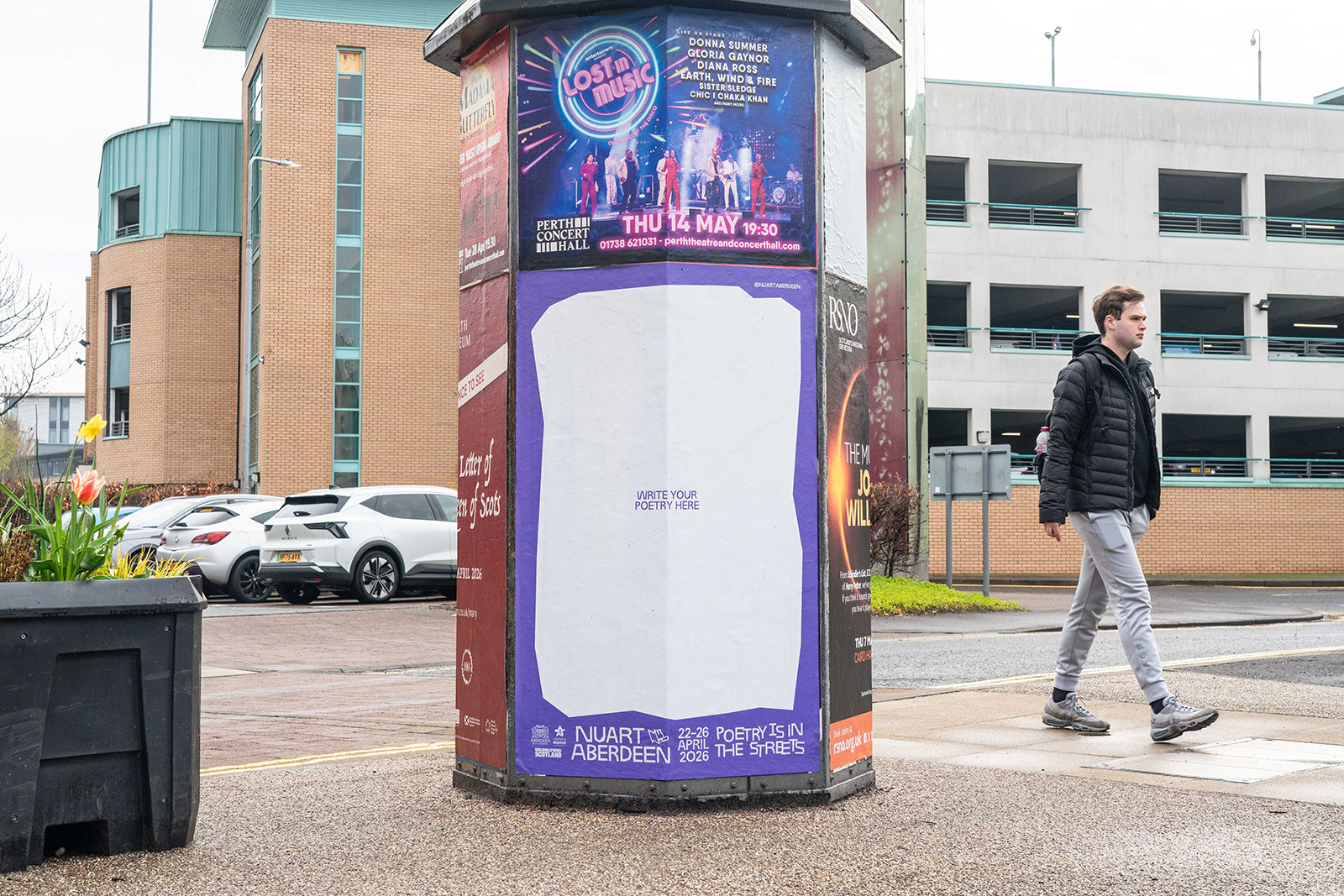
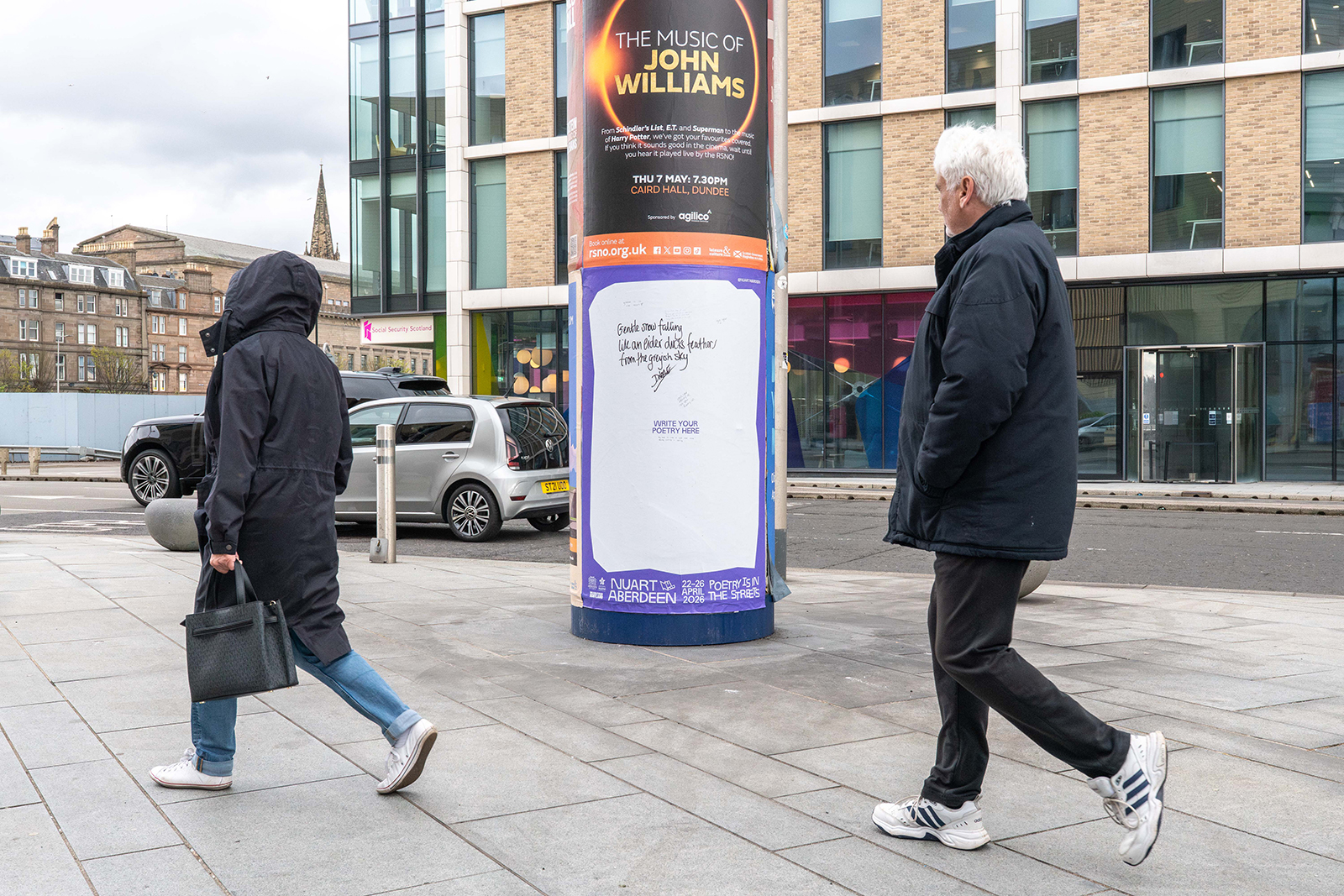
MR:        Yeah, it’s the death of street art, the hegemony of large scale murals, it’s run by the same power blocks who we originally sought to challenge, they’ve reclaimed this power to shape your city by painting on it, they’ve taken that power back, filtered it through an organisation, that involves curators and what not. And I was thinking how do we get that agency back? What else is there in the world, that everyone can do, that you can put in public space, that can be democratised, that isn’t controlled by academia or a rarefied professionalism, and it struck me that poetry was the answer. You don’t need a specially trained skill set to write it, everyone writes it anyway, they just don’t tell anyone! So bringing poetry to the streets was to try and make it a little bit cool, and allow people to be vulnerable, and to put that vulnerability in public space. It just struck me that text and poetry, they’re the two things that people have access to, and that everyone does in private, let’s see if we can make it cool and encourage more people to contribute to public space. I mean walking down Union Street and getting these little flashes of empathy, wonder and love – the kids’ poems – it makes the world a little bit more interesting, right?

AB:         And the idea of having these specific sites for artworks but also a number of artists are creating a sort of treasure trail around the city is great. Unexpectedly I came across one of @thewritingisonthewall’s poems installed using a handheld inkjet printer on a vacant shop window, his “star strewn nights” poem, it was magical.

MR:        Yes, and Erin Holly has been going round chalking her enigmatic phrases. So, there’s kind of a Nuart ‘unofficial’ aspect to 2026, satellite events, people going out doing their own thing. I think that’s super, super exciting for me because I’ve got no clue what’s going on or where they are. I came round a corner the other day and saw Erin’s piece and I thought, that’s amazing.

Be it monumental or intimate, official or informal, POETRY IS IN THE STREETS, and the Granite City is all the better for it. Once again, bravo Nuart Aberdeen, it’s been a blast.

Previous article

Friendly Records at 10; on Bristol, community and being the spot where music meets action

Next article

Partnerships

Through the Kollideoscope: Jukebox Collective distils the harmony in difference