Newsletter

Join our mailing list for latest news and features

Build Hollywood

Build Hollywood

Build Hollywood

Build Hollywood

Your Space Or Mine

The All-Consuming Consumer

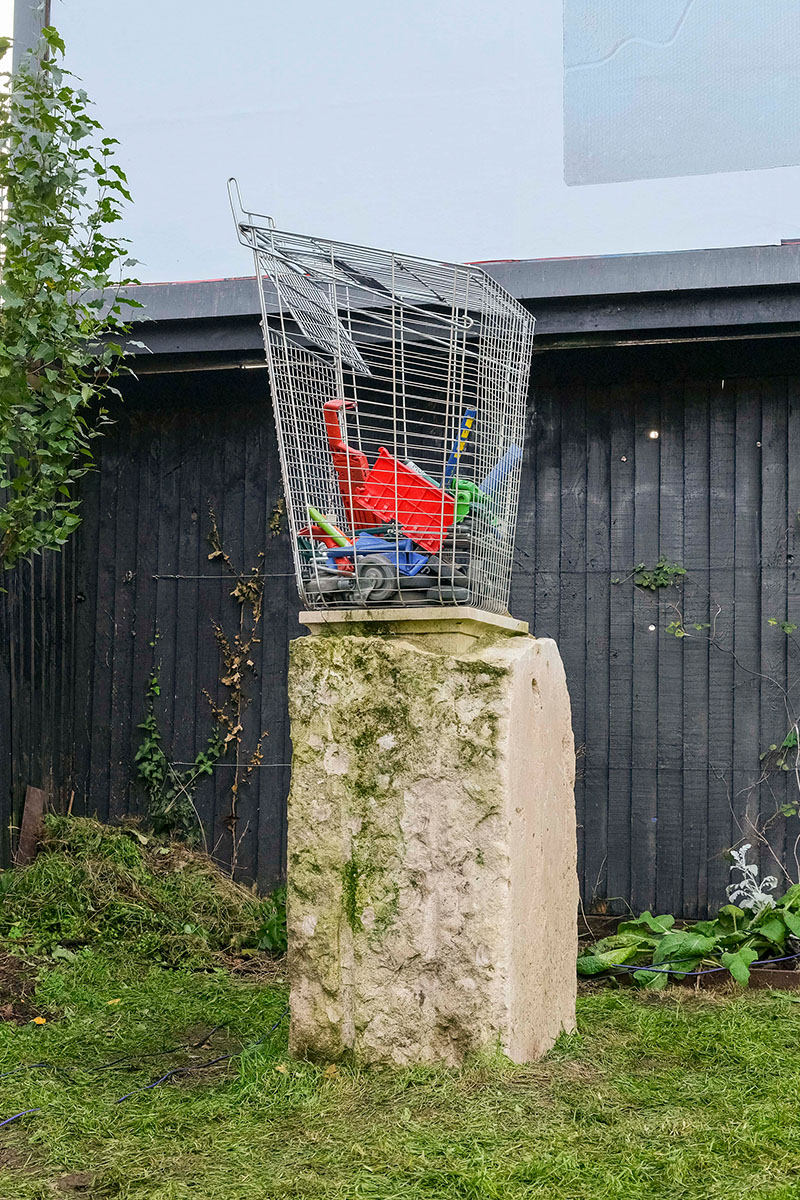
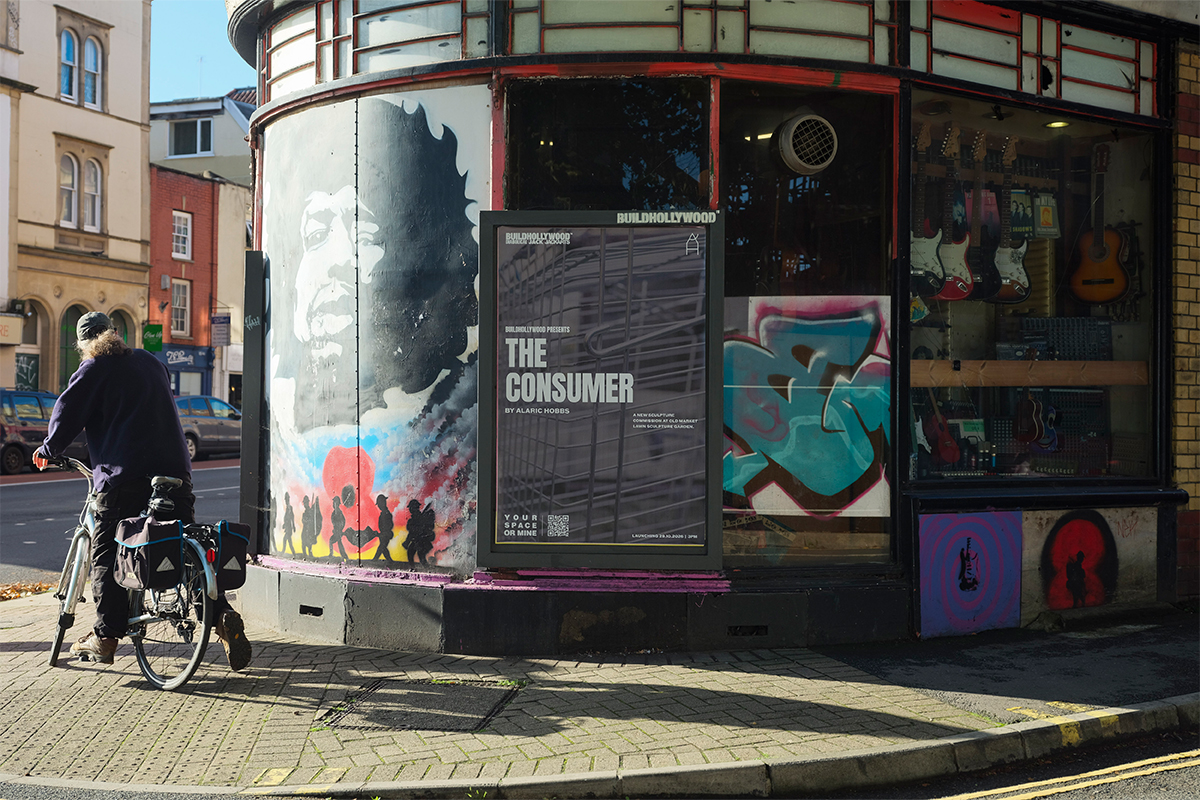
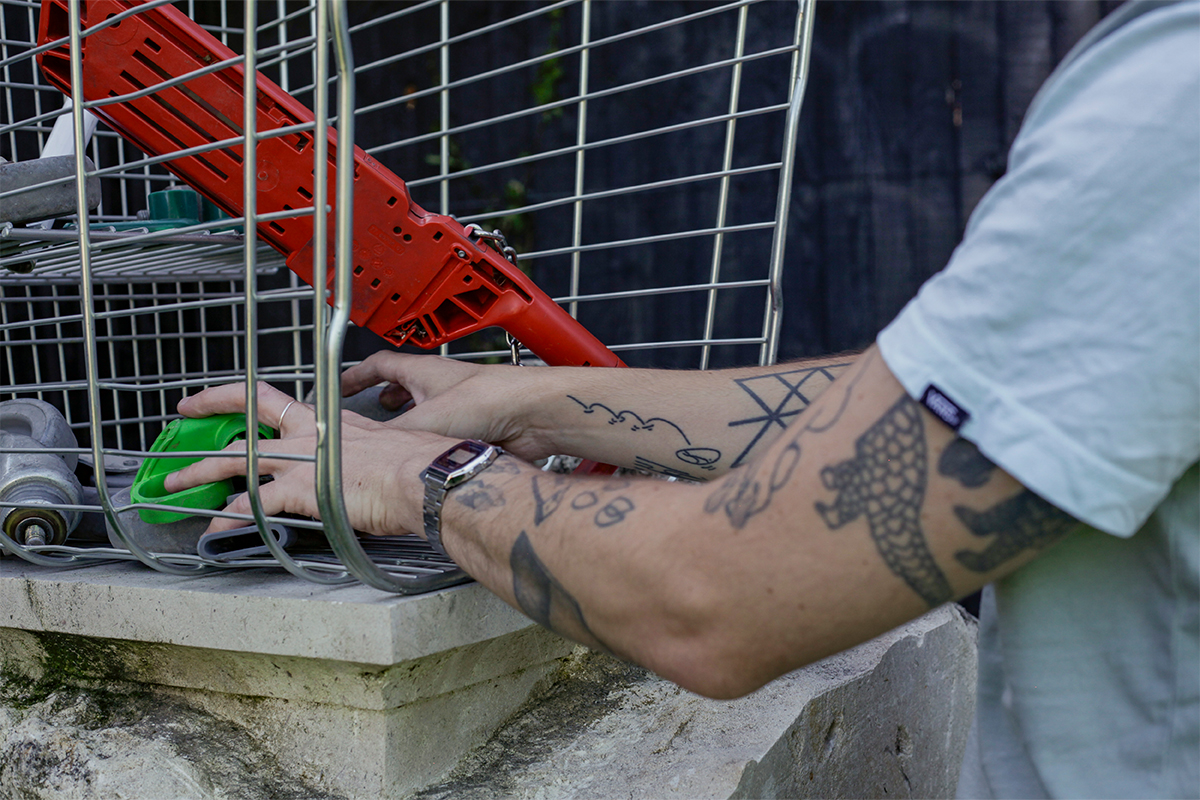
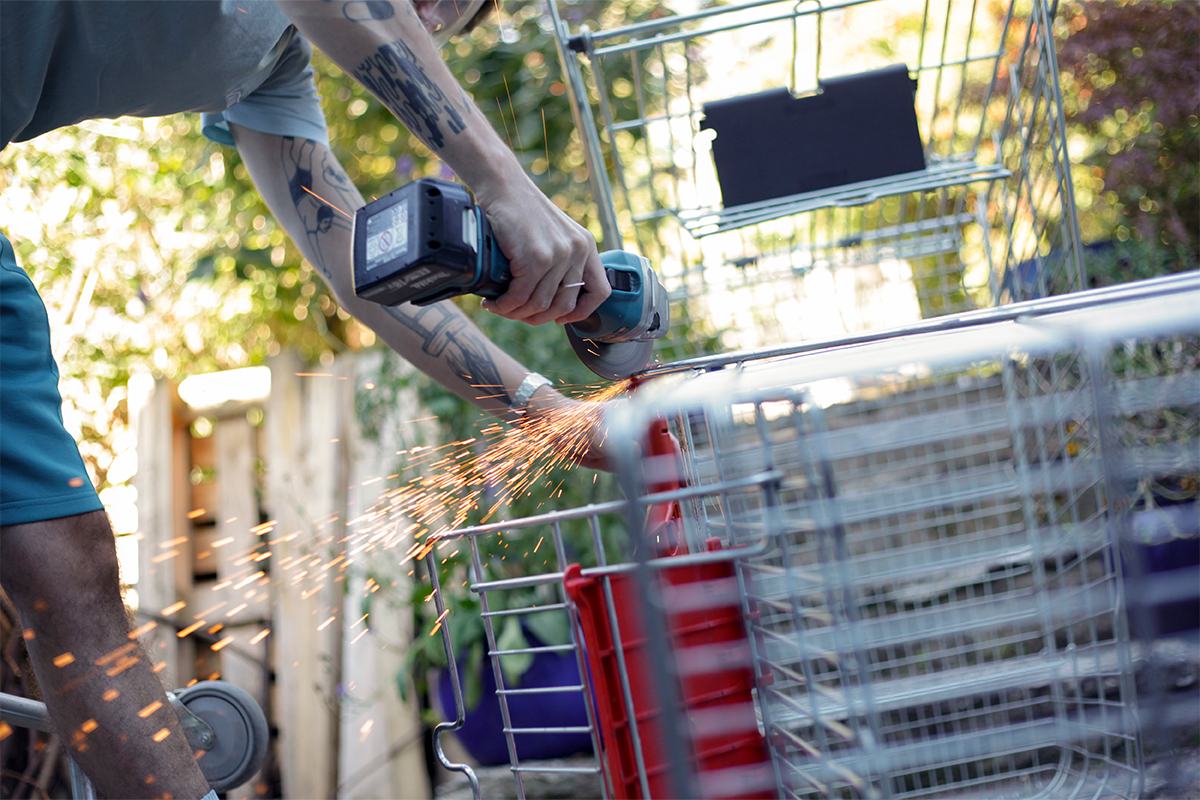
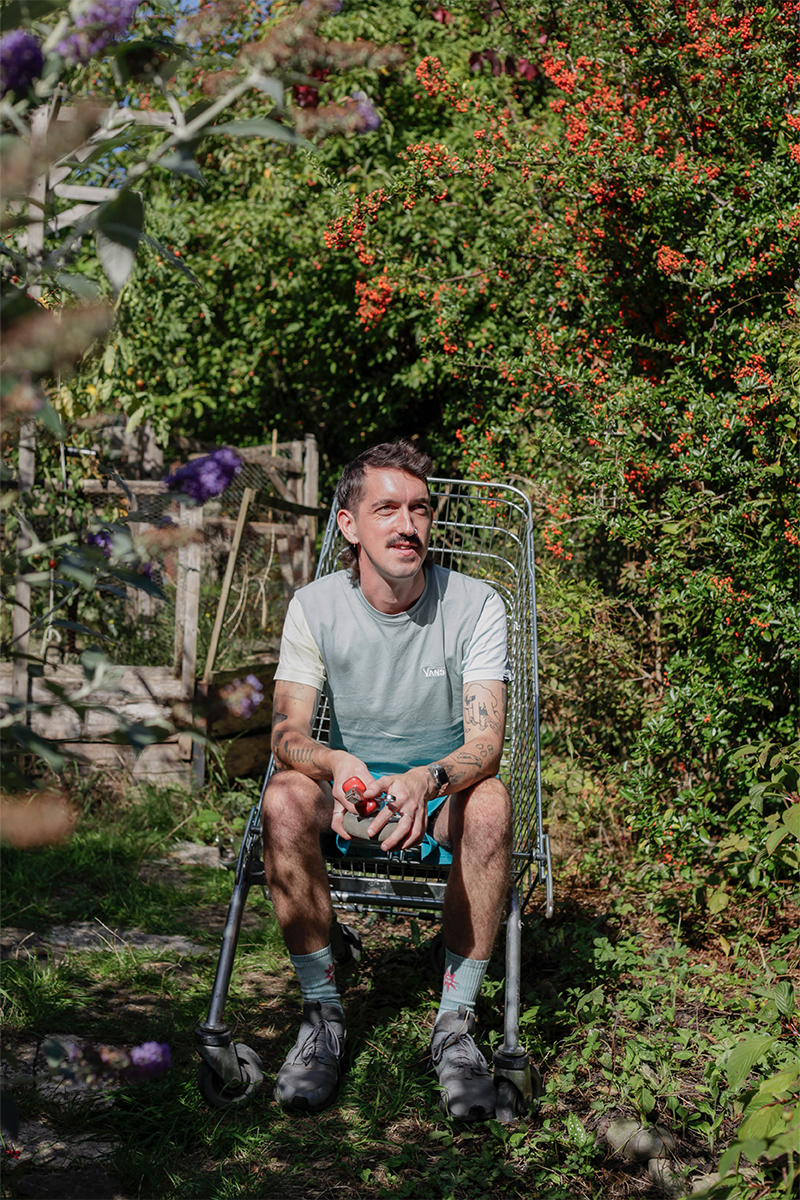
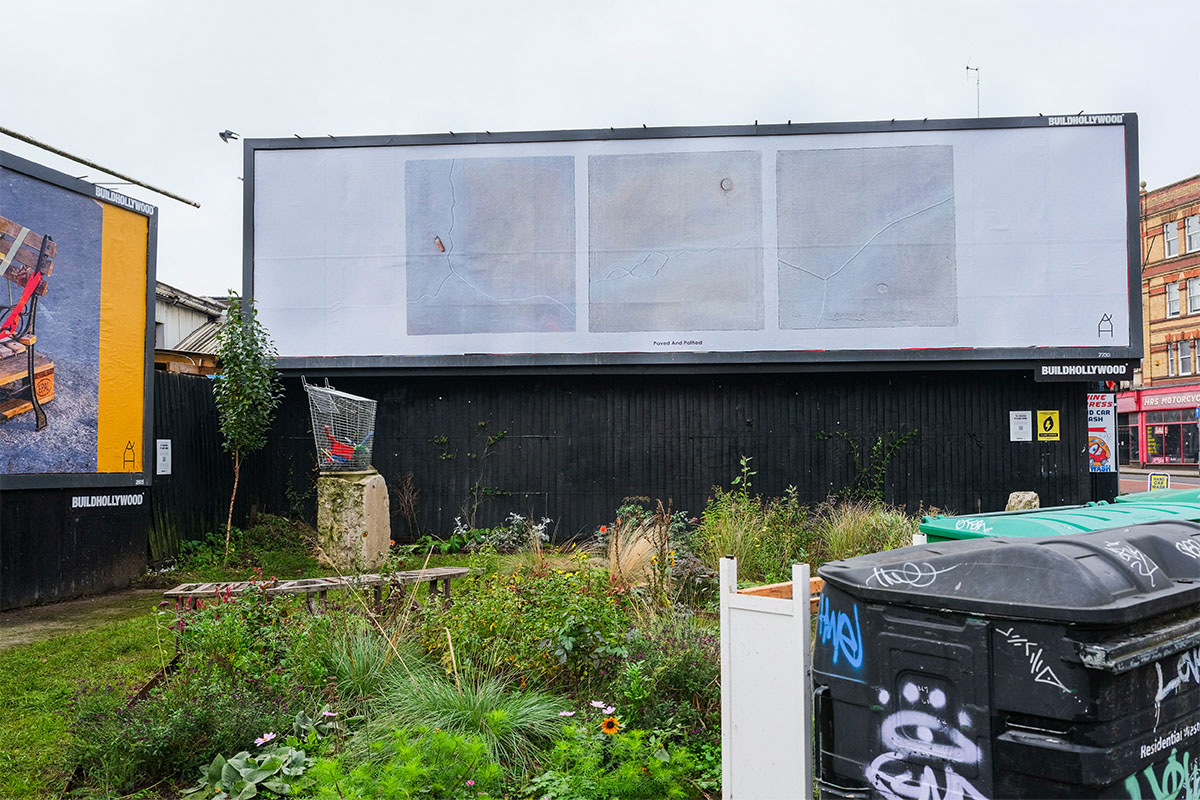
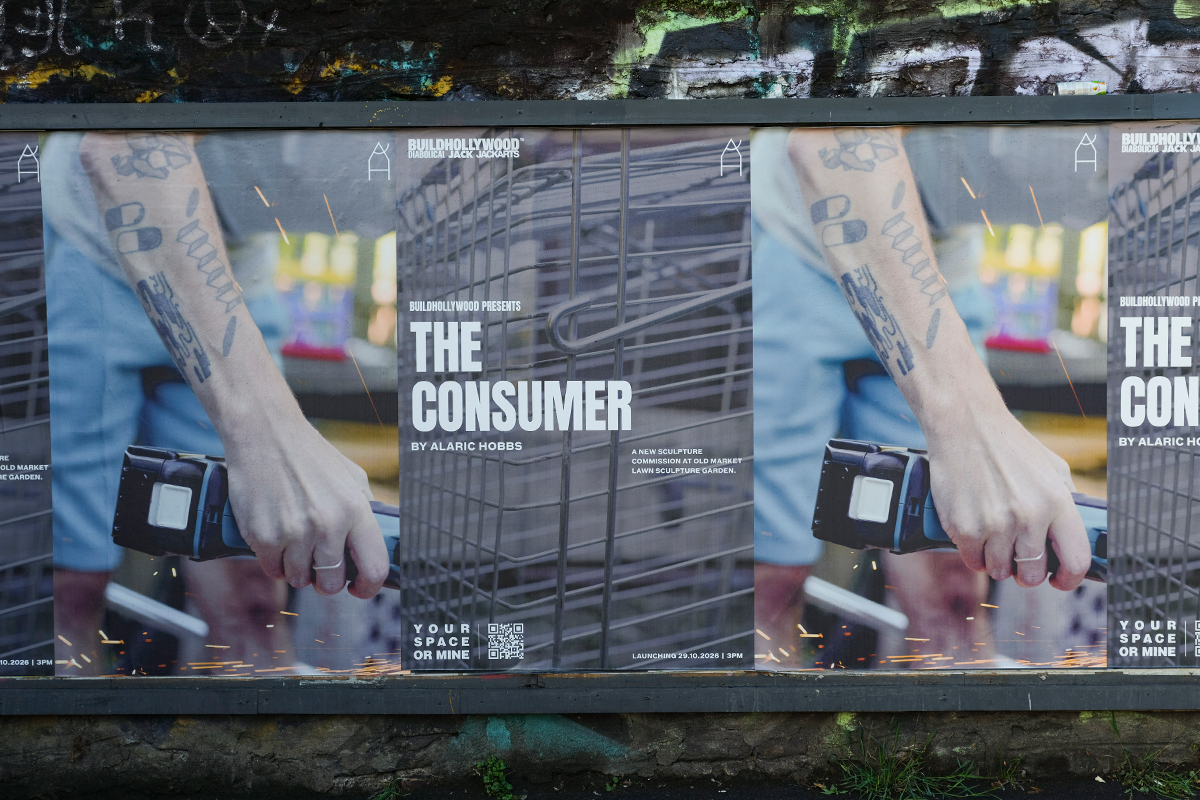
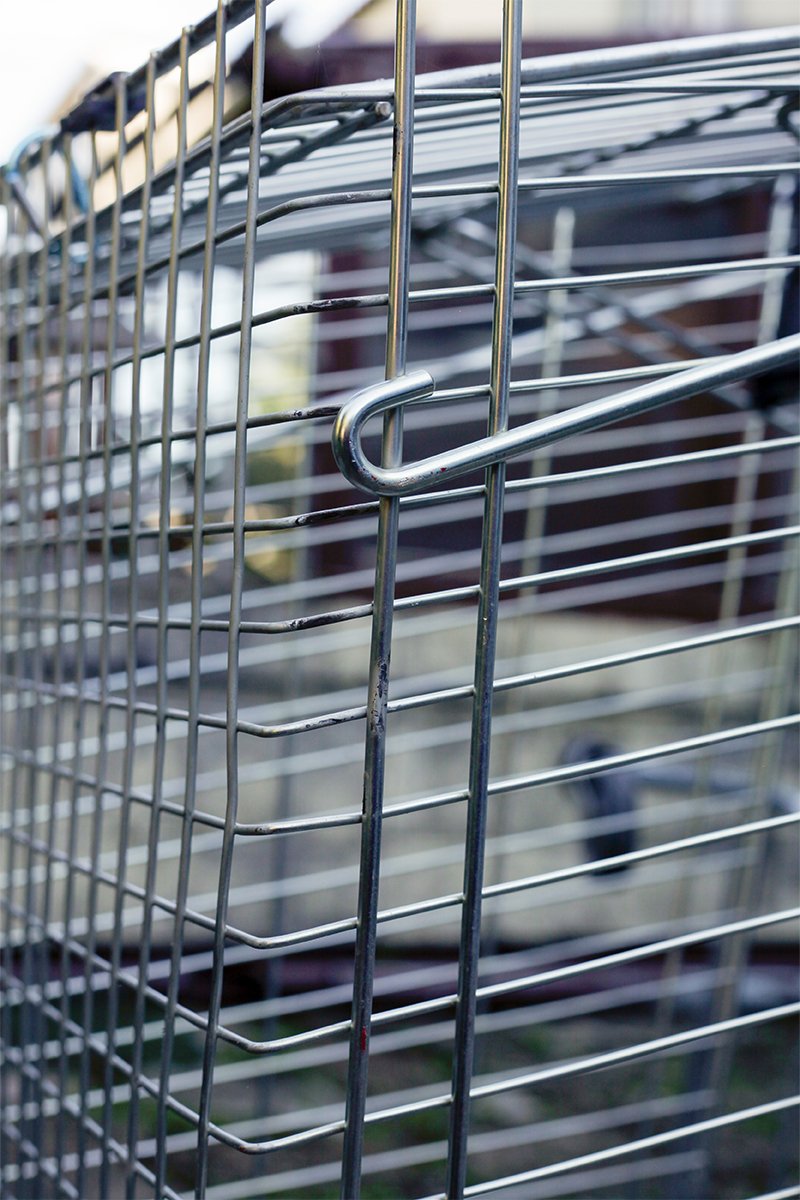
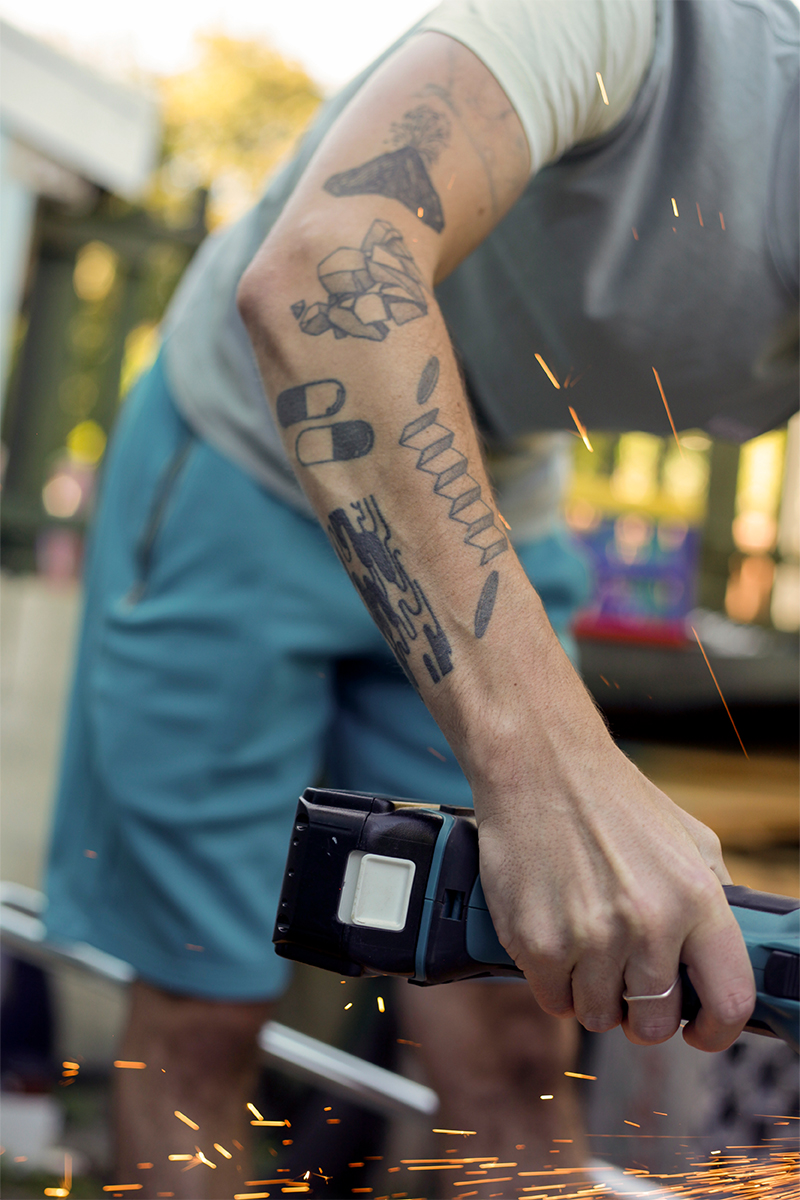
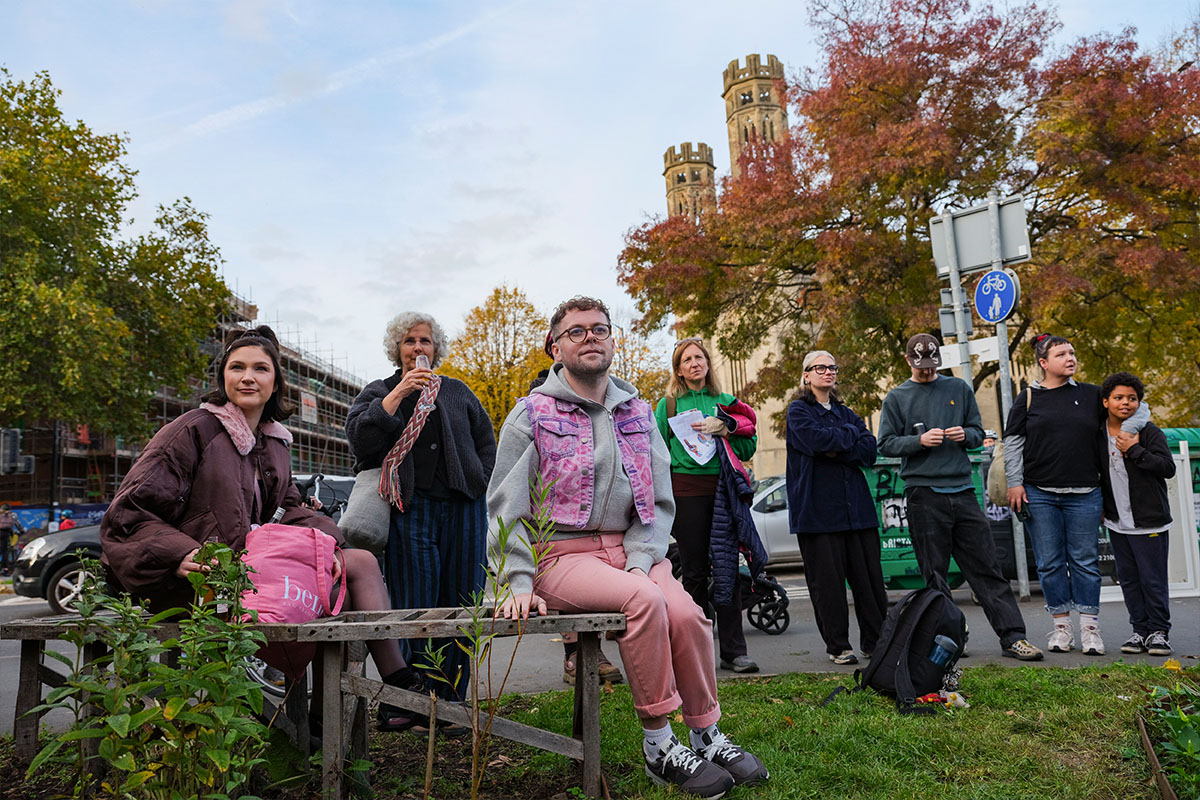
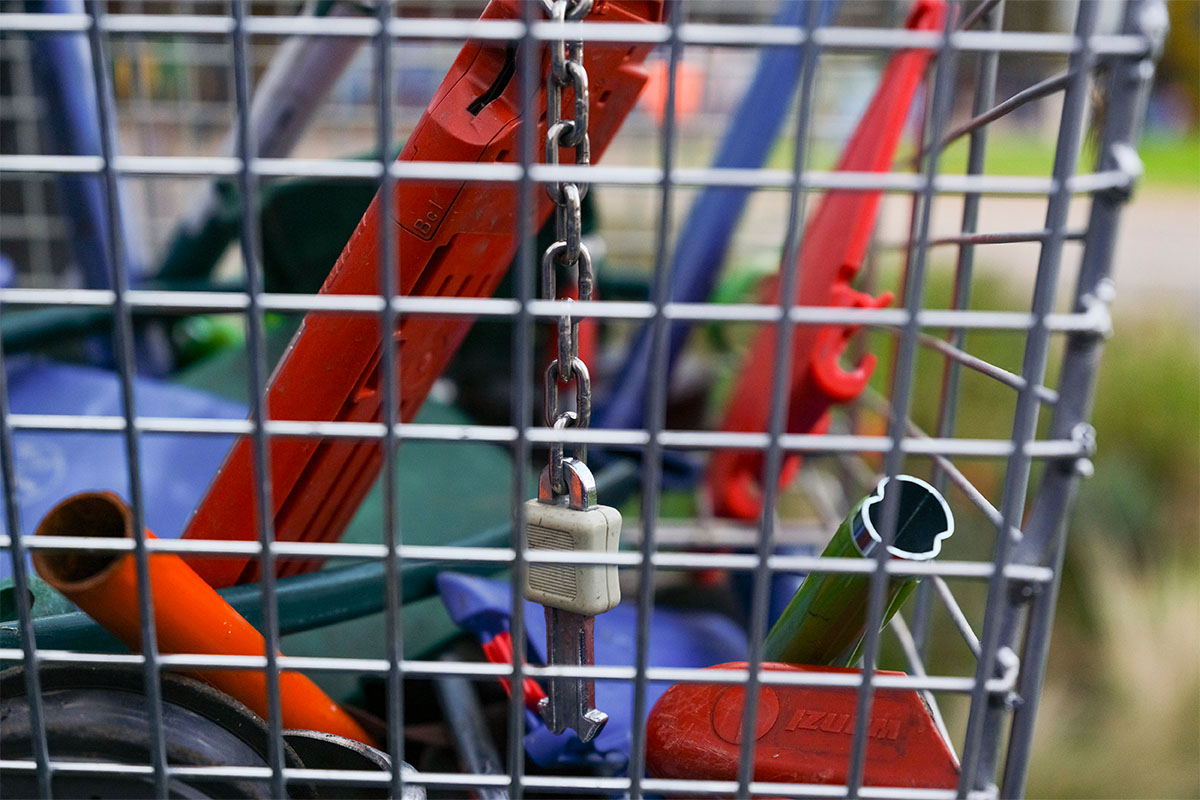
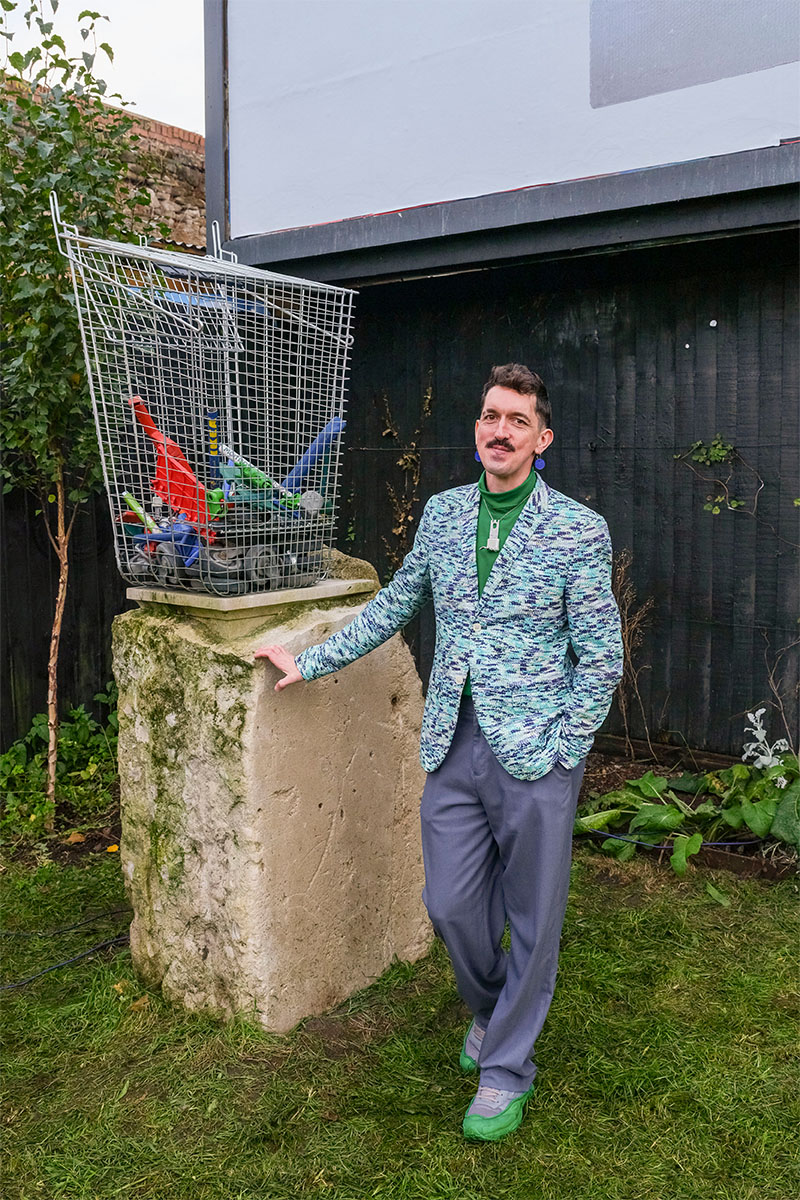
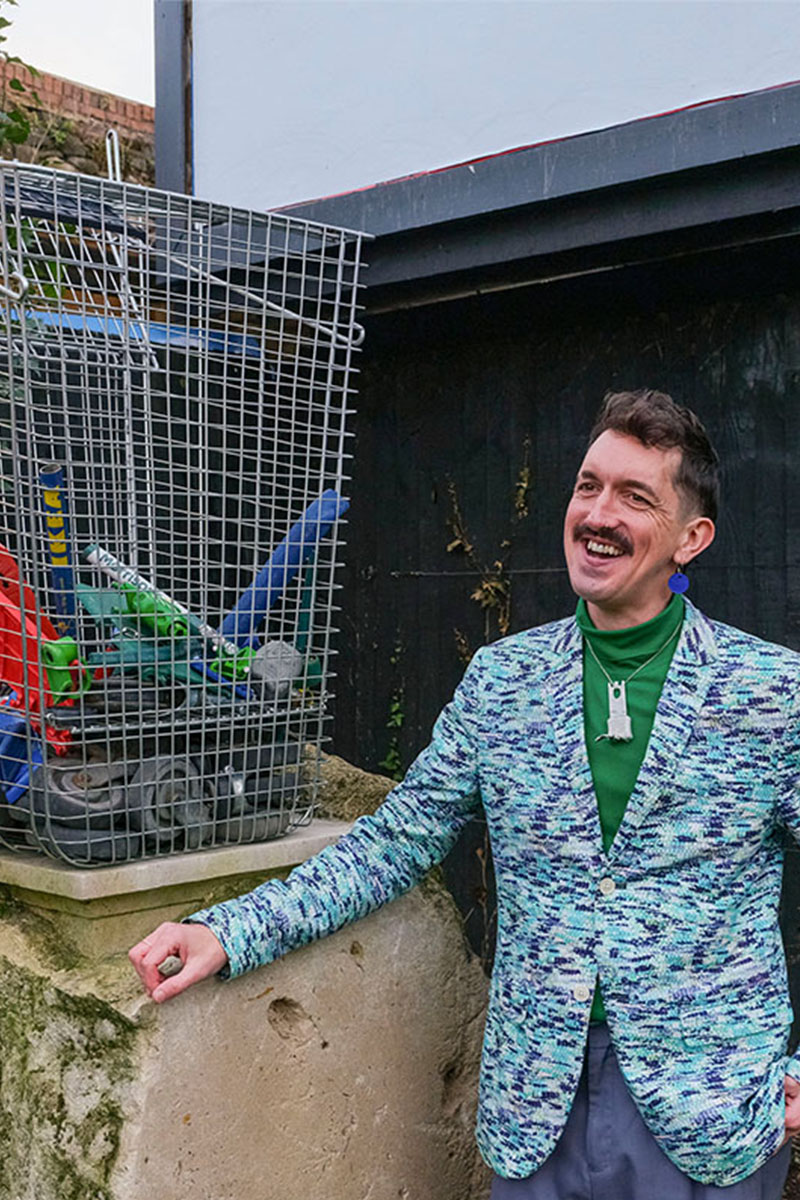
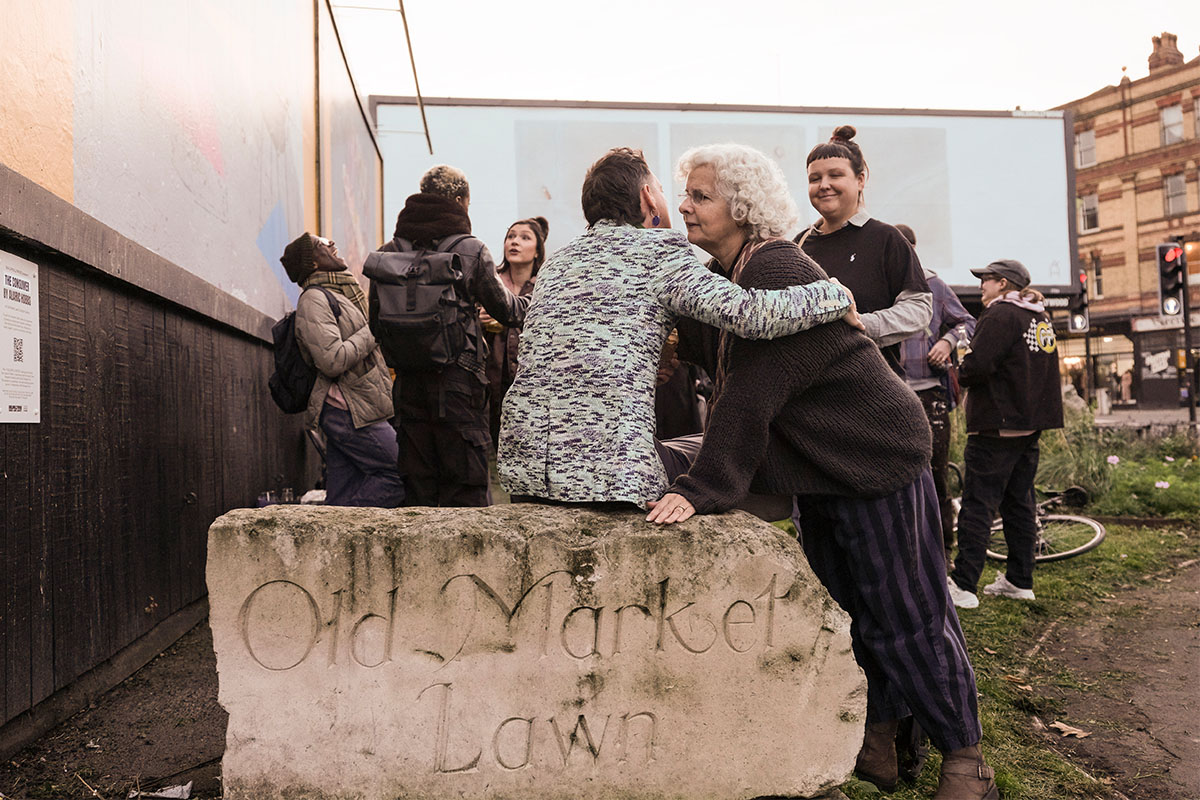
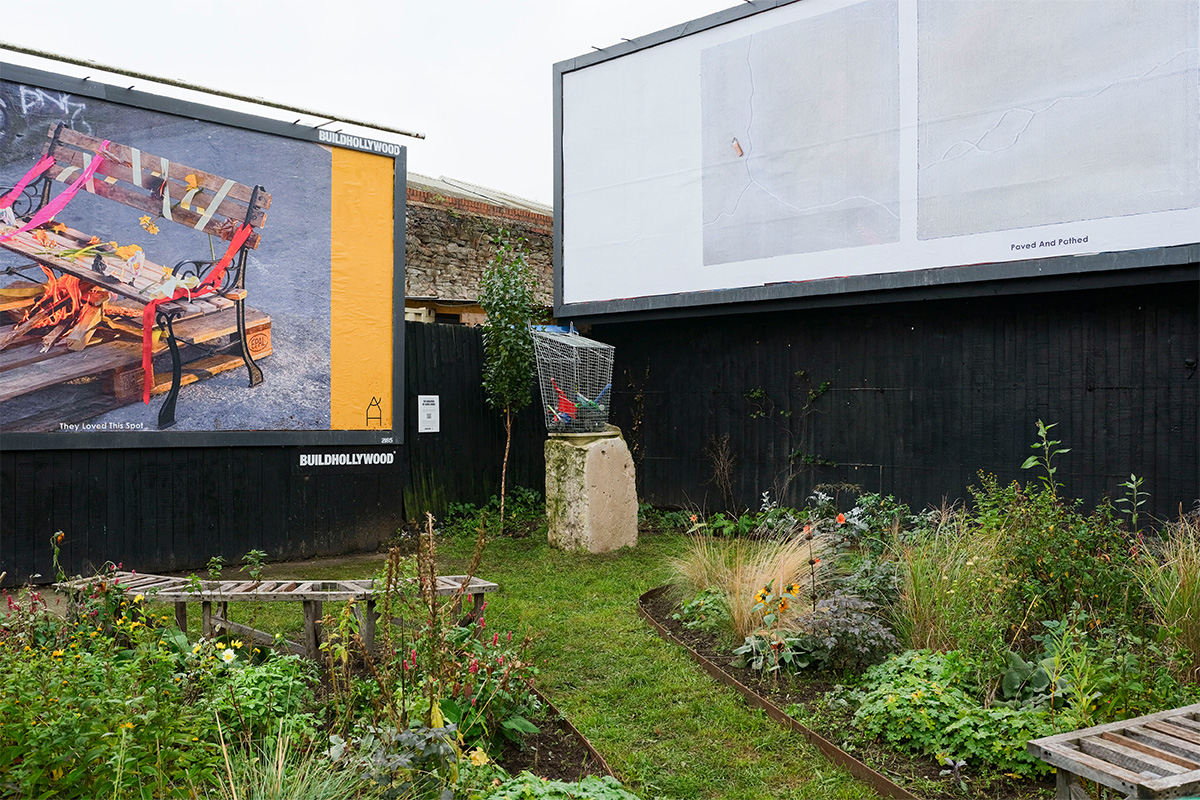
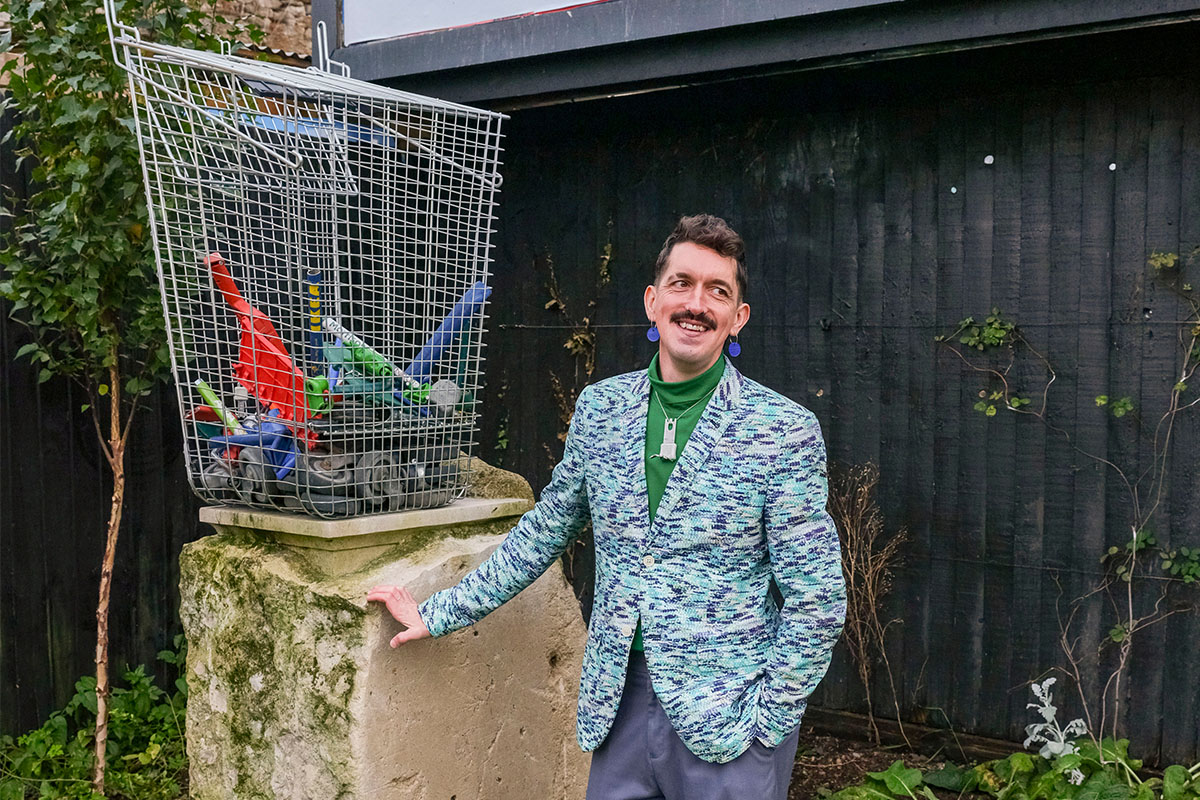
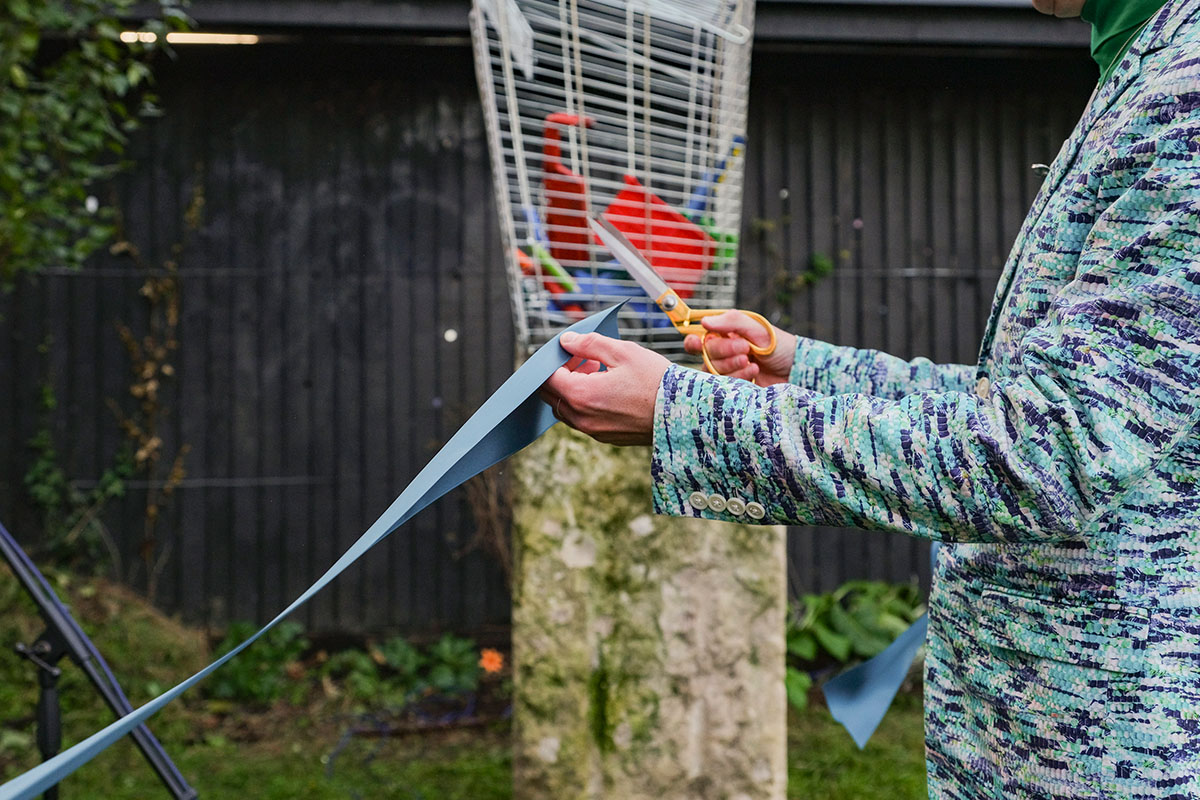
Any Bristolian will be familiar with the sight of a discarded shopping trolley emerging from the muddy waters of the tidal River Avon that cuts through the city’s centre. Sightings like these, which begin with materials already present in the city’s landscape, are the point of departure for Alaric Hobbs’s sculpture The Consumer, at Old Market Lawn. For this public art commission, Hobbs breaks down and reassembles the body of a Costco supermarket trolley, fills it with old trolley parts (wheels, handles, coin mechanisms and chains) and seals it shut. Sitting atop the plinth, a position that art history would have us believe is reserved for monarchs, leaders and philanthropists, The Consumer is personified: like a torso but with its innards exposed.

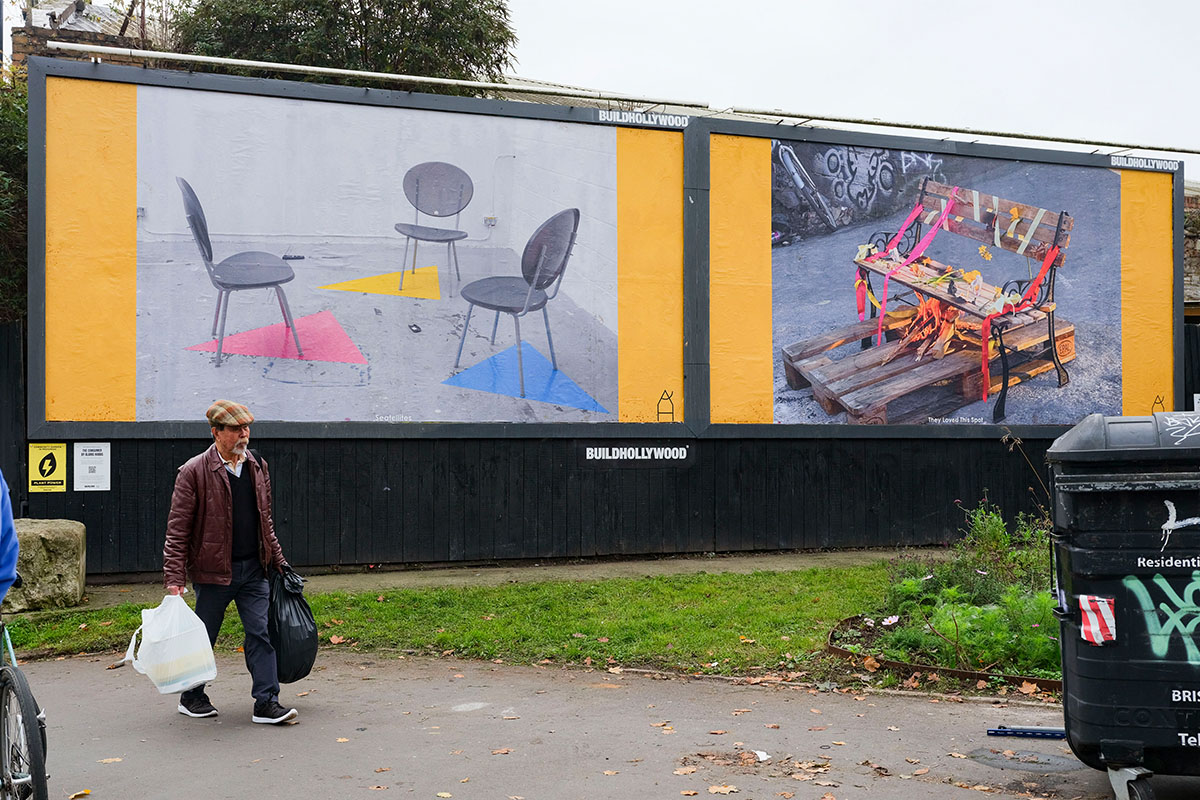
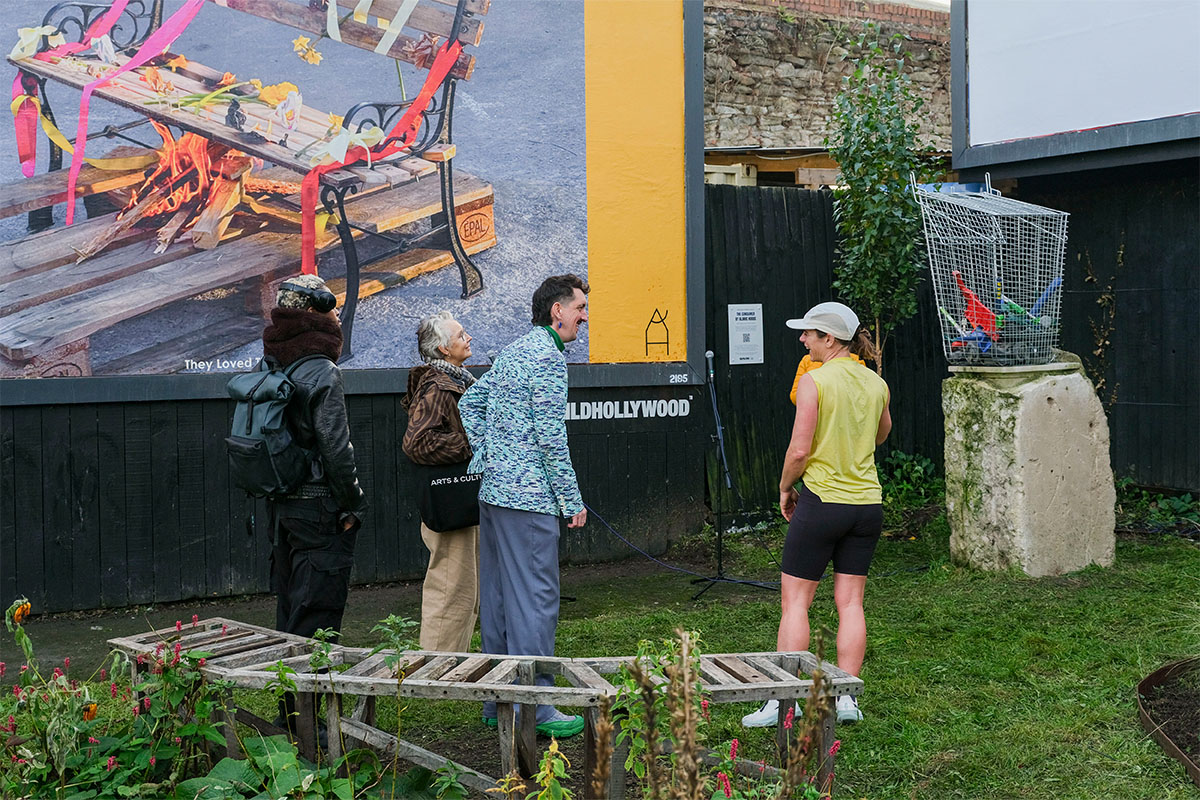
It is in keeping with Hobbs’s wry sense of humour that the shopping trolley, an everyday object that serves as the functional carrier of a family shop, the enabler of overconsumption and the late-night joy ride of city revellers, is held aloft. The Consumer is flanked by three billboards, which will show work by Hobbs, before they play host to commercial advertising. It is the latest commission from BUILDHOLLYWOOD’s Your Space Or Mine programme, curated by artist Sarah Staton, which launched in 2024, and previously platformed Zoë Pencils and Sophie Fischel.

03.11.26

Words by Lizzie Lloyd
The Consumer feels particularly pertinent to its site at Old Market Lawn, once the gateway to the city of Bristol and now a place that does triple duty as a community garden, an advertising site and a home for public art. In societies built on market values, we are routinely treated as consumers by social media algorithms, by universities and by increasingly privatised healthcare systems. Hobbs takes this dystopian vision a step further. In their work, the trolley is not just the vehicle for consumption, it is actually eating itself: the consumer consumes itself.

Though Hobbs is actively warning about the dangers of rampant consumerism generally, they come to it through the lens of their own lived experience as a queer, neurodivergent person from a working-class background, navigating the world and looking for a sense of belonging. Hobbs is interested in what can be done with the hand they have been dealt, and so seeks out the found objects that make up the material landscape of urban life: the shopping trolley, but also discarded mattresses, breeze blocks, bike locks and road signs. Their approach is to modify these objects as a form of social commentary, playing on the associations of the original materials and encouraging us viewers to look again at what we might otherwise take for granted. In using found forms, Hobbs highlights both the possibilities of reworking what already exists and the creative limitations this imposes. It drives them to interrogate our urban landscapes and to consider how well the places we live serve us, not just as individuals but as the social beings we are.

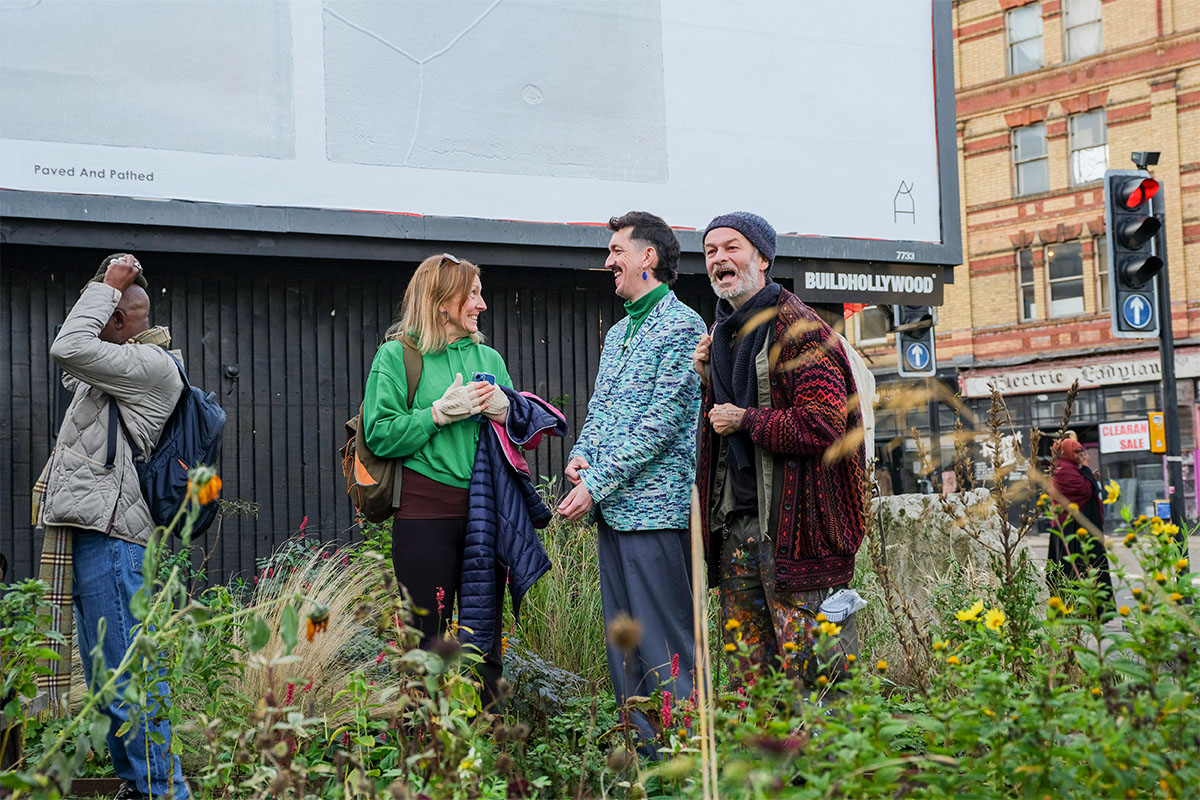
Here Alaric Hobbs, fresh out of a Master’s in Fine Art, speaks to Lizzie Lloyd about growing up in poverty, learning to make art that is at once deeply personal and political, and finding ways to draw people into serious subjects such as consumerism, class, prejudice and the death of community. For that, Hobbs says, you need a good dose of humour.

What is your relationship to Bristol?

I grew up in Wells, about twenty miles south of here, and my paternal grandparents are from Bristol. I always used to escape here as a teenager. Then I lived in Berlin for eight years, and when I came back I was trying to find somewhere in England that felt similar. I was drawn to the creative scene, and there’s a vibe to Bristol that I really like, which is similar to Berlin – they both have a community aspect: you can wander around and bump into someone you know, but not always.

Your commission makes an explicit comment on consumerism using the motif of a shopping trolley. Can you tell me more about this?

The piece is made of the body of a Costco trolley that is enclosed and filled with handles, seats, wheels and coin mechanisms. I want it to feel like the trolley is consuming itself; it’s eating its smaller parts, mid-digestion, as if it’s breaking down its own body parts. I’m playing on the idea that by shopping, you’re directly participating in consumerism.

So the trolley becomes an active consumer, as well as a vehicle for enabling our consumption.

I was thinking about urban materials and the abandonment of materials. But the trolley is a status symbol. I remember growing up and seeing kids in Tesco eating a French baguette sat in their trolley. To have a trolley meant you had loads of money, or that’s how I saw it as a child. It’s a comment on class and social status so I wanted to give the trolley an elevated status – I’m literally putting the shopping trolley on a pedestal.

The plinth sits in front of three billboards which for the launch will include images of your work. Can you tell me about the largest, Paved and Pathed, and its relationship to The Consumer?

Paved and Pathed is about my experience of homophobia in Bristol. It’s a triptych of a crack in a slab of tarmac, pavement and wall. These are taken from places where I experienced homophobia. The billboard faces Old Market, which is the gay part of the city. I’m commenting on the way Bristol has an air of being really cool and liberal, but gay people like myself still experience moments of hostility.

How did growing up working class shape the way you think about consumption?

I grew up really poor. I didn’t have a car or a phone. I grew up frugal. So from college, at sixteen, learning about the readymade and using found objects, and it opened my mind. Instead of something like ceramics, where you take a material and make something from it, with found objects the material is already given and you work with what’s there. I liked that. I don’t want to sound sadistic, but it mirrors what growing up was like for me: this is your meal, you’re going to eat it.

Lots of your work references familiar objects and street furniture, giving them a humorous or unexpected edge. Why is that, and why use humour to explore serious subjects such as consumerism and food scarcity?

I’ve had a pretty dark and traumatic life, and I’ve always used humour as my go-to for talking about things seriously. My therapist used to ask why I was laughing when I was talking about my experiences, she’d say I told stories as if they weren’t my own. It was my way of easing the pain. I’m a playful person and I want that to come across. My pieces all have pretty serious subjects, but I’m wary of being a Debbie Downer. Humour is a good way to coax someone into thinking about serious subjects. It makes the work more approachable.

It opens the door to massive issues that might be too overwhelming otherwise?

Exactly. A white-wall gallery is an intimidating space for a lot of people. If you already feel nervous, and then you read that someone got beaten up, what better way to draw people in than something interactive, relational or cute? I’m like that in my life anyway, so it’s an outward expression of me as a person.

How does this commission relate to your previous work?

I’ve just finished a Master’s in Fine Art and I learned so much from that. I used to think it was cringe when people used their life experience in their artwork. I never thought I’d be that person, I felt I had so much more to talk about! I now realise that that was quite rigid of me. Being in a cohort of twenty-odd people, everyone was feeding off each other subconsciously, and it made me realise that, all along, I’d been talking about my own life experience without noticing. That has come out naturally in this piece. It’s been a way of understanding myself more.

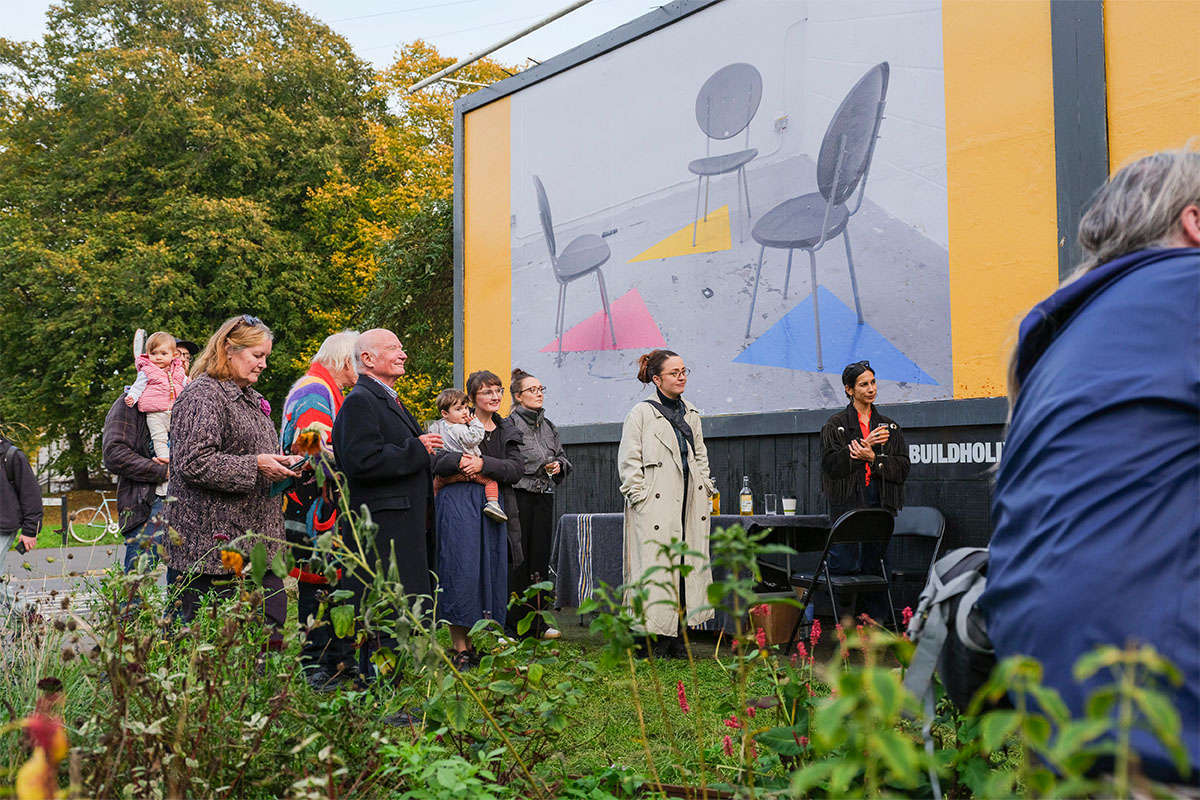
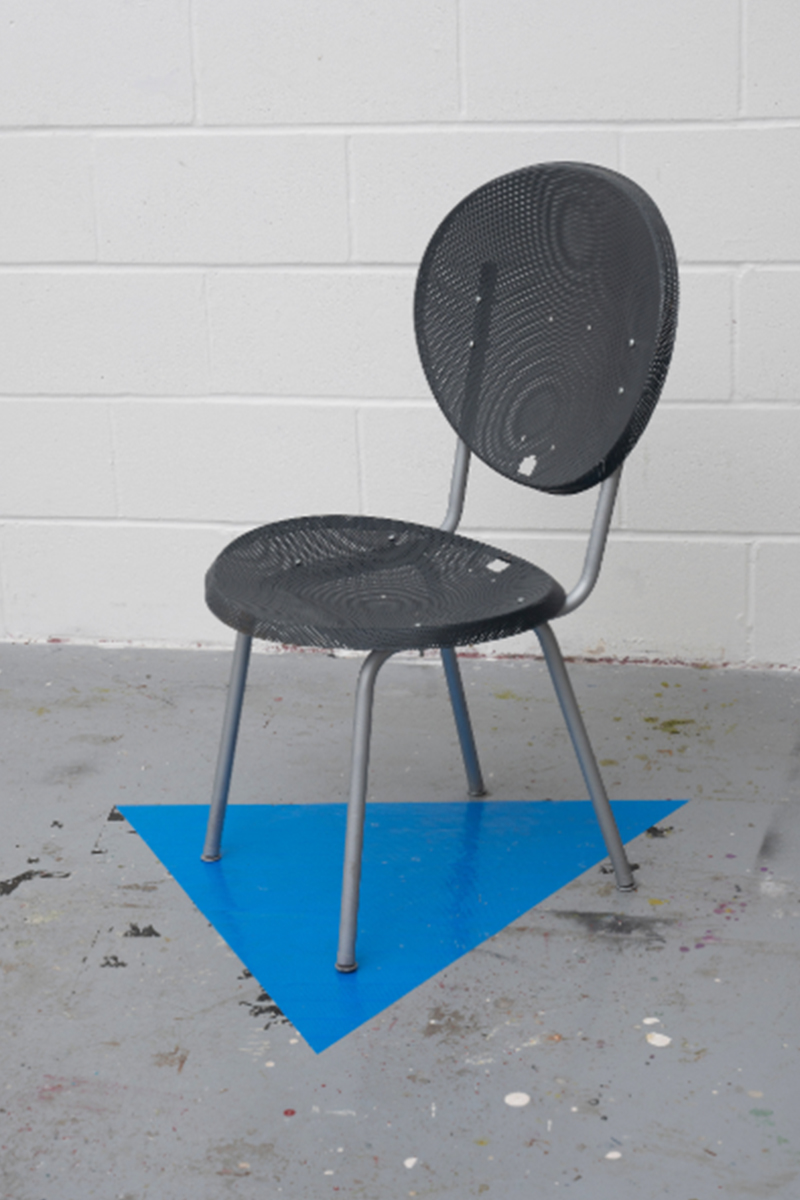
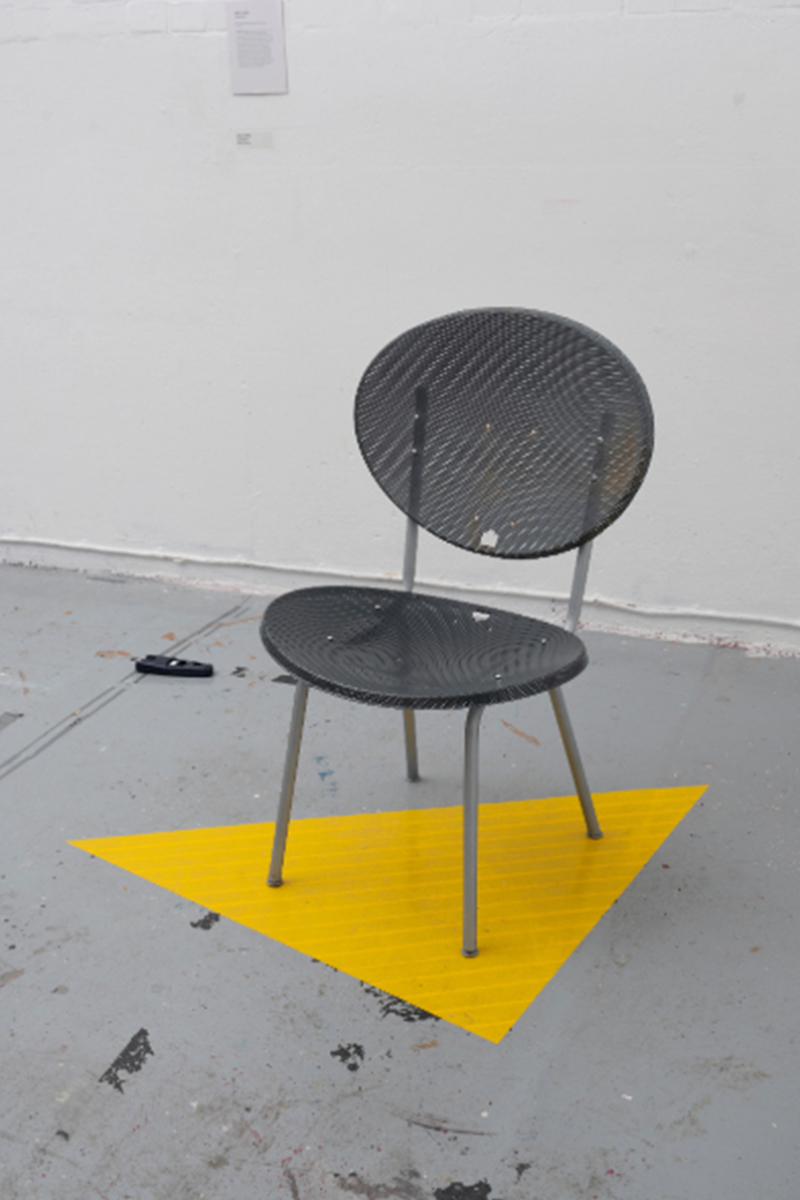
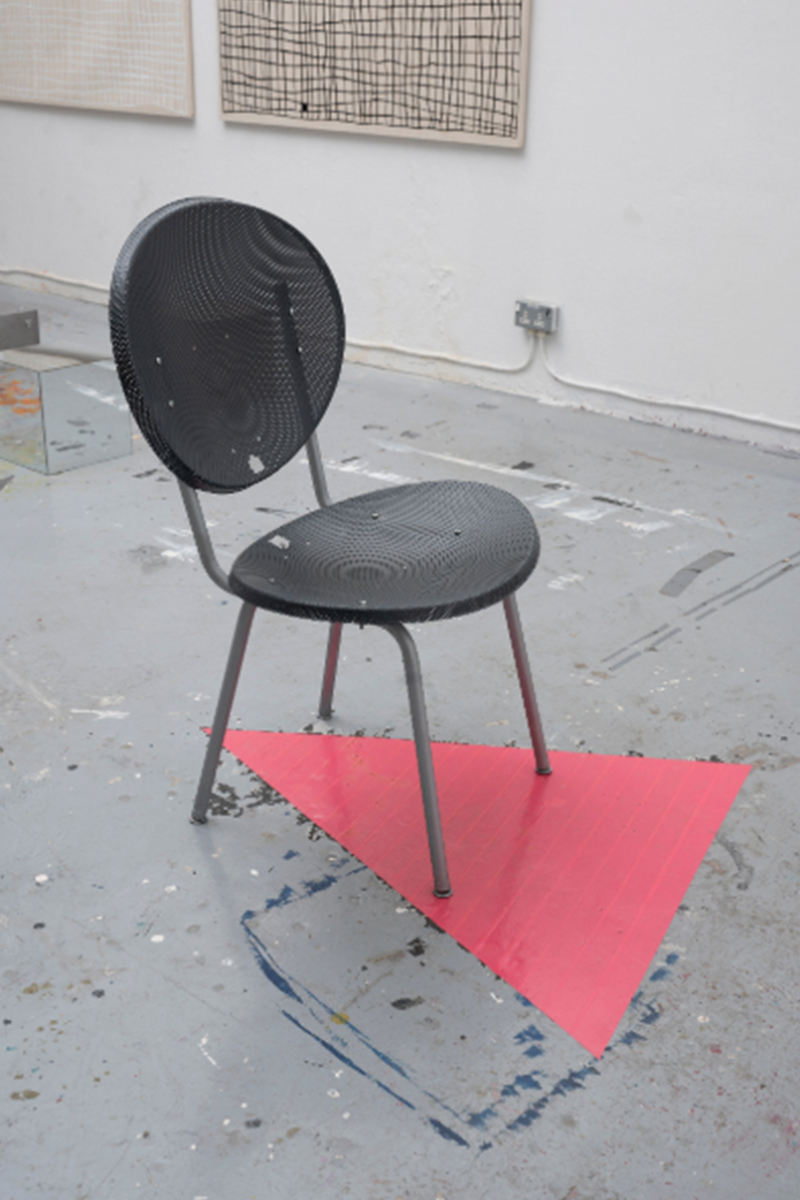
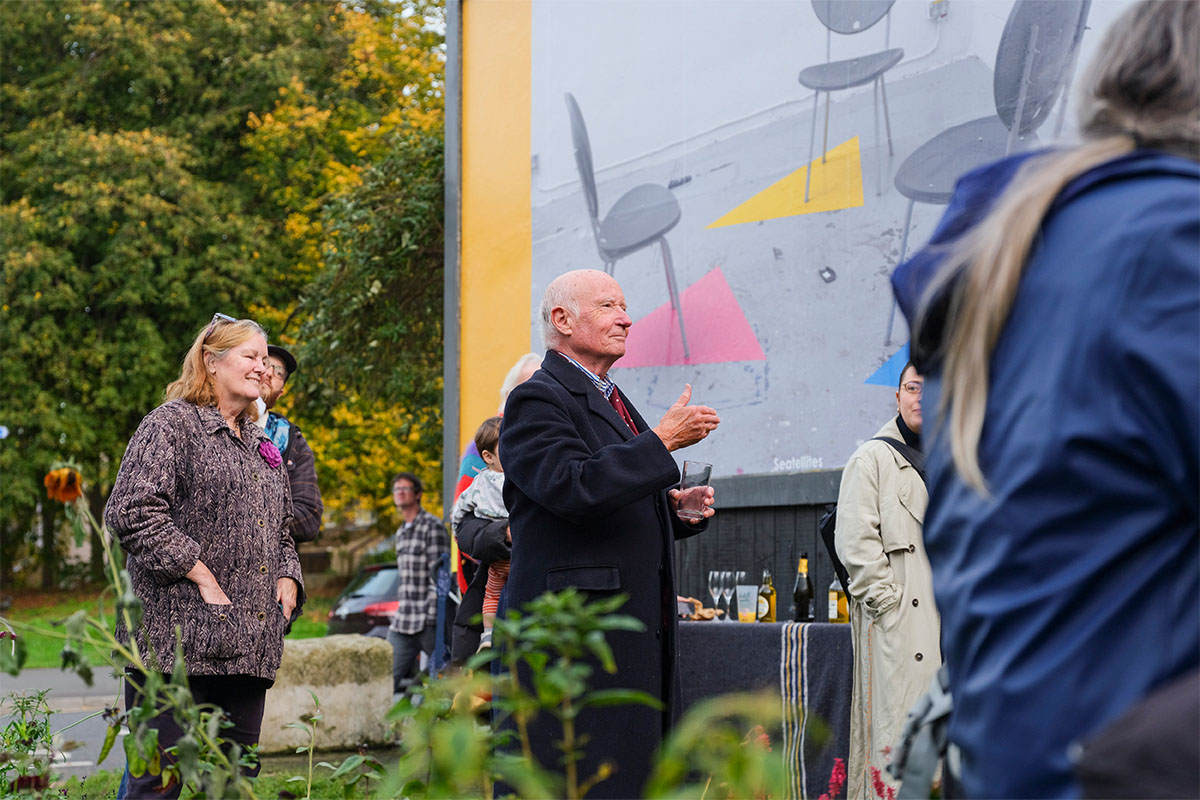
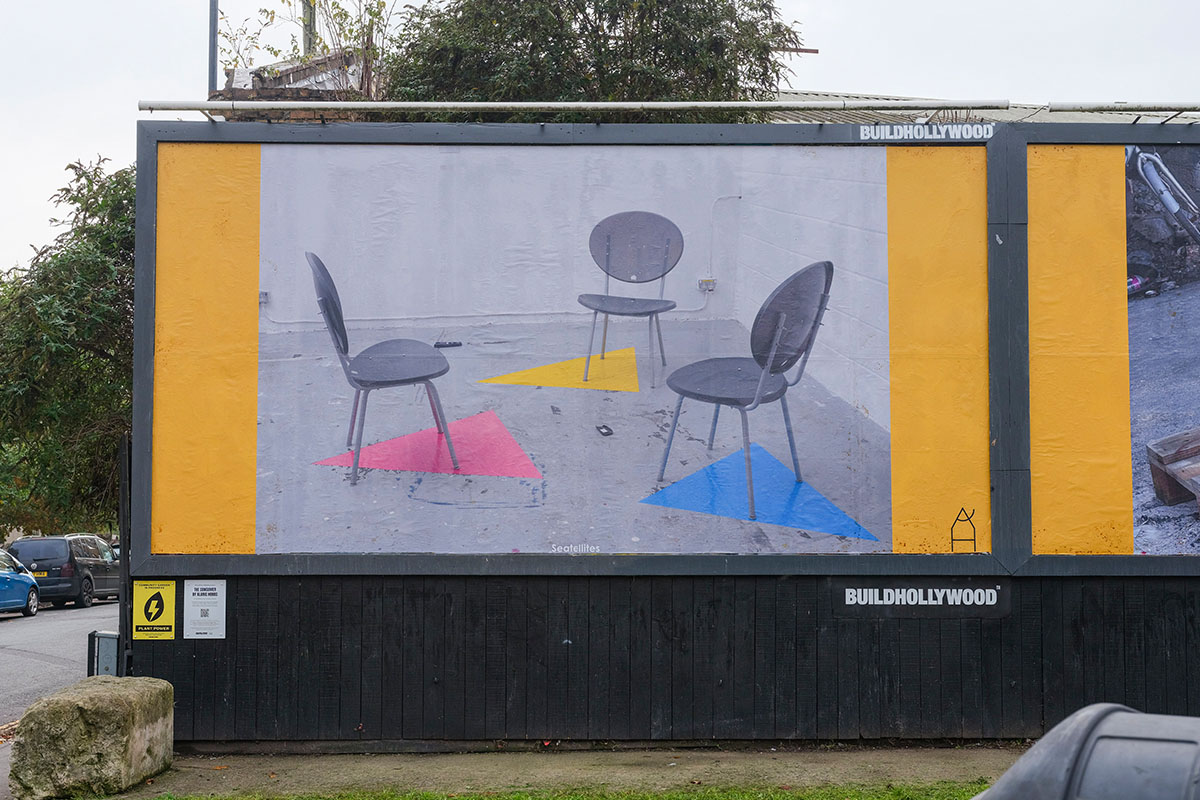
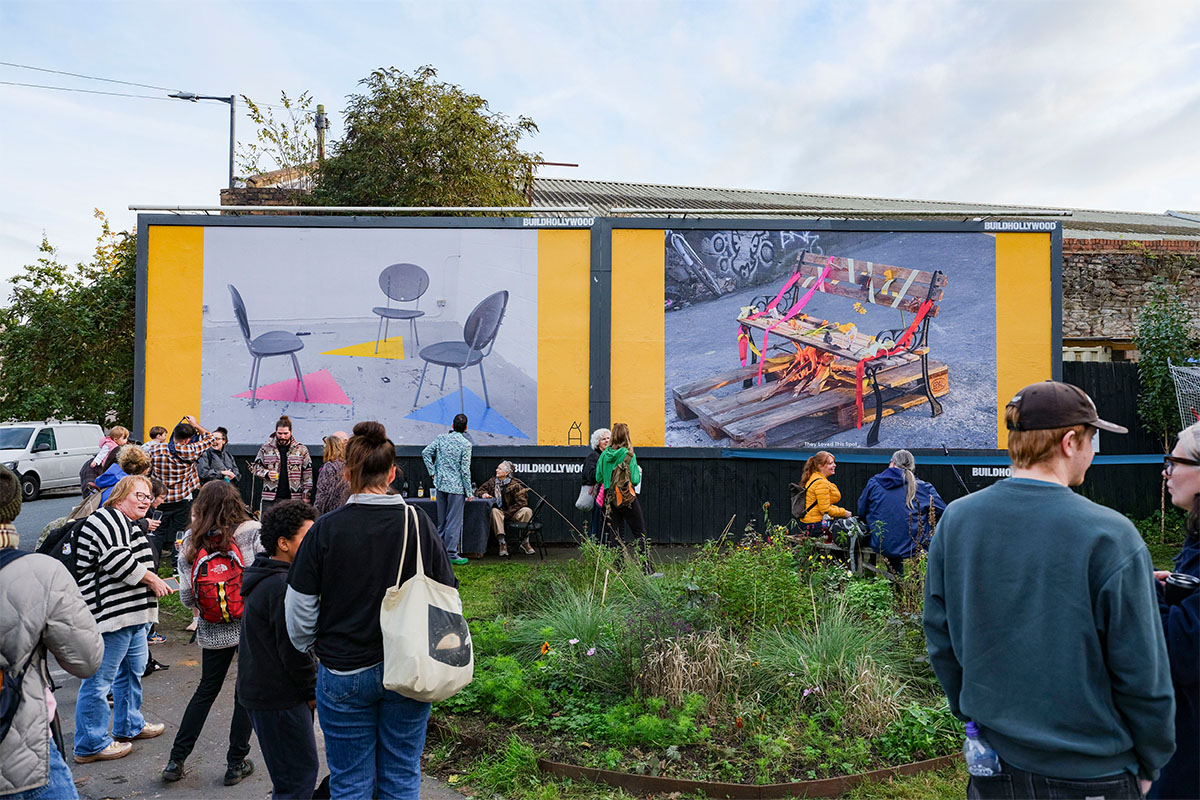
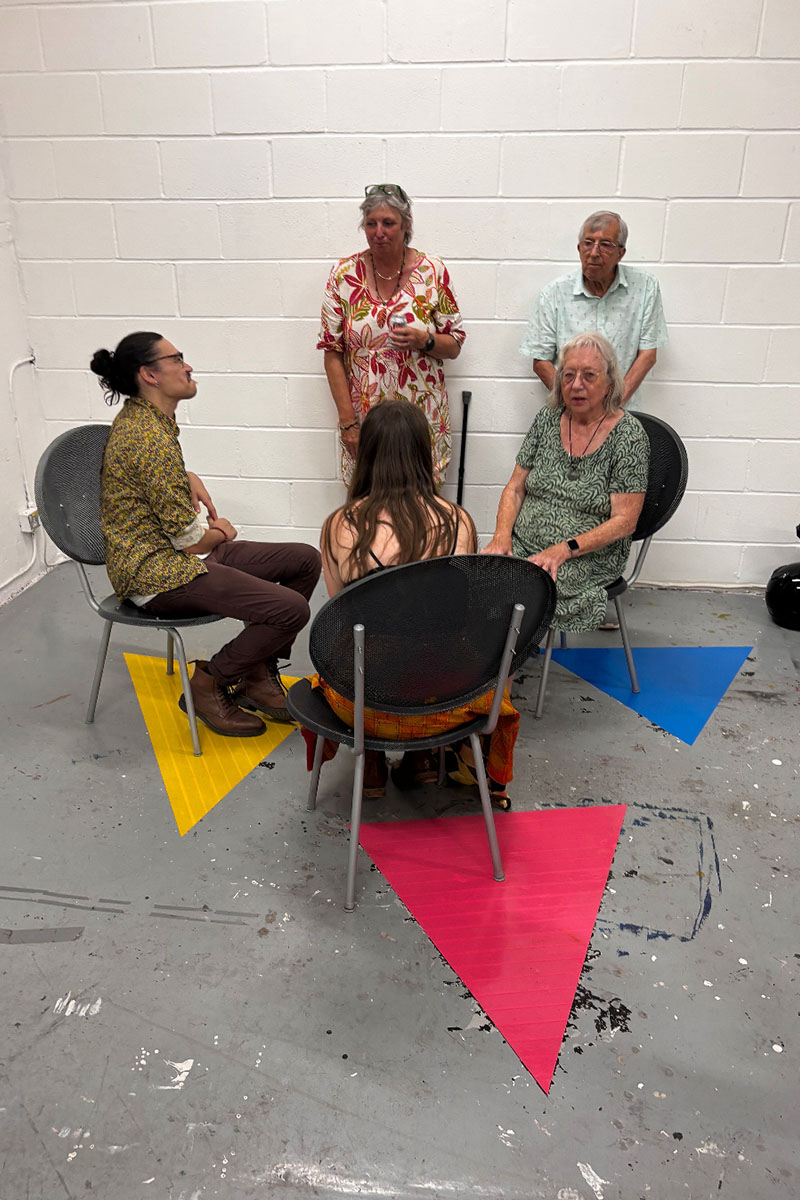
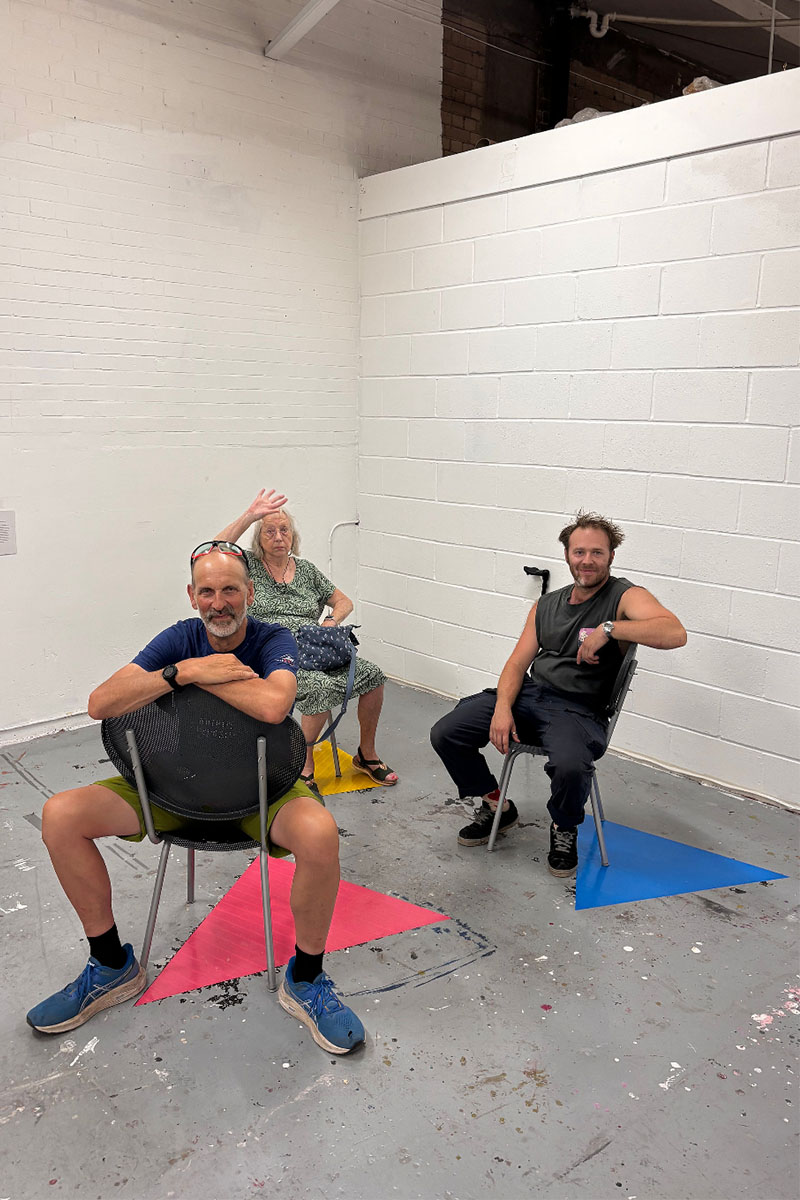
Another example is in one of the other billboards which features Seatellites, which I made during my Master’s. It’s a series of seats made from satellite dishes, installed in a gallery space and was an invitation to people to sit and talk with each other. That was about communication, and the lack of it in my upbringing, especially being autistic. I always just thought: say it how it is! I’m pushing against that British stiff-upper-lip, passive-aggressive mentality.

There’s another billboard – They Love This Spot – on the site, too. Can you tell me about it?

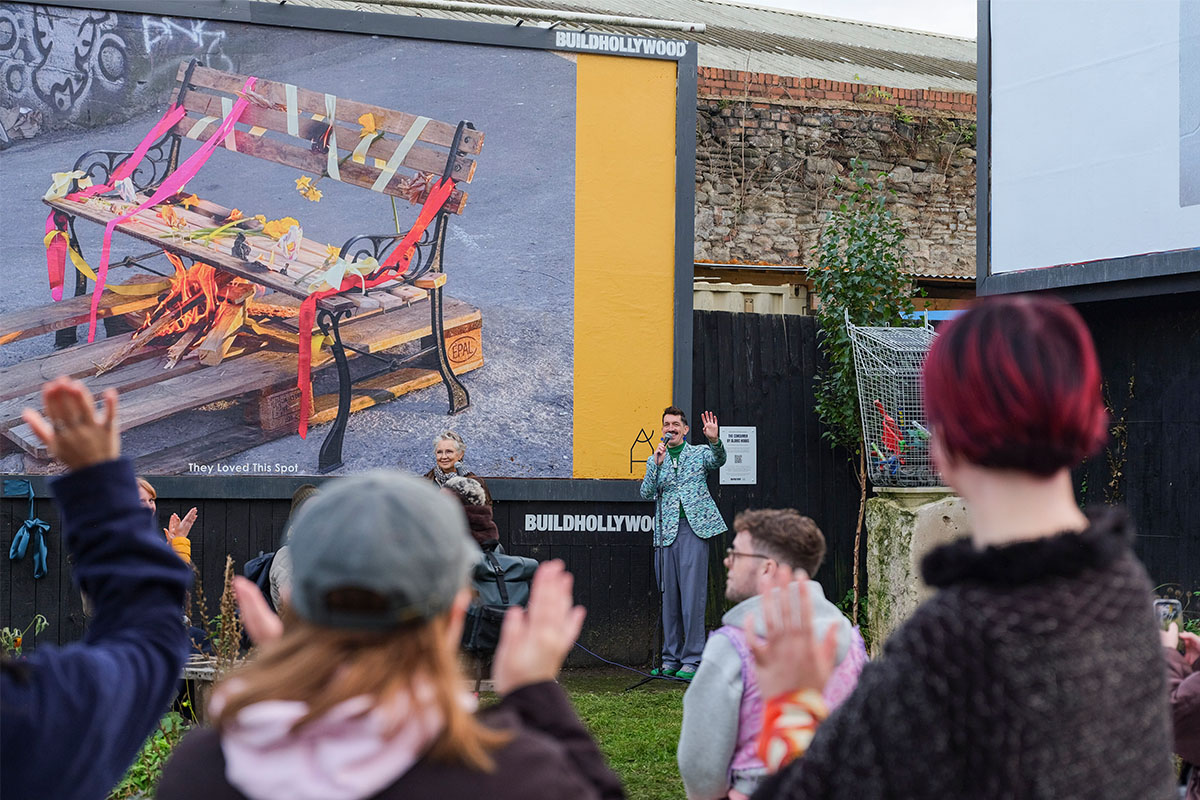
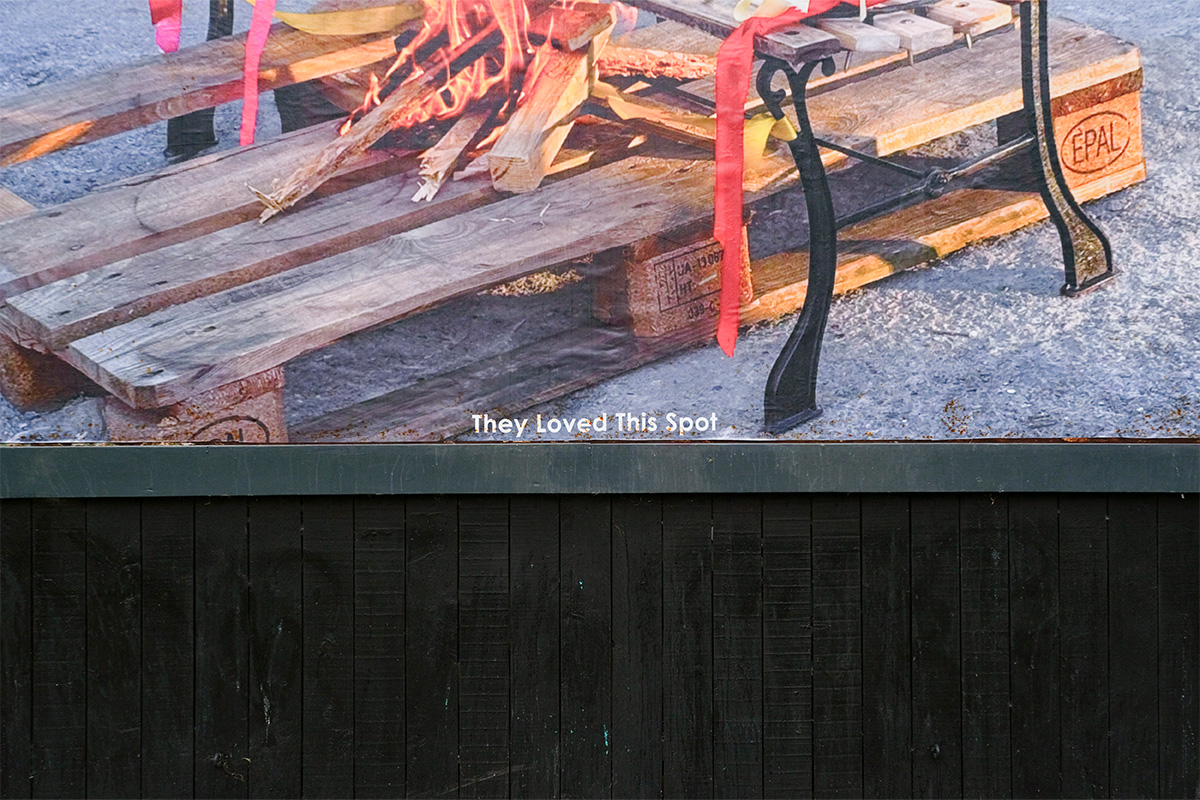
They Love This Spot is a photograph of a bench that I bought second hand, repaired, burnt and then rebuilt again. It is about the bench as a community symbol; a place to sit down and have a random chat with a stranger. It’s commenting on the removal of public benches by schemes like Secured by Design, a police initiative in the UK that removes them for anti-loitering reasons in cities. Hostile architecture is an urban design strategy that uses elements of the built environment to deter people from public spaces. I was talking about the death of community via the bench.

The work combines sculpture on a plinth and your paste-up billboard images of your previous work. How did you think about the site and the sculpture’s relationship to advertising?

I was a bit wary about my own work being in that space and being linked to advertising. I follow Adblock Bristol on Instagram and I’m all for what they do. Adblock is a Bristol group campaigning for a city free from corporate outdoor advertising. They were recently part of the push in Bristol to ban polluting ads.

As I was thinking about how to make the site work for me, I thought about the community garden that surrounds the plinth and the billboards, and the benches there. I absolutely love chairs and benches and seats because of the way they are symbolic of community and conversation. When you boil it down, a lot of my concepts are about comfort, community and talking, and a chair is designed for all of those things. So I guess what I wanted from the billboards was to mirror the space and to link with community.

What was your aim for the commission, and how do you imagine people will engage with it?

A lot of my work uses materials that people would normally overlook or dismiss like shopping trolleys, satellite dishes, bike locks, road signs. People might not immediately see them as sculpture, and that’s something I’m interested in. I’m curious about that moment when someone looks again and starts questioning why they value some objects more than others. I honestly don’t know how people will engage with it though, and I don’t want to dictate this. What interests me is what happens when people bring their own experiences to the work. If someone sits in the garden and starts thinking about consumerism, that’s great. If someone starts talking to a stranger because they’re sharing the space, that’s equally important to me. For example, in Seatellites, which I referred to earlier, it wasn’t just the seats that were the artwork, it was the people sitting on them. The piece was activated when people talked, because it was meant to incite conversation, taking the agency of public space into the gallery. The white-wall gallery space can feel really rigid for some people, but Seatellites was an invitation for you to sit down, have a chat and get comfortable.

As much as I wanted all of these pieces to look good, the work is what happens around it.

What impact do you think this commission has had, or will have, on developing your work? What have you learned from it? 

It’s nice to get some recognition finally. I was longlisted for the Saatchi open call, and I don’t think I’d have got that without Jonathan Baldock being one of the judges. He gave me really lovely feedback. It’s all been surreal, and it’s really given me confidence. 

If you could meet any creative, living or dead, for a coffee, who would it be and what would you talk about? 

Elsa von Freytag-Loringhoven. There are theories that it’s actually her signature on Marcel Duchamp’s Fountain, that she was the inspiration for his drag persona, and that she’s the originator of the readymade. I’d want the full lowdown on her being a woman who came up with the idea first. They were apparently good friends, so I’d want to know how she felt about him taking the credit. She’s a legend, and no one knows about her, which drives me mad. 

And finally, it’s the new academic year, with lots of new students going to university. As you’ve recently completed a Master’s I wondered if you would share three pieces of advice that you’d give to first-year students starting a degree in the arts? 

First, listen. During my Master’s I really learned to listen. Even if it’s advice the old me would have rejected, I learned to take it on board. You can work with it. It doesn’t mean you have to use it but be open to what’s being suggested. 

Second, go to artist talks. That’s how I got this commission. I had a feeling I needed to go, and now look where I am.  

Third, explore materials and media. That helped me go against my own rigidity and my ideas about perfectionism. I never thought I’d do performance pieces or make a film  – in fact I was previously dismissive of them – but during my Master’s I did both. So just go to workshops and play around. This approach really opened my ideas of practice and medium. 

Previous article

Marathon Season: Hit The Ground Running

Next article

Partnerships

Doubling Down with Rowdy and Foka Wolf